Russian Strikes Hit Ukrainian Cities, Renewing Infrastructure Risks
Deadly attacks across several Ukrainian regions damaged homes, businesses and energy assets, sharpening risks for investors exposed to the war.
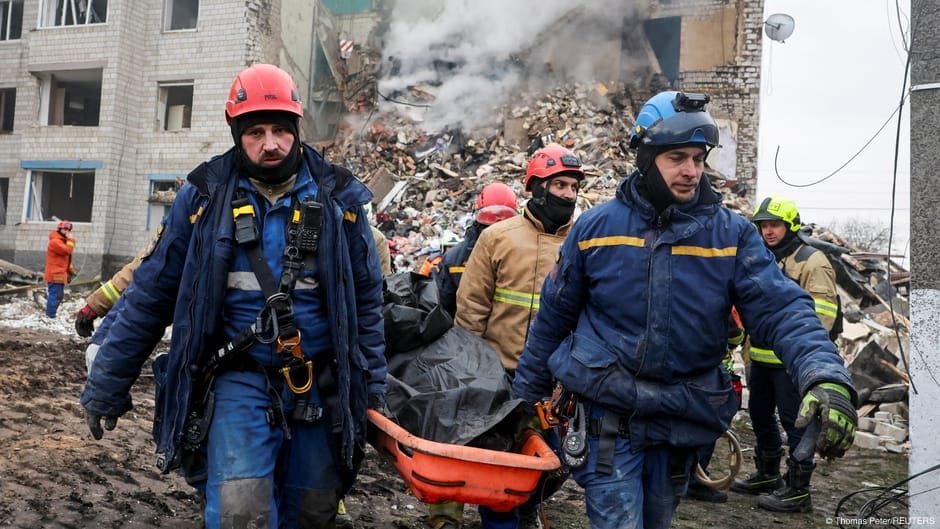
Russian strikes across several Ukrainian regions on Sunday, Nov. 22, killed, injured or left missing dozens of people while damaging residential buildings, businesses and infrastructure. For capital markets, the attacks reinforce the persistent security risk surrounding Ukrainian assets, energy systems and companies with operations or supply-chain exposure in the country.
More than 10 people were killed in attacks on the Kyiv region. In the settlement of Dymer, in the Vyshhorod district, nine people died after a Russian drone struck a five-story residential building during the night. A child was rescued while emergency crews searched the rubble of a destroyed section of the building.
In Vyshneve, in the Bucha district of the Kyiv region, three people were killed and 15 injured when a strike hit a supermarket containing shoppers, according to the Kyiv regional military administration. One injured person was in serious condition, and firefighters extinguished a blaze in the building. Ukrainian Telegram channels reported that a Russian drone had hit a Novus shopping center.
Damage Extends From Retail Sites to Energy Infrastructure
Kyiv regional administration head Tymur Tkachenko said an attack in the Bila Tserkva district caused a fire at a private home. A man was killed, and rescuers recovered his body from the rubble. Four other people were injured. One woman was hospitalized with a traumatic brain injury, while another sustained injuries from the blast wave.
In Bila Tserkva, debris from a Russian unmanned aerial vehicle fell near a store and injured two people, who were hospitalized. A private residence, two vehicles and a business were also damaged, Tkachenko said.
The reported destruction of retail property, private businesses and transport assets adds to the direct economic cost of the conflict. Damage to energy infrastructure is particularly relevant to investors because disruptions can affect industrial production, logistics and operating expenses even when financial markets are not the immediate targets.
In Dnipro, a woman was killed and two men were injured in Russian attacks, according to regional military administration head Oleksandr Hanzha. Residential buildings and infrastructure were damaged. A 22-year-old man was in serious condition, while a 49-year-old man was in moderate condition. Hanzha also reported strikes against energy infrastructure.
“In Dnipro, residential buildings and infrastructure were damaged. A woman was killed,” Hanzha wrote on social media.
Russian forces attacked five districts of the Dnipropetrovsk region more than 40 times during the day, using drones, artillery and aerial bombs, according to Hanzha. Three people were injured in the Nikopol district, including a 64-year-old man in serious condition and a 65-year-old woman in moderate condition.
In the Kamianske district, men aged 51 and 62 were hospitalized in moderate condition, and infrastructure was damaged. Two people were injured in the Synelnykove district, where a store, a vehicle and infrastructure sustained damage. Infrastructure facilities were the targets of Russian strikes in the Dnipro district.
Investor Focus Remains on Resilience and War Risk
Elsewhere, Russian forces dropped a FAB-500 aerial bomb on a residential building in Sloviansk in the Donetsk region, the regional prosecutor’s office said. Two people were killed, including a woman and a 56-year-old local resident, and three others were injured. Nine apartment buildings in the city were damaged.
In the Zaporizhzhia region, Russian forces attacked a civilian vehicle with an FPV drone. The 68-year-old driver was injured and remained in moderate condition, regional military administration head Mykhailo Semikin said.
In Kharkiv, a Russian drone hit the roof of a nine-story residential building in the Saltivskyi district, injuring a woman, regional administration head Oleh Syniehubov said. In the Poltava district, a Russian drone struck the grounds of a private enterprise. Preliminary information indicated that there were no casualties, according to the Poltava regional military administration.
The breadth of the attacks matters to investors assessing Ukrainian sovereign and corporate risk because the damage was spread across residential, commercial, industrial and energy-related sites. Repeated strikes can increase reconstruction requirements, disrupt business continuity and place additional pressure on public finances and insurance availability.
The reports did not provide immediate data on movements in Ukrainian bonds, regional equities or currencies following the attacks. Even so, the renewed damage highlights the variables likely to remain central to market pricing: the durability of energy networks, the fiscal cost of rebuilding, the ability of companies to maintain operations and the continuing requirement for external financing. Investors will also watch whether attacks on infrastructure translate into broader interruptions to production, transport or power supplies.



