Ukraine Anti-Corruption Raids Put Prosecutor’s Office Under Market Scrutiny
The investigation into alleged protection of fraudulent call centers adds governance risk to Ukraine’s investment narrative.
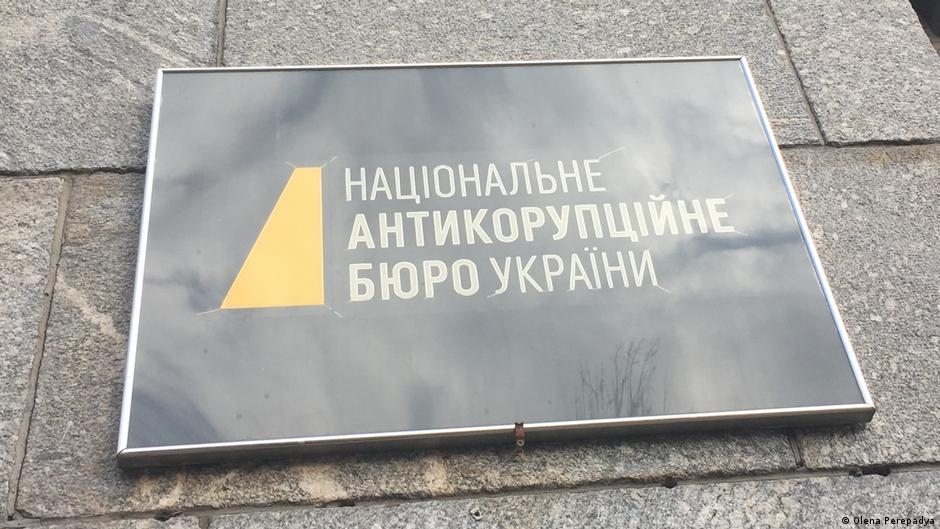
Ukraine’s anti-corruption agencies have announced an operation targeting public officials allegedly linked to fraudulent call centers, placing the office of the country’s prosecutor general under renewed scrutiny at a sensitive moment for investors watching governance, rule-of-law reform and wartime financial stability.
The National Anti-Corruption Bureau of Ukraine, known as NABU, and the Specialized Anti-Corruption Prosecutor’s Office, or SAP, said they were conducting an operation to expose what they described as a criminal organization involved in protecting a network of fraudulent call centers and legalizing assets. According to the agencies’ statements published on Telegram on Friday, September 4, investigators believe the organization was headed by an employee of Ukraine’s Office of the Prosecutor General.
For capital markets, the immediate issue is not only the alleged criminal activity itself, but the institutional signal. Ukraine remains heavily dependent on external financing and investor confidence, while its sovereign risk profile is shaped by the war, fiscal pressure and the credibility of reforms demanded by Western partners. Any case involving senior legal institutions therefore carries weight beyond domestic politics.
Governance Risk Returns to the Foreground
NABU and SAP initially said they would provide details of the operation later. On the same day, searches were carried out at the Office of the Prosecutor General. The office confirmed that investigative actions had taken place, while stressing that the suspicions raised by NABU and SAP did not directly concern Prosecutor General Ruslan Kravchenko.
“The Office of the Prosecutor General will provide the anti-corruption agencies with full assistance and all necessary information within the law,” the office said, adding that the employee whose possible involvement is being checked would be suspended from official duties for the duration of the pre-trial investigation.
That response may be read by investors as an attempt to contain reputational damage and demonstrate cooperation with independent anti-corruption bodies. Still, the searches are likely to reinforce investor attention on Ukraine’s governance premium, particularly in sovereign bonds and any equity-linked exposure to the country’s reconstruction theme.
According to Ukrainian Pravda, the person under suspicion is Serhiy Kropyva, deputy head of the international legal cooperation department at the Office of the Prosecutor General. The outlet reported, citing sources “in business circles,” that he had been detained. There has been no official confirmation of the individuals affected by the searches or of the suspects.
Journalists also reported searches involving Ukrainian official Oleh Kiper. Kiper previously held various positions in the Office of the Prosecutor General and in 2023 was appointed head of the Odesa regional military administration. Before taking his latest post in the prosecutor general’s office, Kropyva had been Kiper’s deputy in the Odesa regional military administration, and prior to that had also worked in the prosecutor general’s office in a cybersecurity department.
Investor Focus on Anti-Fraud Legislation
The operation came just one day after President Volodymyr Zelensky, on September 3, submitted a bill to Ukraine’s parliament that would toughen penalties for organizing fraudulent call centers and for links to their activity. The timing puts the enforcement action within a broader legislative push against financial fraud networks.
Under the proposal, organizers of such call centers could face up to 12 years in prison with confiscation of property. Working in such a call center could carry a prison term of up to 10 years. Recruitment into call centers could be punishable by up to five years in prison, while repeat recruitment could bring up to 10 years. Even landlords providing premises for call centers could face up to 10 years in prison.
For investors, stricter penalties may point to a more aggressive state response to fraud risks, but the effectiveness of that response will depend on enforcement credibility. Markets generally distinguish between headline crackdowns and institutional follow-through. The involvement of NABU and SAP, two agencies closely watched by Ukraine’s partners, makes the case particularly relevant for those assessing whether anti-corruption architecture is functioning under wartime pressure.
The issue also intersects with financial-sector and consumer-protection concerns. Shortly before the NABU and SAP operation, Ukraine’s National Police carried out a major nationwide operation to expose fraudulent call centers. As a result, 94 such organizations were shut down. During searches, law enforcement officers seized, among other items, about $2 million, 64,000 euros, gold bars and jewelry.
The cross-border nature of the fraud allegations adds another layer of risk. Victims of such call centers include not only Ukrainians but also Russians. The problem became more visible after Russia’s full-scale invasion of Ukraine, as fraudsters began persuading people they had deceived to carry out various acts of sabotage. Kyiv and Moscow have accused each other of organizing the work of such “sabotage” call centers.
In market terms, the case is unlikely on its own to determine pricing for Ukrainian assets, which remain dominated by war developments, donor funding and debt sustainability. But it does matter for the broader investment narrative. For bondholders, development finance institutions and companies positioning for eventual reconstruction, governance events shape risk assessments, due diligence requirements and confidence in institutional capacity.
The key questions now are whether authorities provide official confirmation of suspects, whether charges are filed, and how transparently the investigation proceeds. Until then, the raids serve as another reminder that Ukraine’s capital markets story is tied not only to battlefield and budget dynamics, but also to the durability of anti-corruption enforcement inside core state institutions.