Latvia Says Leipzig Sabotage Suspect Lived in Russia as EU Risks Deepen
The cross-border probe adds to investor focus on sanctions enforcement, transport security and Russia-linked policy risk across European markets.
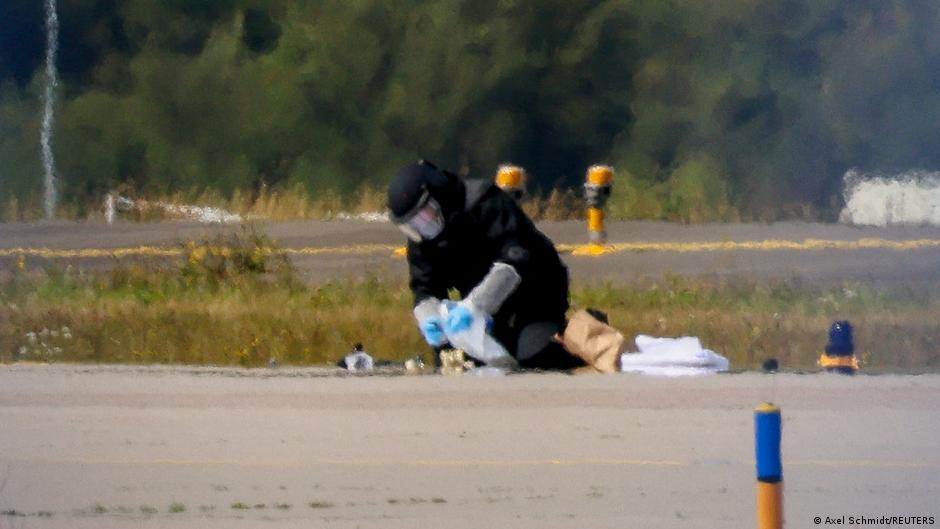
Latvia has said that a Latvian citizen suspected of involvement in the sabotage case at Leipzig airport had been living permanently in Russia in recent years, adding a new element to an investigation that is being watched by investors for its implications for sanctions enforcement, transport security and broader geopolitical risk in Europe.
According to Latvia's State Security Service, cited on Thursday, September 3, by Latvian news agency Leta, the suspect, who was born in Russia and holds a Latvian passport, had not been living in Latvia in recent years. The agency also confirmed that Riga is cooperating with German investigators and providing them with the necessary support, while declining to comment further because the investigation is ongoing.
Germany's federal prosecutor has not yet issued official public comments on the investigation. But German investigators had previously identified two suspects in the case involving an attempted act of sabotage. According to reporting cited from
Die Suddeutsche Zeitung, NDR and WDR, the attempted attack on a Ukrainian transport aircraft involved a Russia-born man with Latvian citizenship and a Belarusian man with Russian citizenship.
For markets, the case matters less as an isolated criminal investigation than as another episode feeding political momentum behind tighter controls on Russia-linked activity in the European Union. Investors in transport, logistics, border infrastructure and companies with compliance exposure to cross-border trade are likely to view the developments through that lens. The immediate issue is not only the security incident itself, but also the policy response it can trigger across sanctions, visas, customs checks and scrutiny of shipping networks.
Security Incident Meets Sanctions Risk
The suspected attempted sabotage against a Ukrainian Antonov An-124 cargo plane took place on August 4, according to the investigation. Prosecutors say at least three drones were involved. One of them, fitted with explosives, was discovered near several Ukrainian cargo aircraft. A second drone is believed to have crashed into a DHL cargo plane minutes after the first was found. A third unmanned aircraft was discovered 10 days later, on August 14, in a field west of the airport. Investigators found about 50 grams of a substance next to it that was initially assessed to be hexogen.
Berlin has placed responsibility for the incident on Russia. The German government responded by deciding to close Russia's consulate general in Bonn and terminate the agreement governing the activities of the Russian House in Berlin. Germany also said it would tighten checks on Russian citizens entering the country and strengthen measures against Russia's so-called shadow fleet, which Moscow uses to circumvent EU sanctions imposed over the war against Ukraine.
That response is the core market angle. A stronger clampdown on the shadow fleet has direct relevance for shipping, insurance, commodities trading and any business exposed to sanctions compliance risk. More intensive entry checks and broader scrutiny of Russia-linked movements may also add friction to transport chains and administrative processes. Even without immediate quantified market moves, the direction of policy is clear from the official response: higher enforcement intensity and more attention to security vulnerabilities tied to the war in Ukraine.
A second layer of risk comes from the visa and border dimension. The second suspect reportedly entered the Schengen zone on an Italian tourist visa issued at the end of April by Italy's diplomatic mission in Minsk. After the information became public, Rome said it would examine the circumstances under which the visa was issued. That review may reinforce investor expectations that European authorities will look more closely at screening procedures, especially in politically sensitive cases involving Russia, Belarus and transit into the EU.
Italian Foreign Minister Antonio Tajani framed the issue as part of a broader pattern. As cited by Euractiv, he said an investigation would be conducted and argued that the case confirmed attempts by some countries to act against the EU using people without criminal records who do not arouse suspicion. He said vigilance was warranted because he knew the methods and instruments such countries had used in the past and that Europe must remain on alert.
For equity investors, those comments are relevant because they point to an environment in which governments may continue favoring tighter surveillance, more restrictive border procedures and broader security spending. For bond investors, the episode reinforces the persistence of geopolitical risk in Europe rather than introducing a one-off event. The likely implication is not a clean sector trade but a continuation of the political backdrop that supports defense, security and enforcement-linked activity while complicating the outlook for firms exposed to Russia-related restrictions.
Moscow has rejected the accusations that it organized the sabotage attempt in Leipzig. In response to the closure of the Russian House in Berlin, Russian authorities said they would close Goethe-Institut branches in Russia, located in Moscow, St. Petersburg and Novosibirsk. That retaliatory element underscores the risk of further tit-for-tat measures, something investors generally read as negative for already limited channels of institutional and commercial engagement.
Capital markets are unlikely to treat the Leipzig case as a stand-alone event. Instead, investors are more likely to see it as part of a wider pattern in which security incidents, sanctions enforcement and diplomatic retaliation increasingly overlap. For European assets, the practical takeaway is that Russia-related headline risk remains active and can still feed directly into policy decisions affecting transportation, trade controls and cross-border operations. That does not automatically translate into broad market dislocation, but it does keep geopolitical risk firmly embedded in the investment case for sectors exposed to logistics, regulation and sovereign decision-making across the region.