US Gas Proposal Puts Europe’s Energy Trade Back in Investor Focus
A reported US peace proposal linking Russian gas flows to an Ukraine settlement could reshape European energy costs and infrastructure valuations.
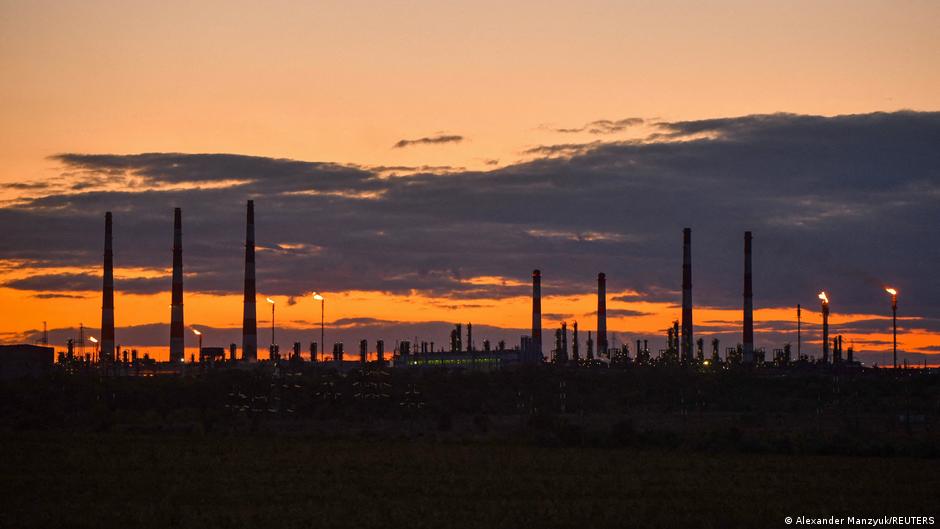
A reported US proposal to restore large-scale Russian pipeline gas deliveries to Europe as part of an agreement ending the war in Ukraine has put energy markets, utility shares and infrastructure assets back at the center of geopolitical risk calculations.
The New York Times reported on Saturday, October 17, citing people familiar with the matter, that US presidential envoys Steve Witkoff and Jared Kushner raised the initiative during negotiations with Ukrainian and European Union representatives. The proposal was also discussed with Ukrainian President Volodymyr Zelensky during a September meeting in Kyiv, according to the newspaper.
Washington’s concept is that renewed European purchases of Russian pipeline gas would provide Moscow with an economic incentive to end the war. For investors, such an arrangement could alter the outlook for European wholesale gas prices, power-generation costs and the earnings of companies across the energy supply chain. The report did not identify any immediate market moves or disclose proposed volumes, prices or a timetable for restarting deliveries.
European resistance clouds the investment case
The EU delegation responded skeptically to the idea, the newspaper reported. Günter Sautter, German Chancellor Friedrich Merz’s closest security adviser, was among those who sharply criticized it. Some European and Ukrainian officials also expect the United States to seek a share of Russian gas exports, according to the report.
That resistance matters for markets because any restoration of pipeline trade would depend on political approval as much as physical infrastructure. European energy companies, industrial groups and bond investors would have to weigh the potential benefit of additional gas supply against sanctions exposure, regulatory uncertainty and the risk of renewed dependence on Russia.
A meaningful return of comparatively large pipeline volumes could ease pressure on energy-intensive industries if it reduced input costs. At the same time, it could challenge parts of the liquefied natural gas supply chain that have benefited from Europe’s shift away from Russian pipeline deliveries. Yet the proposal remains politically contested, and the article offered no evidence that European policy has changed.
Nord Stream discussions add an infrastructure dimension
US officials have also discussed restarting Nord Stream with the Russian side, according to the newspaper’s sources. The major pipeline linking Russia and Germany beneath the Baltic Sea has been out of operation since August 2022 following an explosion. Reuters reported similar discussions in early October, citing five sources.
One person cited by the New York Times said the Trump administration regarded restarting Nord Stream after a peace agreement as an “easy task.” White House representatives, however, denied that discussions about Nord Stream had taken place.
“Any agreement concerning this issue would require close coordination with our European partners as part of a comprehensive peace agreement,” the White House said.
The conflicting accounts leave investors without a firm basis for valuing a restart. Pipeline operators, German utilities, LNG suppliers and European industrial issuers could all be affected, but any repricing would depend on the legal status of the infrastructure, technical feasibility, sanctions policy and the terms of a wider settlement.
Proposal conflicts with the EU’s agreed exit
The reported US initiative also runs against the direction of existing EU legislation. In January 2026, the bloc agreed to phase out Russian pipeline gas and liquefied natural gas completely by November 1, 2027. The law also prohibits new gas contracts with Russia.
Europe has already substantially reduced its reliance on Russian gas since the full-scale invasion of Ukraine began in February 2022. Russia accounted for 45% of EU gas imports in 2021, according to the figures cited in the source article. That share declined to about 19% in 2024 and 13% in 2025.
Reversing that trajectory would therefore require more than a commercial decision. It could demand changes to EU law and national energy strategies, potentially creating uncertainty for companies that invested in LNG import capacity, alternative suppliers, storage and other infrastructure on the assumption that Russian gas would be eliminated from the bloc’s supply mix.
The implications extend to sovereign and corporate debt. Lower and more stable gas costs could support industrial margins, reduce fiscal pressure from energy-support measures and improve the credit outlook for some manufacturers and utilities. Conversely, a politically divisive reversal could introduce new regulatory and sanctions risks. These are potential transmission channels rather than confirmed market effects, as no detailed agreement has been announced.
Ukraine’s transit revenues remain part of the equation
Ukraine stopped transporting Russian pipeline gas to Europe on January 1, 2025, after declining to renew an expired contract with Gazprom. The New York Times said Kyiv consequently loses about €900 million in annual transit fees.
Any plan to restore Russian exports would therefore raise questions about routes, payments and Ukraine’s economic interests. A settlement that bypassed Ukrainian infrastructure could leave those lost revenues unresolved, while a renewed transit arrangement would require Kyiv’s consent and new commercial terms.
For capital markets, the central issue is not simply whether Russian gas could return, but whether a politically durable framework can reconcile US diplomacy, EU legislation, Ukrainian interests and European energy security. Until those elements are defined, the report represents a potentially significant policy signal rather than an investable agreement.