US Significantly Reduces Joint Military Exercises with South Korea, Impacting Defense Sector Markets
President Trump orders cuts to US-South Korea military drills, citing cost and geopolitical considerations, influencing defense equities and investor sentiment.
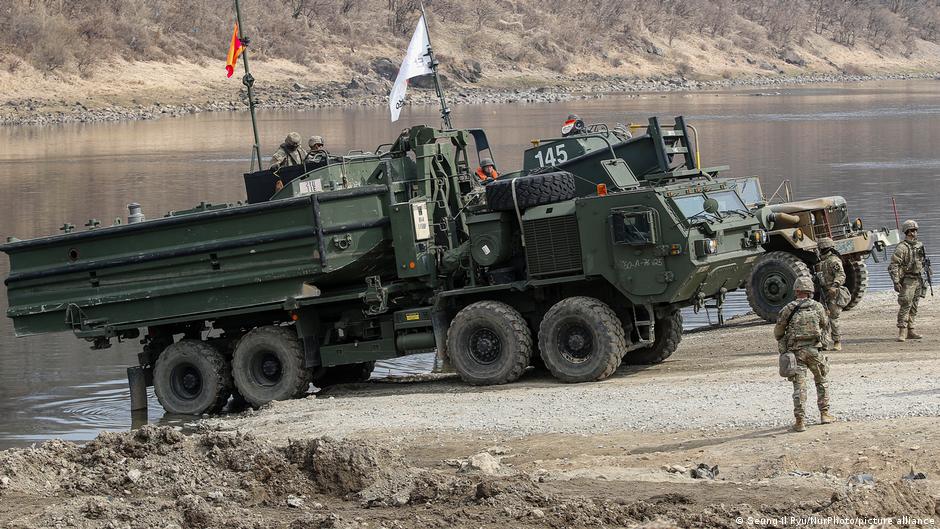
The United States will considerably scale back its joint military exercises with South Korea, a move announced by President Donald Trump on August 16. This decision has implications not only for geopolitical stability in East Asia but also for capital markets, particularly in the defense sector.
Market Impact of Reduced Military Exercises
President Trump directed US Secretary of Defense Pete Hegseth to reduce the scope of the Ulchi Freedom Shield exercises, which had been scheduled to start on August 17. These drills are an 11-day series focused on preparing for potential aggression by North Korea. The US currently maintains approximately 28,500 troops stationed in South Korea as part of its longstanding alliance.
"These exercises are not only expensive, with the US shouldering most of the costs, but they also send an unnecessary hostile signal to a country that has posed no threat recently," Trump stated, referring to North Korea.
This move has immediate ramifications for defense equities. Companies involved in military training, logistics, and related defense contracts could see changes in revenue outlooks. Reduced scale exercises may translate into lower short-term government spending in the region, affecting defense contractors with exposure to South Korea.
Moreover, investors closely watching geopolitical risk premiums may adjust portfolios as this reduction could signal a shift in US foreign policy priorities. The decision also reflects broader concerns over defense budget efficiency, which in turn influences bond market dynamics related to government debt issuance for military funding.
Geopolitical Context and Investor Considerations
President Trump’s remarks highlight his "very good relationship" with North Korean leader Kim Jong Un, emphasizing a strategic pivot aimed at de-escalation. The reduction in military exercises is partially justified by the desire to avoid antagonizing Pyongyang.
Additionally, Trump criticized South Korea for not supporting the US in conflicts involving Iran, underscoring tensions within alliances that can affect market perceptions of regional stability and risk.
The Korean Peninsula remains a complex theater; despite the 1953 armistice that ended active hostilities, no formal peace treaty has been signed. South Korean President Yoon Suk-yeol has sought rapprochement, including a recent offer to North Korea to negotiate a peace agreement. Such diplomatic efforts are closely watched by investors as indicators of potential shifts in regional security dynamics.
From a capital markets perspective, the announced reduction in military exercises introduces uncertainty around future US defense commitments in East Asia. Investors in equities and bonds linked to defense spending must assess how shifts in military posture affect contract flows and government budgets.
In summary, while the scale-back aims to reduce costs and improve diplomatic relations, it also reshapes risk calculations for investors exposed to defense-related assets and regional geopolitical tensions.