Venezuela Government and Opposition to Hold Talks Amid Market Uncertainty
Direct negotiations in Caracas aim to address earthquake aid and election schedules, impacting investor confidence in Venezuelan markets.
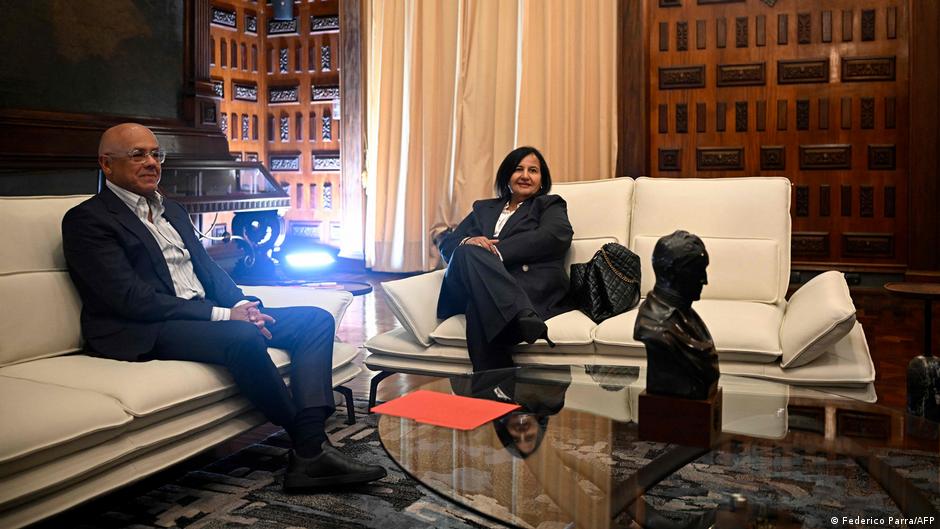
Venezuela's government is set to engage in direct talks with opposition representatives in Caracas next week, marking a significant political development amid the nation's ongoing economic challenges. The discussions are expected to focus on providing aid to those affected by the recent earthquake and establishing a timeline for future elections.
Market Implications of Political Engagement
The upcoming negotiations, announced by Jorge Rodríguez, the head of Venezuela's National Assembly and government's chief negotiator, signal a rare moment of dialogue in a country long marked by political polarization. Rodríguez revealed that Dinora Figuera, a former official who leads the center-right opposition bloc, will represent the opposition. Figuera fled Venezuela in 2018 fearing persecution and has been recognized internationally as a key opposition figure, especially by the United States.
"These talks could pave the way for restoring democratic institutions and improving the electoral system," analysts suggest, highlighting the potential for easing long-standing political tensions that have adversely affected investor sentiment.
For investors, the Caracas talks may present a tentative sign of political stabilization. Venezuela's capital markets have been marred by uncertainty due to disputed elections and governance questions. The opposition bloc led by Figuera once secured a parliamentary majority in 2015 and was recognized by Washington, yet opposition claims to electoral victories, including those by candidate Edmundo González Urrutia in the 2024 election, remain contested by the government.
The United States supports the dialogue, endorsing efforts to restore democratic norms and strengthen electoral processes. However, notable opposition figures such as Nobel Peace Prize laureate María Corina Machado, allied with González Urrutia and currently exiled, have been excluded from the talks. Machado has pledged to return to Venezuela, signaling ongoing political complexities.
From a capital markets perspective, these negotiations could influence equities and bonds by potentially reducing political risk premiums. Venezuela's sovereign bonds and publicly traded assets have suffered from volatility tied to governance uncertainties. Progress in talks might encourage foreign investment and improve liquidity in local markets, especially if a credible election timetable is agreed upon.
However, investors remain cautious as past dialogues have faltered, and the exclusion of key opposition leaders may undermine the talks' legitimacy. The focus on earthquake relief also underscores the government's immediate humanitarian priorities, which could strain fiscal resources further impacting bond yields and credit ratings.
Overall, while the Caracas negotiations represent a hopeful step towards political and economic normalization, market participants will closely monitor developments for tangible outcomes that might mitigate risks and open avenues for capital market improvements.