China Warns U.S. Against Space War Preparations as Defense Stocks Stay in Focus
Beijing’s response to Washington’s orbital weapons disclosure adds a geopolitical risk signal for investors watching aerospace, defense and satellite-linked assets.
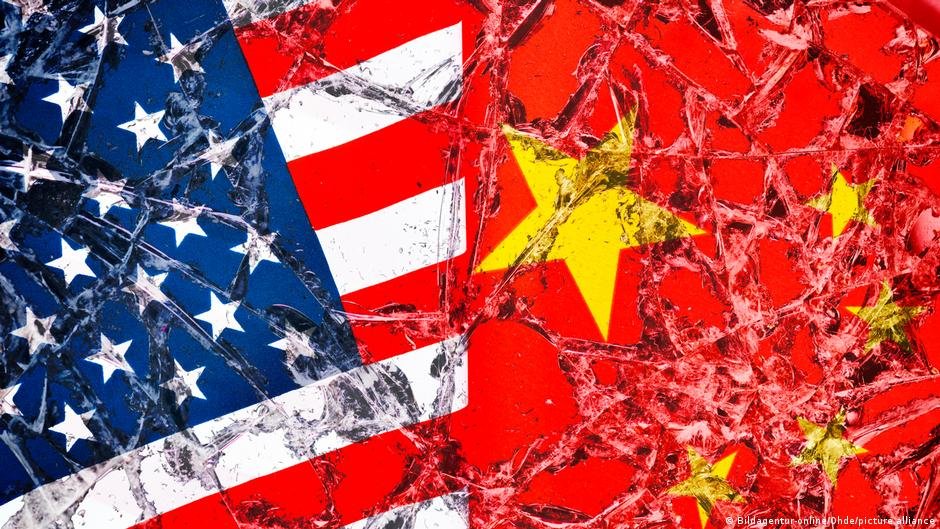
China urged the United States to stop preparing for combat in space after Washington for the first time officially confirmed that it has weapons systems deployed in orbit, adding a new geopolitical flashpoint for investors already tracking defense budgets, satellite infrastructure and the risk premium embedded in global markets.
The warning came from China’s Ministry of Foreign Affairs on Tuesday, September 15, after U.S. officials described orbital capabilities held by the U.S. Space Force. For capital markets, the exchange reinforces a familiar pattern: strategic competition among the United States, China and Russia continues to migrate into domains that are central not only to national security, but also to communications, navigation, surveillance and data-dependent sectors.
Chinese Foreign Ministry spokesperson Guo Jiakun cautioned against the “militarization of space,” the transformation of space into a battlefield and an arms race in outer space. He called on Washington to halt the buildup of military capacity and preparations for war in space.
“We urge the American side to stop building up military capabilities and preparing for war in space,” Guo said at a briefing.
The U.S. disclosure came a day earlier, on September 14, when Air Force Secretary Troy Meink said the United States has space-control assets located in orbit. He said those assets, operated by the U.S. Space Force, are capable of protecting the combined force from hostile actions, while giving no details on the weapons themselves.
Defense and Satellite Exposure Moves Higher on the Risk Map
For investors, the significance is less about any single system and more about the formal confirmation that space is now being discussed in explicit operational terms by major powers. The U.S. statement said space control includes capabilities needed to secure and protect control of space and that they may be used for both offensive and defensive purposes. It also referred to the use of kinetic and non-kinetic means.
That language matters for markets because satellites underpin military command systems, civilian telecommunications, financial timing infrastructure, weather monitoring, logistics, precision navigation and intelligence gathering. Any perception that orbital assets are becoming more vulnerable can affect how investors evaluate aerospace and defense contractors, satellite operators, launch providers, cybersecurity firms and communications infrastructure companies.
Equity investors have already grown accustomed to treating defense spending as a long-duration theme shaped by geopolitical rivalry. The latest exchange between Beijing and Washington adds space systems to the list of areas where procurement, research and resilience spending could remain politically durable. At the same time, it highlights risks for companies whose business models rely on uninterrupted satellite connectivity or space-based services.
The U.S. Space Force statement separately named China and Russia. It said China is developing and operating capabilities for action in space and counter-space defense systems as part of its military modernization strategy. Russia, according to the statement, regards space as a theater of military operations and assumes that dominance in space will be a decisive factor in future conflicts.
Those assertions are likely to be read by investors as further evidence that space-related defense programs are moving from speculative future planning into active strategic competition. For bond markets, the direct impact may be limited in the near term, but the broader implication is continued pressure on government defense priorities at a time when public debt levels and fiscal costs remain under scrutiny.
Treaty Limits and Market Uncertainty
The current debate also revives questions about the legal framework governing military activity beyond Earth. In the past, the greatest concern focused on the possible deployment of nuclear weapons in space. The 1967 Outer Space Treaty prohibits such placement. The United States, Russia and China are among the parties to the treaty, which requires space exploration to be conducted for peaceful purposes.
But the treaty does not cover conventional weapons placed on satellites or spacecraft. That gap is increasingly relevant as governments explore actions outside the treaty’s constraints, including strikes on adversaries’ satellites that play an important role in military communications, observation and navigation, according to AFP.
Non-kinetic threats are also becoming more important. These include hacking satellites and interfering with their operations. Russia has been suspected of developing weapons against Starlink satellites used by the Ukrainian military. Russia, along with the United States, China and India, is studying possible actions outside the treaty framework, AFP noted.
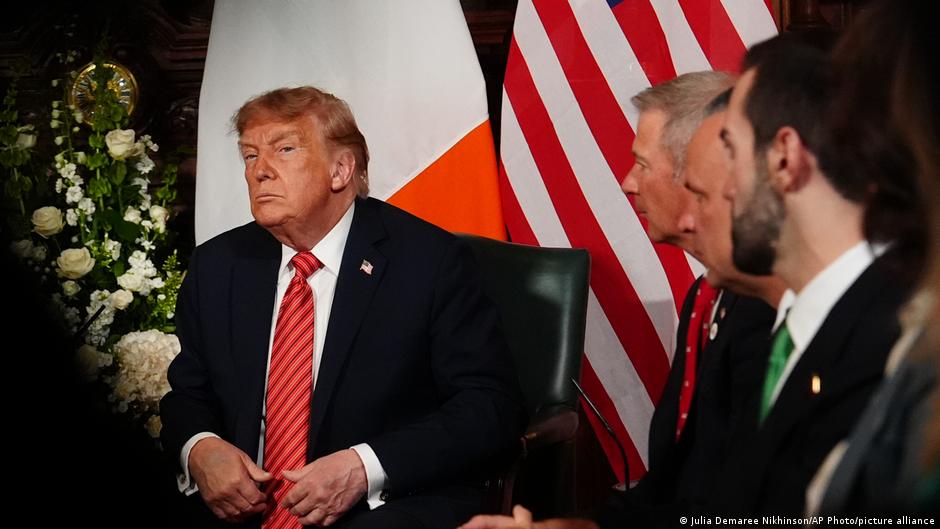
The issue has political roots in the United States as well. During his first presidential term, Donald Trump established the United States Space Force in 2019 as a separate branch of the armed forces, citing potential threats from Russia and China. The latest confirmation from Washington gives that institutional shift a sharper market context, because it suggests space capabilities are not merely symbolic or organizational, but part of an expanding operational architecture.
For investors today, the immediate takeaway is a higher geopolitical-risk signal rather than a simple directional trade. Defense and aerospace shares may draw attention when strategic tensions escalate, but satellite-linked businesses could face a more complicated valuation picture if orbital infrastructure is viewed as a more contested asset class. Insurers, cybersecurity providers and companies involved in resilient communications may also find themselves pulled into the investment debate.
In fixed income, the story feeds into a larger question about defense-led fiscal commitments. Sustained military modernization in space could support specific government contractors while also reinforcing concerns about long-term budget demands. That combination can be constructive for some equity segments but more ambiguous for sovereign debt markets, particularly when investors are already sensitive to deficits, issuance needs and real yields.
The U.S.-China exchange does not by itself signal an imminent conflict in space. It does, however, formalize a rivalry that capital markets can no longer treat as remote. As space becomes more central to military planning and economic infrastructure, investors will have to assess not only who benefits from new spending, but also which assets and sectors carry greater exposure to disruption above the atmosphere.