European Allies Discuss Ukraine Conflict Resolution Amid Market Uncertainty
Top European leaders and Ukrainian president convene to revive diplomatic efforts, impacting investor sentiment in capital markets.
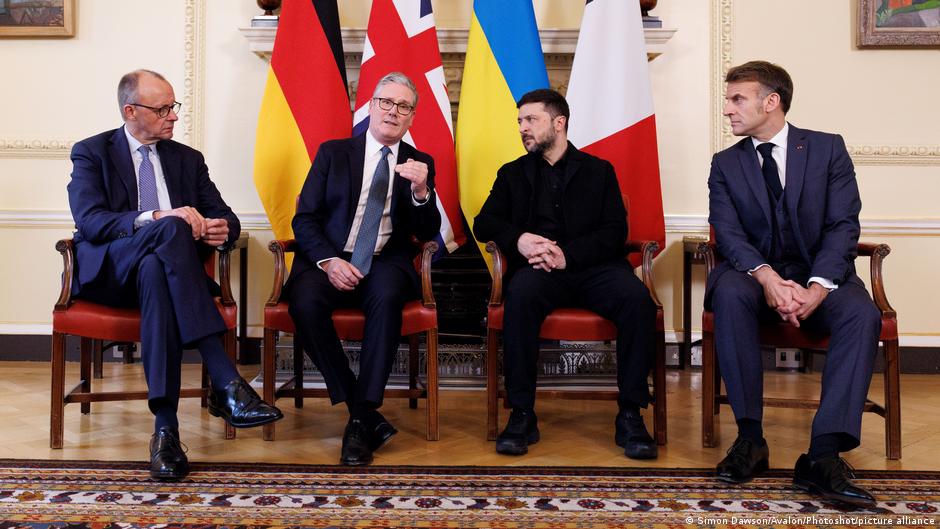
On May 22, a pivotal videoconference brought together Germany's Chancellor Friedrich Merz, France's President Emmanuel Macron, the United Kingdom's Prime Minister Keir Starmer, and Ukrainian President Volodymyr Zelensky to discuss reinvigorating diplomatic efforts aimed at ending the ongoing conflict in Ukraine. This high-level meeting, the first of its kind in several months, signals a potential shift in geopolitical dynamics that investors should monitor closely.
Market Reactions and Investor Implications
The renewed diplomatic engagement among key European allies comes at a time when markets are highly sensitive to geopolitical developments. The conflict's prolonged nature has injected volatility into equities and bonds, especially in sectors exposed to Eastern Europe and energy markets. Zelensky noted that Ukraine's position has strengthened significantly, both militarily and diplomatically, which could influence investor perceptions of risk in the region.
"All partners acknowledge that Ukraine's position is notably stronger—both on the battlefield and in foresight. Such pressure may drive effective diplomacy," President Zelensky stated after the meeting.
European leaders confirmed their commitment to supporting Ukraine's defensive capabilities, with plans to intensify assistance in the coming months. This assurance may buoy investor confidence in European defense equities and related industries, while also affecting sovereign bond markets that are sensitive to regional stability.
However, the discussion also highlighted the diminishing returns of the existing trilateral negotiation format involving Ukraine, the United States, and Russia. Ukrainian Foreign Minister Andriy Sybiha emphasized the need for fresh diplomatic mechanisms, suggesting the inclusion of European Union representatives or a summit involving national leaders could revitalize peace talks.
Market participants should watch for developments from upcoming security advisor meetings among the four nations, as these dialogues could set the tone for future conflict resolution strategies, thereby influencing risk assessments.
Broader Geopolitical Context and Capital Markets
The United States, currently preoccupied with its conflict with Iran, has played a limited direct role in mediating between Kyiv and Moscow. This shift places greater responsibility on European partners to lead diplomatic initiatives. Such a transition may alter the geopolitical risk profile perceived by investors, impacting capital flows and asset valuations within the region.
U.S. Secretary of State Marco Rubio underscored the stalled progress in ceasefire negotiations and expressed caution about endless dialogues without tangible outcomes. The acknowledgment of a "turning point" in the conflict by both Ukrainian officials and U.S. policymakers suggests that markets might soon reassess the potential for escalation or resolution.
Investors engaged in equities, sovereign bonds, and commodities should remain vigilant as renewed diplomatic engagements could recalibrate market expectations. Positive breakthroughs could lead to risk-on sentiment benefiting European and Ukrainian-linked assets, while failure to advance peace talks might perpetuate volatility and safe-haven flows into bonds and gold.
In conclusion, the recent videoconference among Ukraine's European partners marks a critical juncture in diplomatic efforts to end the war. Its outcomes will likely have significant implications for capital markets, influencing investor strategies amid ongoing geopolitical uncertainty.