Fire at Ryazan Plant Housing Yandex Data Center Draws Investor Attention
A reported blaze at the Sasta machine-tool plant in Russia adds operational risk to cloud infrastructure and sanctioned industrial assets.
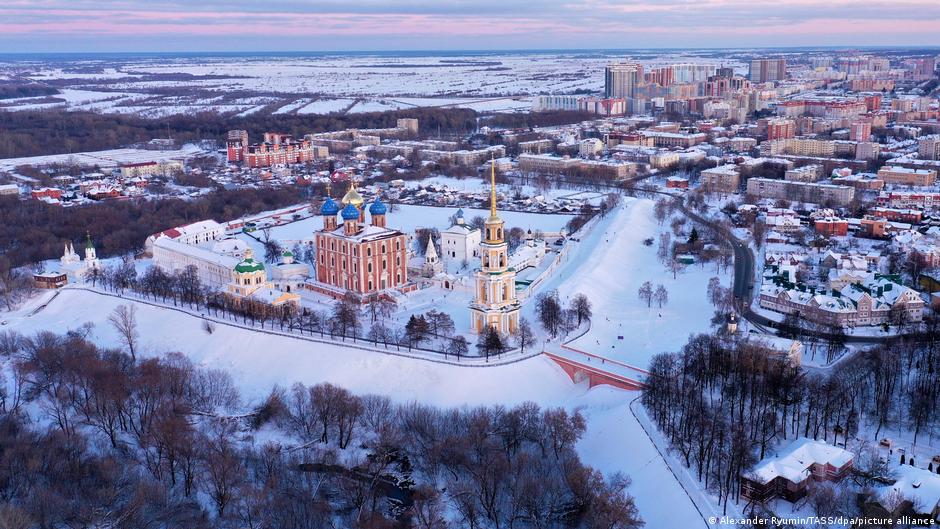
A fire broke out in Sasovo, in Russia’s Ryazan region, on the grounds of the Sasta plant, where a Yandex DC data center is located, according to the Russian-language outlet Astra. The report puts fresh attention on the vulnerability of digital infrastructure and industrial sites at a time when investors are already weighing geopolitical risk, sanctions exposure and operational resilience across Russian assets.
Astra said its conclusion was based on open-source intelligence analysis. The site is described as a machine-tool plant that produces CNC metalworking equipment. The outlet reported overnight into Thursday, October 8, that employees of the data center had shown its equipment last month and directly stated that the facility was located in Sasovo, in the Ryazan region.
“Last month, the data-center employees themselves showed its equipment and directly stated that it is located in Sasovo, Ryazan region,” Astra said in its Telegram post.
For capital markets, the immediate question is less about the fire itself, whose scale and damage were not detailed in the source report, and more about what the incident signals for infrastructure reliability. Data centers support cloud services, enterprise workloads and internet platforms. Even short disruptions can matter for clients, counterparties and investors trying to price continuity risk in technology operations.
Cloud Reliability Comes Into Focus
Astra later pointed to a notice about disruptions in the power supply to a separate availability zone of the Yandex Cloud platform. The source article notes that around 40 minutes after those issues appeared, the Yandex Cloud team reported that the situation had stabilized.
That timeline matters for investors because cloud outages are typically assessed through duration, geographic concentration and customer impact. A 40-minute stabilization, as described in the source, suggests the reported issue was not presented as a prolonged platformwide breakdown. Still, the mention of a power-supply disruption in a cloud availability zone can sharpen scrutiny of redundancy, energy security and physical-site concentration.
For equity holders or creditors exposed to technology infrastructure, this kind of event can feed into risk premiums even when direct financial damage is not immediately quantified. Markets tend to penalize uncertainty around mission-critical operations, particularly when the assets are located near industrial facilities that may carry separate strategic or sanctions-related risks.
Sanctions and Industrial Exposure
The Sasta plant is not described by Astra as a producer of finished weapons. Instead, the outlet says the company’s relevance to Russia’s military-industrial complex lies in supporting the production base. Its machine tools are needed to manufacture high-precision metal parts and assemblies, according to the report.
Astra also reported that the plant specializes in producing CNC metalworking machines and that its equipment is used in the defense, aerospace, transport and heavy-industry sectors. The outlet further noted that the enterprise is under sanctions imposed by Canada, Switzerland, the European Union, the United Kingdom, Australia, New Zealand and Japan.
That sanctions backdrop is central to the market angle. Sanctioned industrial companies can face restricted access to financing, technology, components, maintenance and international counterparties. When a site connected to such an enterprise also hosts data-center infrastructure, investors may look more closely at co-location decisions, supply-chain exposure and the resilience of services tied to that physical footprint.
The source does not provide a market reaction in equities or bonds, and it does not state any share-price moves, bond-yield changes or formal corporate disclosure from Yandex. For investors today, the available facts therefore support a risk-monitoring framework rather than a quantified valuation call. The key variables are whether there was damage to data-center equipment, whether cloud services were materially affected beyond the reported power issue, and whether authorities or company representatives provide further details.
Broader Infrastructure Risk
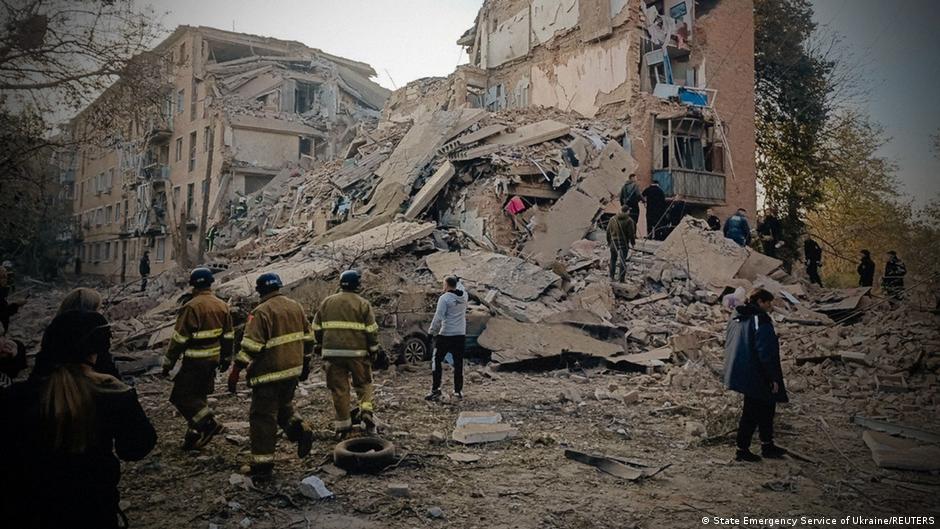
The report also places the Ryazan incident against the wider backdrop of attacks on data and telecom infrastructure during the war in Ukraine. According to the source article, on the evening of September 25, Russian forces began strikes on infrastructure belonging to the Ukrainian telecommunications operator Cosmonova, including a data center. The article says the strikes led to disruptions in internet and television service in Kyiv.
On October 3, Ukrainian President Volodymyr Zelensky commented on strikes against Ukrainian data centers, according to the source. He said such attacks affect civilians and argued that data centers and mobile communications are not military infrastructure. He also said communications are used not only in Ukraine but also in Moscow.
Those details are relevant for capital markets because data centers increasingly sit at the intersection of technology, energy, defense and sovereign risk. Investors in telecoms, cloud platforms, infrastructure funds and corporate debt now have to assess not only demand growth for digital services, but also the physical security of the assets that deliver those services.
Bond investors may focus on business-continuity planning, insurance coverage and the potential for higher capital expenditure on backup power and site hardening. Equity investors may watch for customer churn, service-level penalties or higher operating costs if infrastructure risks become more visible. In both cases, the market impact depends on verified damage, disclosure quality and whether the incident remains isolated.
At this stage, the reported facts point to a localized fire at a plant site associated with both CNC machine-tool production and a Yandex DC data center, followed by a separate reported power-supply issue affecting one Yandex Cloud availability zone that was said to have stabilized within 40 minutes. Without additional confirmed financial or operational data, the investor takeaway is caution: infrastructure resilience remains a live risk factor, especially where cloud operations overlap with sanctioned or strategically significant industrial assets.