Trump Jr. Repaid Russian Businessman for Wedding Event Costs, Kremlev Says
The account adds a political-risk layer for investors tracking Washington oversight, sanctions exposure and headline volatility around U.S. assets.
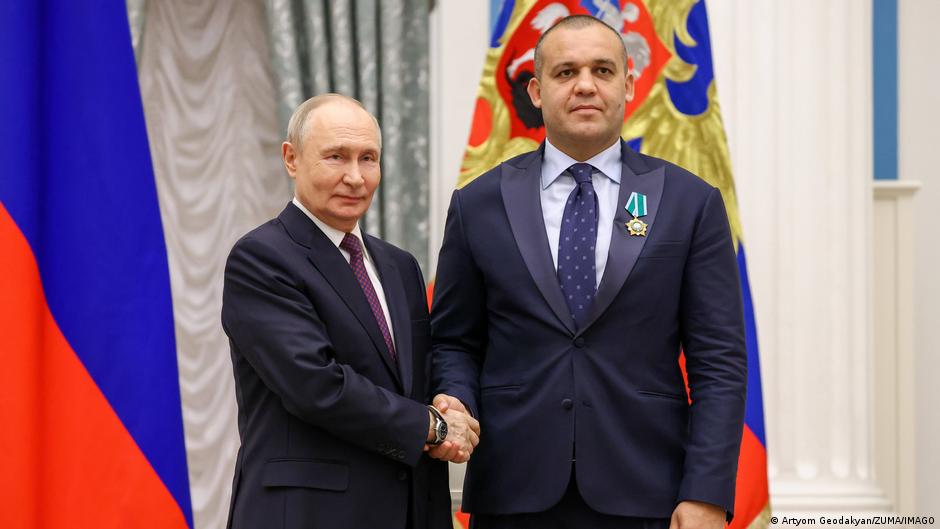
Russian businessman Umar Kremlev said Donald Trump Jr. reimbursed him for money spent on part of the younger Trump’s wedding celebrations, reviving a politically sensitive story that may matter less for its immediate financial scale than for the market risk it could generate around Washington oversight, sanctions narratives and investor confidence.
Kremlev, an entrepreneur close to Vladimir Putin and head of the International Boxing Association, made the statement on Tuesday, October 6, at a press conference in Istanbul. According to Russia’s state news agency TASS, he said Trump Jr. had returned the money connected with the organization of part of the wedding festivities.
“As for whether he returned the expenses or not, yes, he returned them,” Kremlev said, according to TASS.
Kremlev also expressed confusion about the reimbursement, saying he had not regarded the event as a special gift. He described it as a shared event rather than an exclusive wedding payment and compared it to inviting guests to a country house without later sending them a bill. He said he has friendly relations with Donald Trump Jr. and that he had “never asked him or anyone else” to help him.
The comments followed earlier remarks by U.S. President Donald Trump, who on September 18 confirmed that his son had repaid Kremlev. Speaking to reporters, Trump said that, as he understood it, Trump Jr. had “returned the debt.” He also described it as a normal practice for a friend to pay for a wedding celebration and said he considered it acceptable for a businessman close to Russian authorities to participate in financing festivities linked to his son.
Why Markets May Care
For capital markets, the central issue is not the reported wedding spending itself, but the possibility that the matter becomes part of a broader political and congressional oversight cycle. Investors generally price political controversy through several channels: regulatory uncertainty, headline risk, sanctions expectations, and the possibility that policy attention shifts toward investigations rather than legislation or fiscal priorities.
The report lands in an environment where market participants already monitor Washington closely for signals on government funding, tax policy, trade measures, and foreign-policy risk. Any controversy involving Russia-linked figures and the family of a sitting U.S. president can sharpen scrutiny of executive-branch ethics, foreign influence and potential congressional action. Those themes can affect risk appetite even when no direct corporate earnings impact is immediately visible.
Equity investors may view the episode as another source of political noise rather than a standalone market driver. Still, sectors sensitive to U.S.-Russia relations, sanctions policy or federal contracting could face additional investor attention if the story develops into a formal inquiry. Defense contractors, energy companies, banks with compliance exposure, and multinational firms with geopolitical risk profiles are among the groups that markets often reassess when Russia-related controversies gain traction in Washington.
Bond markets are likely to treat the matter as secondary unless it contributes to broader political instability or distracts from fiscal negotiations. U.S. Treasuries typically respond more directly to inflation data, Federal Reserve expectations, supply dynamics and growth signals. But political events can still influence demand for haven assets when they raise doubts about policy execution or increase the risk of legislative gridlock.
Currency and sovereign-risk investors may also watch whether the issue feeds into renewed rhetoric on Russia, sanctions enforcement or U.S. political accountability. The immediate facts described by Kremlev and Trump do not establish a market-moving policy change, but they do add to the pool of political information that investors use to judge the durability of policy commitments and the likelihood of investigations.
Background to the Reimbursement Claim
The matter first drew wider attention after ProPublica published an investigation on September 14 stating that Kremlev had paid part of the costs for Donald Trump Jr.’s wedding celebration in the Bahamas. Trump Sr. told Axios that he had “no idea” who Umar was, had never heard of him, and that Kremlev had not paid for Don and Bettina’s wedding, which Trump said took place at a different location and on a different day from the party in question.
Trump described the gathering as an after-party held in their honor and said there was nothing wrong with it. He also said he did not attend that party.
Axios also reported that a senior Democratic member of the House Oversight Committee could investigate the reports about Kremlev paying for Trump Jr.’s festivities. Representative Robert Garcia of California sent a letter to White House Chief of Staff Susie Wiles saying Democrats on the committee were investigating multiple ways in which the Trump family had tried to enrich itself through proximity to the head of state.
According to Axios, if Democrats win control of the House of Representatives in the upcoming November 3 midterm elections, Garcia is likely to become Congress’s chief investigator. The publication wrote that the inquiry gave a fairly clear idea of the direction he would take in that role.
That potential path is where investors may find the most relevant signal. Markets often discount isolated allegations quickly, but they pay closer attention when a controversy could produce subpoenas, hearings, document requests or political confrontation that affects the legislative calendar. The consequences may be indirect, but indirect political risk can still move valuations when it intersects with fiscal policy, sanctions policy or investor perceptions of institutional stability.
For now, the publicly described facts are limited: Kremlev says Trump Jr. returned the money; President Trump has said the debt was repaid; ProPublica reported that Kremlev paid part of the wedding-related expenses; and Axios reported that Democrats may pursue the matter through oversight channels. Investors will be watching whether the story remains a personal reimbursement dispute or becomes another formal front in Washington’s broader political and market-risk landscape.