Foreign Retail Assets in Russia Face Control Risk as Investors Reassess Exposure
Temporary management over assets linked to Auchan, Leroy Merlin, Metro and others highlights a widening governance risk for Western retailers in Russia.
The fate of foreign retail assets in Russia has become a fresh capital markets risk marker as a growing number of international chains lose the ability to manage their local businesses. For investors, the issue is no longer only reputational or operational. It now goes to the core of asset control, ownership rights and the recoverability of value from Russian operations.
Assets belonging to several foreign retailers have already been placed under temporary management in Russia, leaving their owners without access to those businesses. The companies named in the source material include France's Auchan and Leroy Merlin, Germany's Metro and other groups. The development raises a direct question for shareholders, bondholders and counterparties: whether foreign-owned retail businesses in Russia face a path from administrative control toward possible nationalization.
The Russian retail sector had long been viewed by international chains as a large consumer market with scale, logistics depth and attractive store networks. That investment thesis has changed sharply. Where investors once assessed sales growth, margins and consumer spending, the central concern is now political and legal control over assets.
Temporary Management Becomes the Market Signal
The introduction of temporary management over assets is significant because it changes who can direct day-to-day business activity. In market terms, that affects the practical value of ownership. A parent company may still be associated with an asset, but if it cannot access, operate or dispose of that asset, the value investors can reasonably attach to it becomes deeply impaired.
For equity investors, the risk is most visible in valuation. Any remaining Russian exposure at foreign retailers may need to be viewed through a heavy discount, particularly where the company no longer has effective managerial control. Analysts typically focus on earnings contribution, cash repatriation and asset sales when valuing international operations. In this case, each of those channels is under pressure because the owners have lost access to assets placed under temporary management.
For bond investors, the issue is different but equally important. Credit analysis depends on control over cash-generating assets and the legal ability to move funds within a group. If a retailer's Russian business is administratively separated from the parent, its contribution to consolidated financial flexibility becomes uncertain. That does not automatically determine a company's broader credit profile, but it does make Russian assets less useful as a source of liquidity or collateral value.
Assets of several foreign retail chains in Russia have already come under temporary management, with owners losing access to them.
The question of nationalization remains the most severe scenario. The source article frames it as a looming risk for the Russian businesses of foreign retailers. For markets, even the possibility of nationalization can affect how investors price exposure. It introduces a binary legal and political risk that is difficult to hedge through ordinary portfolio tools.
Metro, Globus and the Search for Protection
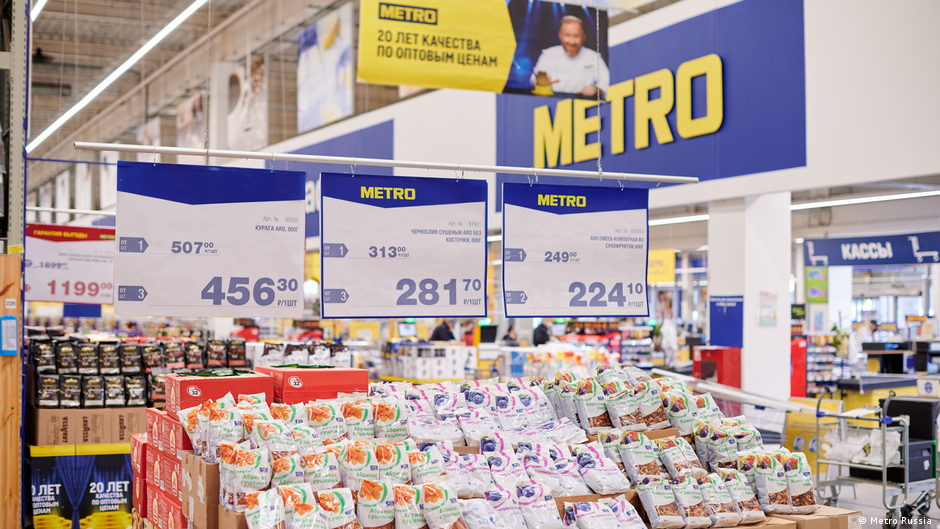
Germany's Metro is among the companies mentioned as having assets affected by temporary management. That places the group in the broader category of Western retailers whose Russian operations are subject to decisions beyond ordinary corporate governance. Investors following the sector will view the case as part of a larger pattern rather than an isolated operating event.
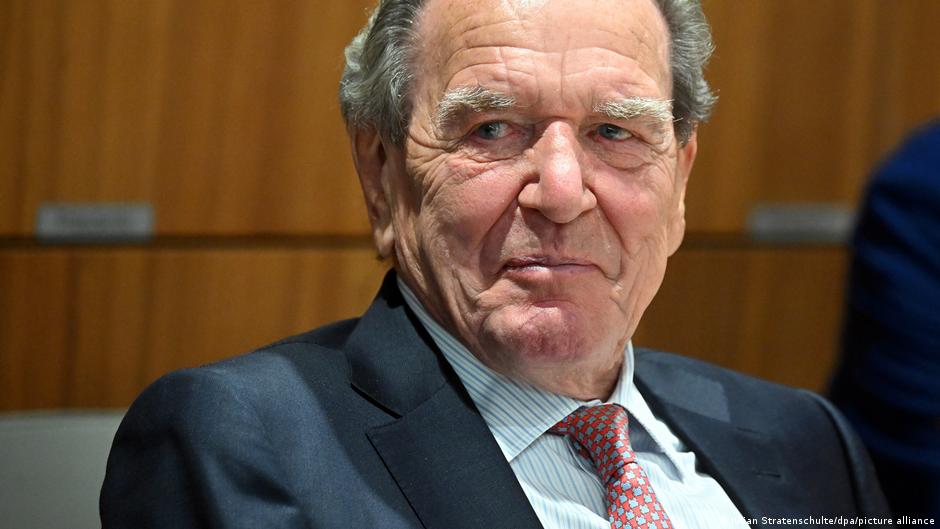
The former Russian subsidiary of German retailer Globus presents another notable development. Former German Chancellor Gerhard Schroder has joined the supervisory board of the former Russian unit, according to the source material. In capital markets terms, the appointment points to an attempt to secure influence, protection or legitimacy around an asset facing an uncertain legal and political environment.
Such moves can matter to investors because governance structures are part of how markets assess asset risk. A supervisory board appointment does not by itself resolve questions over ownership access, asset control or future state action. But it signals that companies and their former or current affiliates are seeking ways to navigate pressure around foreign-linked retail assets in Russia.
The situation also shows how foreign retailers' Russian businesses are moving into a different category of investment risk. These are not normal emerging-market operating issues such as currency volatility, consumer demand swings or supply-chain disruption. The central risk is whether the legal owner can still exercise the powers normally attached to ownership.
Investor Implications Today
For investors, the immediate takeaway is to scrutinize any listed retailer, holding company or creditor with residual Russian exposure. The relevant questions are practical: Does the company still control the asset? Can it access cash flows? Has temporary management been introduced? Is there a pathway to sale, exit or recovery? If the answer is unclear, markets are likely to treat the exposure conservatively.
Equity markets tend to penalize uncertainty around stranded assets because investors cannot easily model timing or proceeds. A business that is profitable on paper may contribute little to shareholder value if the parent cannot manage it or receive economic benefit from it. That distinction is now central to foreign retailers' Russian exposure.
Debt markets may focus on disclosure and balance-sheet treatment. If companies continue to report Russian-linked assets, investors will want clarity on whether those assets are accessible, impaired or effectively beyond management control. The same applies to covenants and leverage metrics where asset values affect investor perception, even if the direct cash impact is limited.
The broader message for capital markets is that foreign retail assets in Russia have shifted from operational holdings to political-risk assets. Temporary management over assets linked to Auchan, Leroy Merlin, Metro and others has become a warning sign for investors assessing control risk. The involvement of a high-profile political figure on the supervisory board of the former Russian Globus subsidiary adds another layer to the governance picture.
For now, the main market reaction is likely to be caution rather than precision. Without clear access to assets, owners and investors face limited visibility. That uncertainty is itself material. In valuation, credit analysis and portfolio risk management, Russian retail exposure now carries a question that markets cannot ignore: whether ownership still means control.