Schröder Role at Globus Russia Unit Draws Investor Scrutiny in Germany
The former German chancellor’s post at Hyperglobus has renewed debate over Russia exposure, political risk and asset protection for German-linked firms.
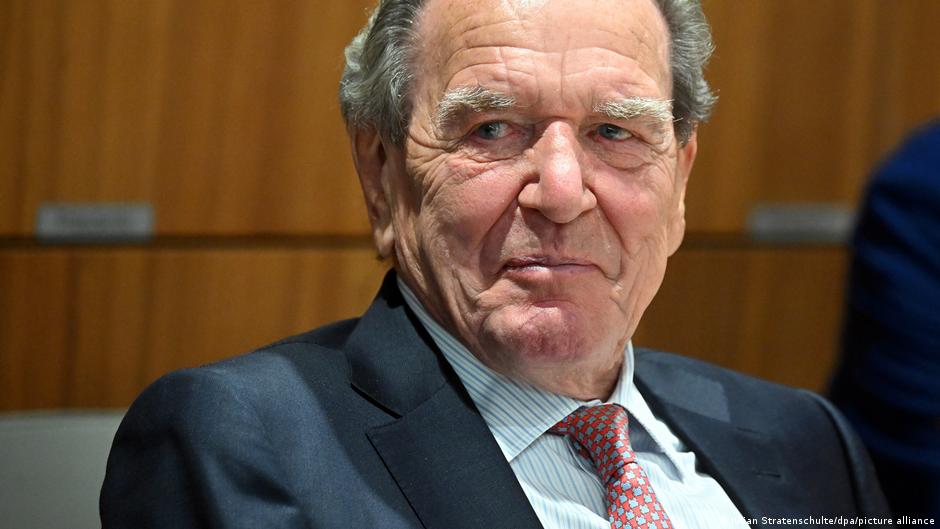
Gerhard Schröder’s appointment to a supervisory role at Hyperglobus, the operator of the Globus hypermarket chain in Russia, has triggered sharp criticism in Germany and added a fresh political-risk signal for investors tracking European corporate exposure to Russia.
The former German chancellor has become a member of the supervisory board of Hyperglobus, a former Russian subsidiary of the German hypermarket group Globus. The company’s press service confirmed to DW on October 2 that Schröder would join the supervisory board and oversee the retailer’s “strategic development.” For capital markets, the appointment is less about one executive role than about the continuing difficulty of valuing Russia-linked assets, governance structures and sanctions-era reputational risk.
German politicians and economists reacted forcefully after the news emerged. Roderich Kiesewetter, a Bundestag member and foreign-policy expert for the governing Christian Democratic Union, commented on the appointment on Saturday evening, October 3. He called Schröder’s new post “a betrayal of Europe and his own country.”
“Anyone who publicly and demonstratively shakes Schröder’s hand thereby wants to demonstrate their position,” Kiesewetter wrote on X.
The criticism also drew in Germany’s head of state. Kiesewetter and political scientist Thomas Jäger appeared to refer to a ceremony marking the 75th anniversary of Germany’s Federal Constitutional Court, held in Karlsruhe on September 28. German President Frank-Walter Steinmeier attended the ceremony and, upon entering the hall, shook hands with Schröder, who was seated in the front row as an honorary guest.
Jäger, a professor of political science at the University of Cologne, described the appointment as another lobbying assignment. “Schröder has a new lobbying order. In Russia. Where else?” he wrote on X, adding a question about whether Steinmeier knew of it when he greeted Schröder days earlier.
Political Risk Returns to the Balance Sheet
The market relevance lies in what the appointment suggests about the risk environment for foreign-linked businesses still operating in Russia or tied to Russian assets. Since the full-scale invasion of Ukraine, investors have had to price not only sanctions risk and consumer boycotts, but also the possibility of forced administration, asset seizure or sudden changes in ownership control.
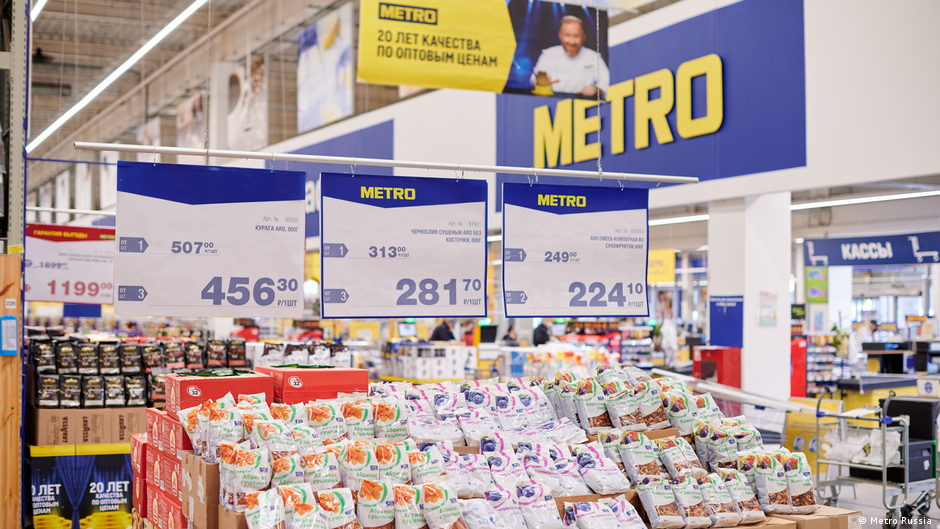
Janis Kluge, a German economist and head of research at the Berlin-based German Institute for International and Security Affairs, argued that Schröder’s entry into Hyperglobus management amounts to the company “buying itself lifetime insurance” against suffering the same fate as German retailer Metro, whose Russian assets were transferred into temporary management by decree of Vladimir Putin.
That assessment, while political in tone, goes directly to investor concerns. For companies with residual Russia exposure, the market discount is often tied to uncertainty over exit routes, cash repatriation, legal control and the risk of state intervention. Kluge wrote on X that “Schröder is once again monetizing his access to Putin.”
Schröder has long been viewed by many observers in Germany as a lobbyist for Russian enterprises. He previously held senior roles at Rosneft and at the operating company for Nord Stream. Those past positions have kept his Russia ties under scrutiny and now frame the reaction to his role at Hyperglobus.
For bondholders and equity investors, governance questions around politically connected figures can matter even when the company involved is not publicly traded. Banks, suppliers, insurers, landlords and parent-company stakeholders may all face higher reputational and compliance sensitivity. In practice, Russia-linked corporate structures have become difficult to analyze with traditional valuation models because political access may be treated as a defensive asset while also increasing headline and sanctions scrutiny.
Globus Says Russian Business Is Independent
Globus Gruppe has emphasized that its Russian business is legally and organizationally independent. Isabel del Alcazar von Buchwald, a spokesperson for Globus Gruppe, said in a comment to DW that, since January 1, 2025, the Russian business of the Globus chain has been “legally and organizationally independent.” At the same time, the shareholders of Russia’s Hyperglobus are the same German businesspeople as those behind the rest of the group.
That distinction is important for markets. Legal separation can reduce direct operational exposure for the broader group, but common ownership can leave investors and counterparties focused on reputational spillover, political optics and potential future claims. In a sector such as food retail, where margins are typically narrow and supply chains depend on stable financing and vendor confidence, governance controversies can quickly become commercial issues.
German economist Jan Schnellenbach, a professor of microeconomics at Brandenburg University of Technology in Cottbus, accused Schröder of “shamelessness.” He wrote on X: “Wasn’t it said that he was too ill to appear before a German court? Do Russian money have healing powers?”
The appointment comes at a time when investors continue to reassess the residual value of European corporate assets in Russia. Some companies have exited at steep discounts, others have separated operations, and some remain entangled through ownership, legacy contracts or frozen assets. The Metro example cited by Kluge underscores why asset-control risk remains central: even when operations are profitable, enforceability and ultimate control can be uncertain.
There is no immediate market price attached to Schröder’s new role at Hyperglobus, but the controversy reinforces a broader investment lesson. Russia exposure now carries a political beta that can affect credit perceptions, corporate reputation and counterparty risk. For investors in European equities and bonds, especially those tied to consumer retail, logistics, banking and industrial groups with historic Russia links, the issue is not only whether a company has left the market, but how cleanly it has done so and who still stands behind the remaining assets.
The criticism from German politicians and economists also shows how quickly governance decisions can become part of the investment narrative. In this case, Schröder’s appointment has reopened questions about political access, asset protection and the price companies may be willing to pay to preserve value in Russia.