Macron and Trump Push Ukraine Infrastructure Shield as Markets Watch War Risk
France and the United States are seeking a moratorium on strikes against Ukrainian energy and civilian infrastructure as investors assess geopolitical risk.
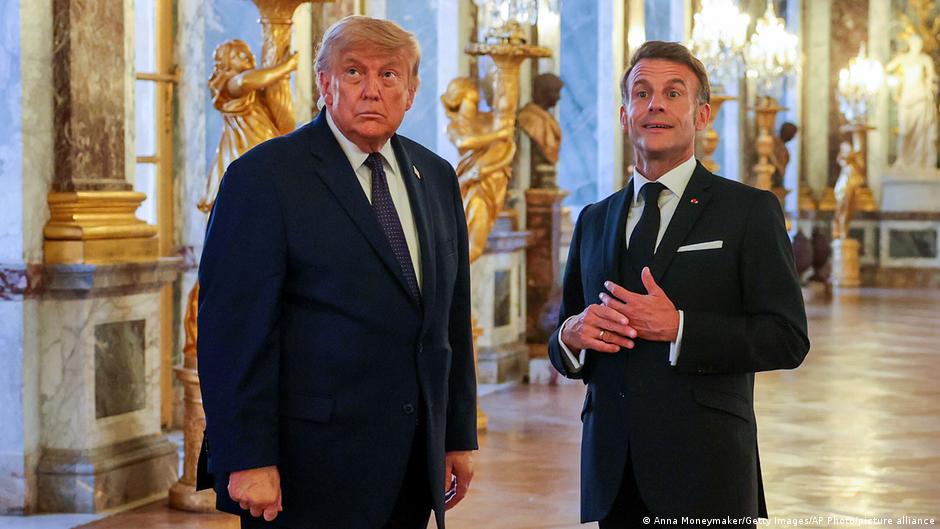
French President Emmanuel Macron said he and U.S. President Donald Trump discussed joint efforts to secure a moratorium on attacks against Ukraine’s energy and civilian infrastructure, a proposal that carries immediate significance for markets already sensitive to the economic spillovers of Russia’s war against Ukraine.
Macron wrote on X on Monday, September 21, that the two leaders met in New York and reviewed initiatives aimed at halting strikes on energy facilities during the war. He said France and the United States would work together to pursue protections for infrastructure that remains central to Ukraine’s wartime economy and to broader European risk sentiment.
“We will also combine our efforts to achieve a moratorium on strikes against Ukraine’s energy infrastructure and civilian infrastructure,” Macron said.
For investors, the focus is less on diplomatic language than on the potential market impact of reduced attacks on power generation, transmission networks and civilian facilities. Ukraine’s energy system has been a recurring pressure point in the war, with damage to infrastructure adding uncertainty to fiscal planning, industrial output, reconstruction needs and external financing requirements. Any credible pause in strikes could help reduce volatility around Ukraine-linked risk, although the details and enforceability of such a moratorium remain unclear.
Macron also said civilians must be protected and that serious talks on peace terms between Russia and Ukraine should begin as soon as possible. That comment places infrastructure protection alongside a broader diplomatic push, but markets are likely to treat the proposal cautiously until there are verifiable steps from the parties involved.
Defense Support Remains Central to the Market Signal
Speaking to journalists after his meeting with Trump, Macron said the two leaders agreed on the need to help Ukraine strengthen its defensive capabilities. According to Macron, this includes supplying Kyiv with additional interceptor missiles to defend against Russian air attacks.
The reference to interceptors is important for equity and bond investors because air defense has become a core element of Ukraine’s economic resilience. Stronger defenses can limit damage to infrastructure, reduce emergency budget pressures and support continuity for businesses operating in or exposed to the country. At the same time, additional military support implies continuing demand across the defense supply chain, a factor that investors in European and U.S. defense equities continue to monitor closely.
Bond markets are likely to read the discussion through the lens of fiscal risk and geopolitical duration. More effective protection of infrastructure could reduce some emergency reconstruction costs and improve confidence among Ukraine’s external backers. But expanded defense commitments also reinforce expectations that Western governments will remain financially and militarily engaged, with implications for budget priorities in France, the United States and other allied countries.
The meeting came as New York became the center of high-level diplomacy around the war. According to the report, a bilateral meeting between Macron and Ukrainian President Volodymyr Zelensky also began on the evening of September 21 in New York. The talks add another layer of investor attention to a week already dominated by geopolitical headlines.
Sanctions and Diplomacy Add to Investor Calculus
Before the Macron-Zelensky meeting, Zelensky met with U.S. lawmakers and thanked them for adopting the law of the late Senator Lindsey Graham on “hellish sanctions” against Russia. The Ukrainian leader said he wanted the sanctions to start working.
Sanctions remain one of the main channels through which the war affects global markets. Investors track them for possible consequences across energy trade, shipping, financing, commodities and corporate exposure to Russia-related restrictions. Zelensky’s emphasis on implementation suggests that enforcement, rather than simply the passage of measures, is now a key political priority for Kyiv.
The market reaction to any new sanctions pressure would depend on scope and timing. Measures that affect Russian energy revenues, logistics or financial flows could ripple through commodity pricing and risk premiums. Conversely, signs that sanctions are being coordinated with diplomatic efforts may be interpreted as part of a broader attempt to raise pressure on Moscow while keeping negotiations in view.
From a capital markets perspective, the sequence of meetings matters. Macron’s discussions with Trump, his meeting with Zelensky, and Zelensky’s outreach to U.S. lawmakers all point to a coordinated diplomatic week in which security guarantees, infrastructure protection and sanctions enforcement are being considered together. That mix is likely to keep defense stocks, European energy names, sovereign spreads and emerging-market risk indicators in focus.
The 81st session of the United Nations General Assembly is taking place in New York from September 22 to 26, with nearly 130 world leaders expected to attend. Zelensky is also expected to meet Trump on September 22. For markets, that meeting may be the next headline catalyst, especially if it produces clearer signals on U.S. support for air defenses, sanctions policy or any framework for negotiations.
At this stage, Macron’s proposal does not remove war risk from portfolios. It does, however, identify the assets and sectors most exposed to the next phase of diplomacy: Ukraine’s infrastructure, Western defense supply chains, European energy security and sovereign funding commitments. Investors will now be watching whether the call for a moratorium becomes a concrete mechanism or remains another diplomatic marker in a conflict that continues to shape capital allocation across Europe and beyond.