New York Mayor Mamdani Unveils Antisemitism Plan With Budget Surge
The city’s proposed increase in hate-crime funding adds a fiscal and political variable for investors tracking New York’s municipal risk profile.
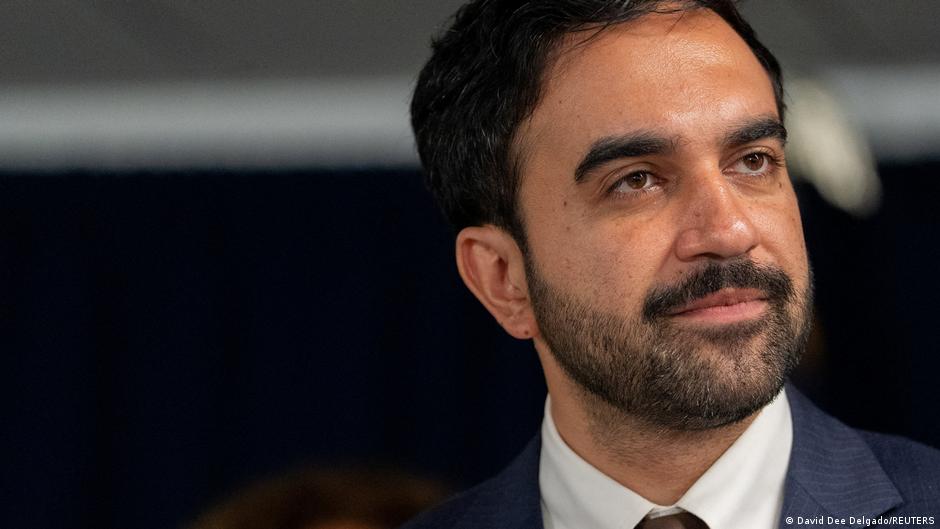
New York Mayor Zohran Mamdani on Tuesday, September 29, presented a citywide strategy to combat antisemitism and hate crimes targeting Jewish residents, a proposal that carries both social-policy significance and a fiscal signal for investors watching the nation’s largest municipal market.
The plan would raise the city’s annual budget for combating hate crimes from $3 million to $29 million. City officials also intend to allocate additional funds for the protection of synagogues and to restore a task force focused on the security of Jewish houses of worship. The package arrives at a politically sensitive moment for Mamdani, who is known as a critic of Israel and whose positions have drawn opposition from parts of New York’s Jewish community.
For capital markets, the immediate sums involved are modest relative to New York City’s overall budget. Still, the proposal is relevant because it illustrates how public-safety demands, community security, education programs and cultural funding can become recurring claims on municipal resources. Investors in city debt typically look beyond any single program and assess the broader pattern: whether new spending is one-time, funded through existing appropriations, or likely to create durable obligations.
Municipal Spending Enters the Market Lens
The anti-antisemitism strategy includes citywide public-information campaigns, expanded educational programs about the Holocaust, and millions of dollars in support for Jewish cultural centers and nonprofit organizations. Planned beneficiaries include a Holocaust memorial being created in Queens and a New Jewish Culture Center in Brooklyn.
Those measures place the initiative partly in the category of public safety, partly in education, and partly in civic and cultural investment. That mix matters for bondholders and equity investors with exposure to companies that operate in New York, because public order, community confidence and political stability can influence the city’s attractiveness as a place to live, work, invest and hold real estate.
New York’s municipal bonds are generally assessed on the city’s tax base, spending discipline, labor costs, pension burdens and economic resilience. A $26 million increase in hate-crime funding is not, by itself, a credit event. But the political direction of spending remains a factor in how investors view budget flexibility. If additional safety and cultural commitments are absorbed without pressuring reserves or requiring offsetting tax increases, the market impact is likely to be limited. If they become part of a broader expansion of recurring spending, they may contribute to closer scrutiny of the city’s fiscal trajectory.
Equity markets may read the plan through a narrower channel: business confidence and urban risk. Property owners, insurers, security contractors, nonprofit partners and institutions with large New York footprints all monitor city responses to hate crimes and public safety concerns. A more visible municipal security framework may support confidence among community institutions, though investors will also watch whether political tensions complicate implementation.
“Although our Jewish neighbors make up only 12% of New York’s population, police statistics show that antisemitic crimes account for more than half of all registered hate crimes. This is not only unacceptable, it is something we are obliged to change, and city authorities will take the lead,” Mamdani said in a video address posted on X.
Political Risk Remains Part of the Equation
Mamdani is the first Muslim mayor of New York and is known for his pro-Palestinian stance and criticism of Israel. Those views have caused unease among some members of the city’s Jewish community, though Mamdani also has supporters among New York Jews. The new strategy therefore functions not only as a public-policy measure but also as an attempt to address a trust deficit with a constituency that has been central to the city’s civic, cultural and business life.
Political risk is not abstract for investors in New York. The city’s budget, real estate market and service economy are deeply affected by confidence among residents, employers and visitors. Measures aimed at reducing hate crimes may help stabilize community relations, but the political context surrounding Mamdani means the rollout will be watched for signs of either reconciliation or further polarization.
The controversy has already reached the international stage. Israeli Prime Minister Benjamin Netanyahu, speaking at the United Nations General Assembly in New York, called the city’s mayor an antisemite. During the 2026 election campaign, Mamdani said that if Netanyahu visited New York, he would seek his arrest on the basis of a warrant issued by the International Criminal Court in 2024. After taking office as mayor, however, he acknowledged that he did not have the authority to do so.
That sequence is important for markets because it underscores the gap between campaign positioning and governing constraints. Investors often reassess elected officials once they begin operating within legal, fiscal and institutional limits. Mamdani’s acknowledgement that he lacked authority over such an arrest may reduce one category of legal uncertainty, while his antisemitism plan indicates a move toward practical municipal governance on a high-profile issue.
For bond investors, the next questions are budgetary: how the $29 million annual allocation will be financed, whether the synagogue-security funding is incremental, and whether grants to cultural centers and nonprofits are structured as one-time capital support or ongoing operating assistance. For equity investors and real estate stakeholders, the focus is likely to be whether the plan improves perceptions of safety and reduces reputational risks for New York-based institutions.
The proposal does not change New York’s market fundamentals overnight. But it adds a new data point in the assessment of Mamdani’s administration: a mayor associated with sharp foreign-policy views is now proposing a substantial local spending increase aimed at protecting Jewish residents and institutions. In a city whose municipal bonds, property values and corporate presence are watched globally, even targeted social-policy moves can become part of the broader investment narrative.