Palestinian Election Delay Extends Political Risk Over Gaza Recovery
Mahmoud Abbas moved presidential and parliamentary votes to September 2027, adding another layer of uncertainty for investors watching the region.
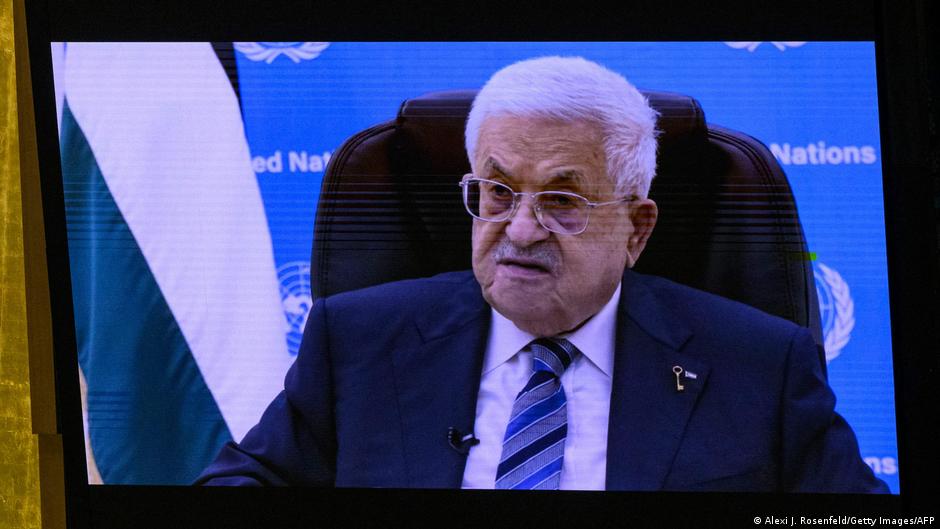
Palestinian Authority President Mahmoud Abbas has postponed elections in the Palestinian territories from late November to Sept. 11, 2027, extending a political timetable that investors were watching for signs of institutional stability after years of conflict and stalled governance reform.
The vote is set to cover both the presidency and parliament, according to WAFA, which cited a decree by Abbas. It would be the first national election across the Palestinian territories in more than two decades, a milestone with potential implications for aid flows, reconstruction planning and the broader risk premium attached to the Israeli-Palestinian conflict.
For capital markets, the decision does not create a direct tradable event in the same way as a central bank move or sovereign debt auction. But it does matter for regional risk assessment. Investors in Israeli equities, shekel assets, regional bonds and emerging-market funds with Middle East exposure routinely price political visibility alongside military risk, diplomatic momentum and the durability of ceasefire arrangements.
The postponement keeps one of the region’s central governance questions unresolved: who will hold a mandate to administer Palestinian institutions as Gaza moves through a fragile postwar transition. That uncertainty is relevant for investors because reconstruction, security arrangements and international financing typically require counterparties that donors and governments regard as politically credible.
Governance Uncertainty Adds to Regional Risk Premium
WAFA said the postponement was linked to Israeli military restrictions, expansion of Jewish settlements, attacks by armed settlers and limits on freedom of movement in the West Bank, East Jerusalem and the Gaza Strip. In Gaza, the agency also cited instability and a delay in the deployment of international security forces.
Israeli Foreign Minister Gideon Saar rejected that explanation and accused Abbas, who is 90, of deceiving the international community with false claims that Israel had created obstacles to voting. Saar said Abbas was trying to avoid responsibility and accountability.
Israel’s foreign minister accused Mahmoud Abbas of trying to evade responsibility and accountability.
The delay also drew criticism from within Fatah, the Palestinian national liberation movement to which Abbas belongs. That internal criticism is important for market observers because political cohesion is one of the factors that can affect the implementation of any postwar administrative framework in Gaza and the West Bank.
Municipal elections were held earlier in April in Deir al-Balah in the Gaza Strip, the first such local elections in 20 years. Most candidates on the electoral lists were close to Fatah or ran as independents. The national vote, however, would be far more consequential because it would address both parliamentary representation and the presidency.
For investors, the key issue is not the mechanics of the postponed vote alone, but how the delay intersects with the ceasefire architecture that followed the Gaza war. Political transitions can affect the pace of border reopening, reconstruction tenders, fiscal support and multilateral coordination. Delays may therefore keep regional assets sensitive to headlines, particularly when diplomatic milestones are pushed further into the future.
Ceasefire Framework Remains the Market Anchor
The Middle East situation escalated sharply on Oct. 7, 2023, when Hamas, recognized as a terrorist organization by the European Union and the United States, launched a large-scale attack on Israel. Militants fired a massive rocket barrage, entered Israeli territory and carried out the deadliest massacre of civilians in the history of the modern Israeli state, killing about 1,200 people.
Militants also seized about 250 hostages and took them to the Gaza Strip. Some hostages were exchanged or released, while others died. Israel responded by declaring war on Hamas.
In October 2025, Israeli authorities and Hamas agreed to a ceasefire under a peace plan developed by the administration of U.S. President Donald Trump. The United States, Turkey, Qatar and Egypt acted as guarantors of the arrangements between Israel and Hamas. During the first phase, Hamas militants returned all remaining living Israeli hostages in exchange for the release of Palestinian prisoners from Israeli jails.
In mid-January, the White House said the second phase of Trump’s plan to end hostilities in Gaza had begun. Under that phase, a National Committee is expected to take over administration of the region until the Palestinian Authority is ready to assume that role.
That handover is now set against a longer electoral horizon. The Palestinian Authority may still be central to the second phase of the plan, but the absence of near-term national elections could complicate perceptions of legitimacy. For markets, legitimacy matters when it affects whether international donors, regional governments and private contractors can proceed with confidence.
Equity investors in the region are likely to continue treating the ceasefire framework as the primary anchor for sentiment, while also watching whether governance delays slow reconstruction or humanitarian logistics. Bond investors may focus on whether the political calendar affects foreign support, fiscal stress or security spending. Currency markets, meanwhile, can remain sensitive to any sign that regional tensions are rising or that diplomatic guarantees are weakening.
The postponement therefore extends a familiar pattern for investors: the biggest risks are not captured by a single market indicator. They sit at the intersection of security, diplomacy, institutional credibility and public accountability. With the Palestinian national vote now moved to September 2027, the market question becomes whether the ceasefire framework can continue to provide enough stability while the political mandate question remains unresolved.