Zelensky Says US-Russia Diesel Deal Risks Funding Longer War
Ukraine’s president warned that a temporary US license for Russian diesel exports could weaken sanctions pressure and reshape energy-market expectations.
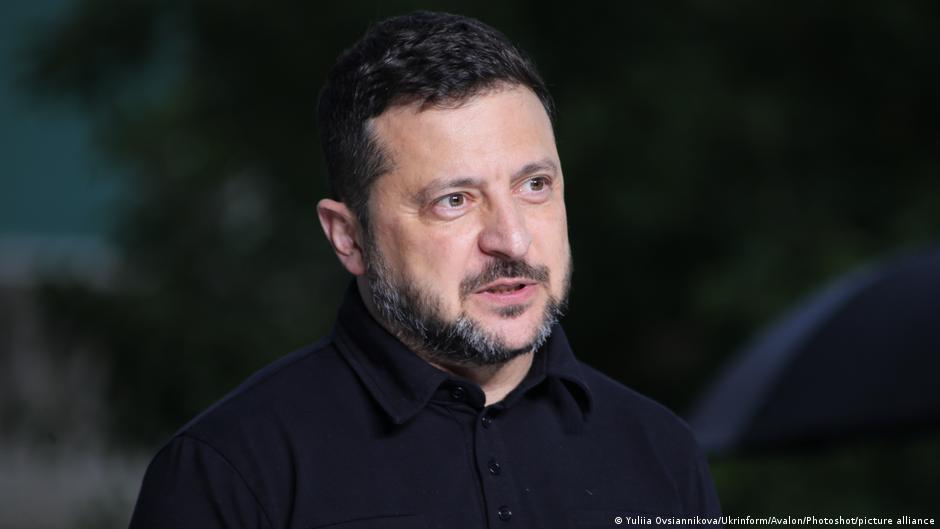
Ukrainian President Volodymyr Zelensky sharply criticized a new US-Russia understanding on global supplies of Russian diesel fuel, framing the move as a market concession with direct consequences for the war and for the sanctions architecture that investors have been watching since Russia’s full-scale invasion of Ukraine.
In comments on Friday, October 9, Zelensky said the White House decision to allow Russia to export petroleum products amounted to an “investment in war,” arguing that any easing of restrictions without a clear de-escalation arrangement would strengthen Moscow’s ability to continue military operations. His statement came after US President Donald Trump described talks with Russian President Vladimir Putin as “very successful” and said the two sides had reached an agreement covering Russian diesel supplies to the United States and the global market.
For energy markets, the announcement points to a potentially meaningful shift in the supply outlook for refined products. Russian Deputy Prime Minister Alexander Novak told TASS that Russia would immediately begin lifting diesel export restrictions ahead of the previously planned schedule. He also confirmed Trump’s statement that Russian diesel exports could eventually reach 3 million tonnes per month.
Sanctions Signal Meets Energy Supply Relief
The market significance of the decision lies in the tension between two competing forces: the prospect of additional diesel supply and the geopolitical cost of loosening economic pressure on Russia. Diesel is a critical fuel for freight, agriculture, industry and military logistics, making its availability a key factor in inflation expectations and corporate operating costs.
The US Treasury Department said on the same day that the Office of Foreign Assets Control, acting on Trump’s order, was immediately issuing a temporary general license permitting Russian diesel fuel supplies to the global market. Such a license can alter risk calculations for traders, refiners, shipping firms and investors with exposure to energy, transport and industrial equities.
Zelensky argued that the decision would not move Russia toward peace. Instead, he said, Moscow would respond to diesel access with further attacks.
“Permission for Russia to sell petroleum products is an investment in the war that must be ended, not continued,” Zelensky wrote.
He also said “gifts” to Putin would not work for peace and warned that Russia would “thank” others for diesel with more “terror” and hostile actions. His message was aimed not only at the political debate in Washington but also at the broader economic logic behind sanctions relief: if Russia gains revenue from renewed energy exports, Kyiv argues, the pressure to accept a ceasefire is reduced.
Investor Focus Turns to Policy Risk
For capital markets, the episode adds a fresh layer of policy risk to an already volatile energy and defense landscape. Energy equities may react to expectations of greater diesel availability, while refining margins and distillate spreads could come under scrutiny if Russian volumes begin returning to global trade flows at scale. Bond investors, meanwhile, may assess whether additional fuel supply can soften inflation pressures in transport-heavy economies, even as geopolitical risk premiums remain elevated.
The decision may also affect how investors price sanctions durability. Since sanctions against Russia have been a central feature of the post-2022 investment environment, any exemption or temporary license can be read as a signal about future enforcement flexibility. Zelensky’s criticism highlights the concern that a narrow energy-market adjustment could have wider strategic consequences.
Ukraine’s president said Kyiv is ready for reciprocal steps aimed at de-escalation and called on Washington to increase pressure on Russia to secure a ceasefire. He proposed a specific framework tied to energy infrastructure: Ukraine would not burn Russian oil refining facilities if Russia stopped destroying Ukrainian energy assets.
“We are offering America exactly such an arrangement and believe that the strength of the United States is sufficient to achieve such a compromise,” Zelensky said.
That formulation matters for investors because it links energy-market stability to military restraint. Ukrainian energy infrastructure has been a recurring target in the war, and attacks on power generation and fuel systems can influence regional risk, reconstruction expectations, utility assets and the fiscal burden on Kyiv’s allies.
Zelensky emphasized that any easing of sanctions against Russia without a clear de-escalation agreement would be “obvious weakness.” He said such a step would play into Russia’s hands by enabling it to kill more people and fight longer. The argument is that sanctions are not merely symbolic restrictions but part of the financial pressure mechanism intended to change Moscow’s behavior.
Diesel Volumes Could Reprice Expectations
Novak’s reference to a possible future export level of 3 million tonnes per month gives markets a figure to watch, though the Russian official described it as a prospective level rather than an immediate confirmed flow. If those volumes materialize, traders would evaluate where the barrels are routed, how shipping and insurance channels respond, and whether buyers treat the temporary US license as sufficient protection from compliance risk.
For equity investors, the effect could vary by sector. Transport, logistics, manufacturing and agriculture generally benefit from lower fuel costs. Refiners and energy producers may face a more complex picture, depending on regional diesel balances and margins. Defense and security-linked assets may continue to be influenced by the broader trajectory of the war rather than by fuel supply alone.
Fixed-income markets may view the development through the inflation channel. More diesel on the global market could reduce pressure on goods movement and industrial costs, but any escalation in the war could offset that benefit through higher risk premiums, fiscal spending needs and renewed volatility in energy prices.
The political implications remain central. Trump presented the talks with Putin as successful, while Zelensky framed the resulting diesel arrangement as a dangerous concession. That split leaves investors weighing immediate supply relief against the possibility that sanctions flexibility could prolong the conflict and increase uncertainty across European security, energy infrastructure and sovereign financing.
For now, the key market questions are practical: how quickly Russia lifts export limits, how much diesel actually reaches global buyers, how OFAC’s temporary license is interpreted by counterparties, and whether Washington pairs the measure with pressure for a ceasefire. Zelensky’s message was clear that, in Kyiv’s view, the financial and strategic dimensions cannot be separated.