Ukraine Talks With Trump Envoys Put War-Risk Premium Back in Market Focus
Kyiv will meet Jared Kushner and Steve Witkoff in the United States as investors assess sanctions risk, security policy and pressure on Russian assets.
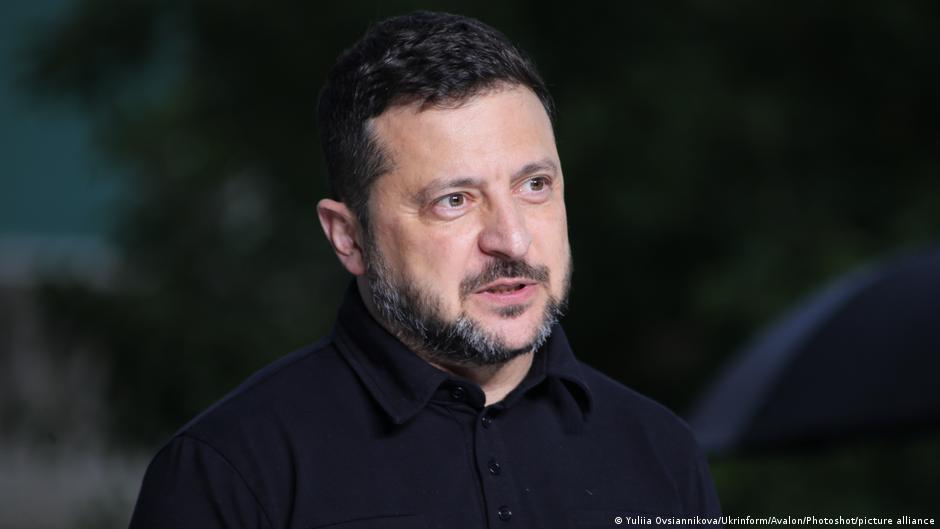
A Ukrainian delegation is set to hold talks in the United States on October 9 and 10 with special representatives of U.S. President Donald Trump over a new plan aimed at ending Russia's war against Ukraine, a development likely to draw close attention across capital markets already sensitive to geopolitical risk, sanctions policy and energy security.
Ukrainian President Volodymyr Zelensky told journalists on Thursday, October 8, that the delegation would travel to the United States for meetings with Jared Kushner and Steve Witkoff, according to UNIAN. The talks come as investors continue to weigh the possibility of renewed diplomatic movement against the still-high risk of escalation, including cross-border strikes, sanctions pressure and uncertainty over Western military and communications support for Kyiv.
The Ukrainian side will be represented by the head of the President's Office, Kyrylo Budanov; deputy head of the President's Office Serhiy Kyslytsia; David Arakhamia, head of the Servant of the People faction in parliament; and Rustem Umerov, chairman of Ukraine's Foreign Intelligence Service. Zelensky also said a European side could join the talks.
For markets, the composition and timing of the delegation matter because negotiations involving senior Ukrainian officials, U.S. envoys and potentially European representatives can shape expectations for sanctions, defense spending, reconstruction financing and the broader risk premium attached to Eastern Europe. Equities exposed to European energy, defense, infrastructure and emerging-market flows may be especially sensitive to any signal that the diplomatic track is either opening or narrowing.
Investors Watch for Sanctions and Security Signals
The Ukrainian service of Voice of America, citing a senior U.S. official, reported that the meeting will discuss a new proposal that covers all aspects of the conflict and is intended to end the war. No further details of the proposal were provided in the source material, leaving investors with limited concrete information and a wide range of possible interpretations.
That uncertainty is itself market-relevant. A credible path toward de-escalation could affect risk appetite in European equities, sovereign bonds and currencies, while a breakdown or signs of tougher sanctions could reinforce defensive positioning. Bond investors will also be watching for implications for government borrowing needs, military aid packages and fiscal commitments from the United States and Europe.
Zelensky on October 8 also responded to comments by U.S. Secretary of State Marco Rubio, who said the war in Ukraine had reached a deadlock and that, in his view, there were no prospects for resolving the conflict through negotiations. Rubio made the statement in an interview with the Greek newspaper Kathimerini.
Zelensky criticized Rubio's position, arguing that the situation should not be described as a diplomatic deadlock while economic activity with Russia continues. His remarks placed sanctions and commercial links at the center of the political debate, a point that may resonate with investors monitoring enforcement risk, secondary sanctions and corporate exposure to Russian-linked trade.
"We are not in a diplomatic deadlock," Zelensky said, according to Ukrinform, while urging tougher economic pressure on Russia.
In the same remarks, Zelensky said it was not possible, on one hand, to discuss future economic projects with Russia and, on the other, to claim that diplomacy had stalled. He called for Russia's economy to be closed off, for Russia not to be supported through sales, and for sanctions to be imposed on its weapons.
Those comments point to a harder sanctions line from Kyiv. For investors, that raises questions about whether any U.S.-led diplomatic initiative would be paired with incentives, penalties or tighter restrictions on sectors connected to Russian military capacity. Markets typically respond not only to the existence of talks, but to whether negotiations imply relief, escalation or a new enforcement regime.
Starlink, Drones and Technology Risk
Zelensky also urged the United States to allow Ukraine to use Starlink over Russian territory. He said this would help Ukraine dominate in the air and ultimately force Russian President Vladimir Putin to sit down at the negotiating table.
The request underlines the growing role of communications infrastructure and space-linked technology in the war. For capital markets, that adds another layer of policy risk for technology and satellite communications companies, as civilian systems continue to intersect with military strategy. Investors in defense technology, telecom infrastructure and aerospace may see such issues as part of a longer-term repricing of dual-use assets.
The Ukrainian president also said Ukraine is responding symmetrically to Russian strikes, including against data centers. According to RBC-Ukraine, Zelensky said Russia had struck and continued to strike Ukrainian data centers, and that Ukraine had responded, though he did not provide all details.
The Armed Forces of Ukraine struck a Yandex data center with drones in the city of Sasovo in Russia's Ryazan region overnight on October 8. A fire broke out, and the data center completely stopped operating. No one was injured.
For investors, the reported data-center strike highlights an increasingly important operational risk: the war is not confined to traditional military targets or energy infrastructure. Digital infrastructure can become part of the conflict environment, with potential implications for technology firms, cloud services, cybersecurity demand and insurers pricing geopolitical exposure.
The immediate market impact of the planned October 9-10 talks will depend on whether U.S., Ukrainian or European officials offer details of the new proposal. Until then, investors are likely to treat the meetings as a potential catalyst rather than a resolution. The central questions remain whether diplomacy can alter the trajectory of the war, whether sanctions pressure intensifies, and whether cross-border attacks continue to expand the range of assets exposed to geopolitical risk.