Latvian Pair Detained at RAF Molesworth as Security Risk Enters Markets
The incident at a NATO and US intelligence base adds a fresh security variable for investors already tracking geopolitical risk in Europe.
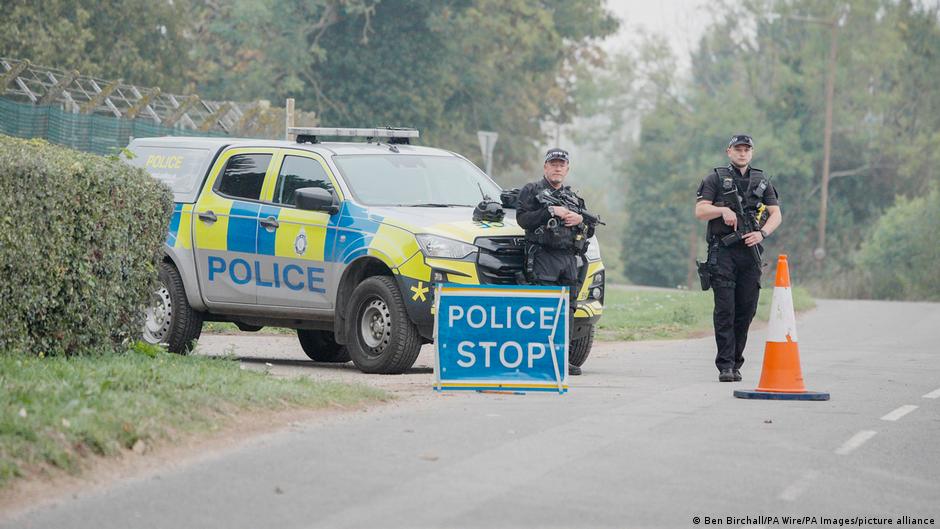
British counterterrorism police have detained two Latvian citizens after they entered the grounds of RAF Molesworth, an air base in southeastern England that hosts NATO and US intelligence facilities. For investors, the case is not primarily a market-moving event on its own, but it adds to the security backdrop around European defense assets, cross-border intelligence infrastructure and the risk premium attached to geopolitical uncertainty.
The two men, aged 32 and 36, damaged fencing around the facility before being detained, according to police information cited by AFP. The incident occurred overnight on October 8. Law enforcement officials said the men intended to “cause harm to the United Kingdom,” and an investigation is continuing.
There was no immediate indication from the report of disruption to trading, defense operations or broader UK infrastructure. Still, for capital markets, such incidents matter because they reinforce a pattern investors have been watching closely: the vulnerability of critical military and intelligence sites at a time when Europe’s security environment remains tense.
Security Risk Stays on the Investor Dashboard
Equity markets tend to distinguish between isolated security incidents and events with wider economic consequences. A breach at a military base does not automatically translate into a selloff. However, defense, aerospace and cybersecurity names can become more sensitive to headlines when the news points to threats against high-value infrastructure. The fact that RAF Molesworth houses NATO and US intelligence centers gives the episode a relevance beyond local policing.
For UK-listed equities, the direct implications appear limited based on the information available. The more significant market question is whether the incident contributes to a broader repricing of security-related risk. Investors have already been assigning greater importance to defense spending, military readiness and intelligence cooperation across Europe. Events involving NATO-linked facilities can strengthen expectations that governments will continue prioritizing security budgets, surveillance capabilities and infrastructure protection.
Police said the men’s purpose was to “cause harm to the United Kingdom,” while the investigation remains underway.
That wording is important for markets because it places the incident within a national-security frame rather than treating it as ordinary trespass or vandalism. Still, officials also said there was so far “nothing to indicate” a link between the RAF Molesworth incident and a separate episode at RAF Fairford in late September.
Bonds May Absorb the Signal Quietly
In sovereign debt markets, isolated domestic security incidents rarely move yields unless they point to systemic risk, a major escalation or a fiscal response. UK gilts are more likely to remain driven by inflation expectations, Bank of England policy, fiscal credibility and global rates. But geopolitical and security concerns can still feed into safe-haven behavior at the margin, especially if investors see a rising probability of broader instability.
The more relevant bond-market channel may be fiscal rather than immediate risk aversion. If European governments continue to treat base security, intelligence protection and defense readiness as higher priorities, investors will keep assessing how higher security spending fits into national budgets. In the UK, where fiscal headroom is closely watched, any sustained increase in defense or security commitments can become part of the conversation around borrowing needs and medium-term gilt supply.
For now, the reported facts do not establish a direct budgetary consequence. The event is best read as one more data point in the broader security environment rather than a standalone catalyst for UK rates.
Fairford Episode Adds Context, Not Confirmation
The Molesworth case follows a late-September incident near RAF Fairford, another UK air base. In that earlier case, a local resident reported “suspicious” activity near the base, and police found three vans containing “some quantity” of gasoline. The area was cordoned off, residents of a nearby village were evacuated, and seven suspects were detained. They were later released under certain conditions, according to dpa.
Authorities have not connected the Fairford and Molesworth incidents. That distinction matters for investors because confirmed coordination would carry a different risk profile from separate local events. Markets generally react more strongly to signs of organized campaigns against strategic infrastructure than to isolated incidents under investigation.
The Fairford episode also had a military-market dimension because the United States decided to withdraw B-1 bombers that had been based there. US President Donald Trump explained the decision by referring to “threats” from people he said were “linked to Iran.” That statement introduced a geopolitical layer into what might otherwise have been viewed as a local security matter.
For capital markets, the key issue is whether such developments alter expectations around military deployment, transatlantic defense coordination or regional security spending. Defense contractors and cybersecurity providers may benefit from a longer-term policy environment in which governments increase spending on protection, surveillance and resilience. Conversely, travel, insurance and infrastructure operators can face higher compliance and security costs if threat perceptions intensify.
What Investors Should Watch Next
The immediate market impact from the RAF Molesworth detentions is likely to be muted unless investigators disclose evidence of a wider plot, foreign direction or a connection to other incidents. Investors should watch for three developments: whether police identify a broader network, whether base operations were affected, and whether the UK government signals any additional security measures around military or intelligence sites.
Equity investors may look for secondary effects in defense, aerospace, surveillance technology and cybersecurity. Bond investors are more likely to treat the story as part of the wider geopolitical-risk backdrop rather than a near-term driver of yields. Currency markets, including sterling, would usually require a much broader escalation before repricing meaningfully around a domestic base-security incident.
The case therefore sits in a familiar category for capital markets: not large enough on reported facts to shift prices by itself, but significant enough to remain on the risk monitor. In an environment where investors are already sensitive to military infrastructure, NATO readiness and geopolitical spillovers, even localized incidents can shape expectations about where governments and companies will need to spend next.