Polish Opposition Leader Calls to Block Ukraine’s EU Accession Talks Amid Rising Tensions
Jarosław Kaczyński urges Warsaw to halt negotiations over Ukraine’s EU membership, raising concerns for investors on market stability and regional cooperation.
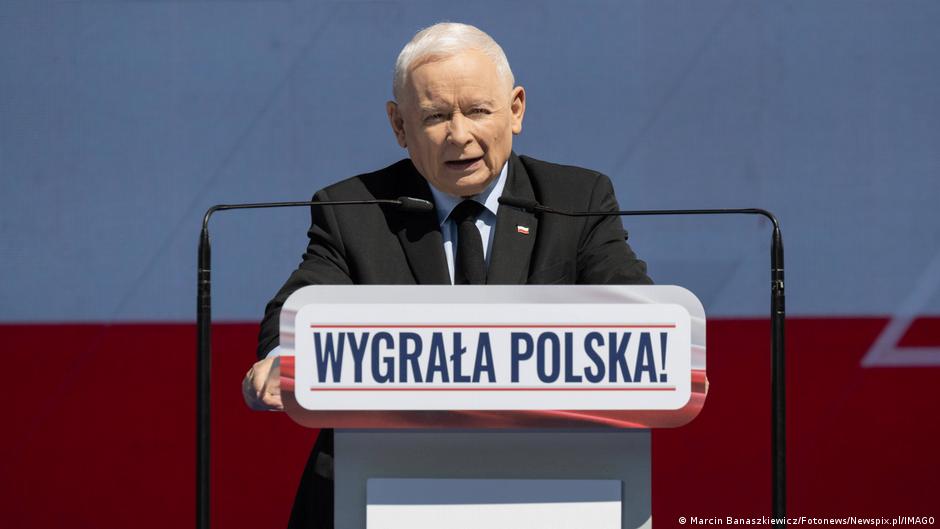
Jarosław Kaczyński, leader of Poland’s opposition national-conservative party Law and Justice (PiS), has publicly called on the Polish government to block negotiations over Ukraine’s accession to the European Union. The move intensifies political tensions between Warsaw and Kyiv, raising potential implications for capital markets and investor confidence in the region.
Political Developments and Market Implications
Kaczyński’s appeal, reported on June 27, comes amid escalating diplomatic friction following Ukraine’s decision to name a Ukrainian Armed Forces unit after the Ukrainian Insurgent Army (UPA) heroes. This move triggered a strong reaction from the Polish government, which saw it as a sensitive historical provocation. Subsequently, Polish President Karol Nawrocki revoked Ukraine’s President Volodymyr Zelensky’s Order of the White Eagle, Poland’s highest state honor.
The dispute has further manifested in symbolic gestures such as Ukrainian officials, including Presidential Office Head Kyrylo Budanov and Foreign Minister Andrii Sybiha, renouncing their Polish state decorations in protest, and Zelensky’s absence from the Ukraine Recovery Conference held in Gdańsk on June 25-26.
"Kaczyński’s rhetoric sharply contrasts with Prime Minister Donald Tusk’s supportive stance toward Ukraine’s recovery and integration efforts," noted analysts, emphasizing the growing political divide within Poland and its potential to influence market sentiment.
While Prime Minister Tusk inaugurated the conference that resulted in over 160 agreements valued at more than €10 billion to support Ukraine’s reconstruction, Kaczyński’s statements appear aligned with efforts to consolidate support ahead of Poland’s parliamentary elections in October 2027. His platform targets concerns among Polish farmers about the influx of Ukrainian agricultural products and worries about the fiscal burden of hosting Ukrainian refugees.
Investor Outlook Amid Regional Uncertainty
The discord has triggered a reassessment among investors monitoring Eastern European markets, given the critical role of Poland as an EU member and Ukraine’s strategic aspirations. The polarization within Poland’s political scene could impact the pace and scope of EU-Ukraine integration, thus affecting sectors linked to cross-border trade, infrastructure funding, and regional stability.
Equity markets sensitive to geopolitical risks may see increased volatility as uncertainty about Kyiv’s EU prospects grows. Similarly, bond markets could react to potential shifts in credit risk premiums if investor confidence wanes due to political instability or if EU support mechanisms for Ukraine are delayed or diluted.
Market participants are advised to closely track further developments in Polish domestic politics, the outcome of upcoming elections, and Warsaw-Kyiv relations, as these factors will shape the investment climate in the broader Central and Eastern European region.
Historical Context and Its Market Relevance
The underlying historical discord centers on divergent narratives surrounding the Ukrainian Insurgent Army, regarded in Ukraine as freedom fighters but associated in Poland primarily with the tragic Volhynia massacre during 1943-1944. This sensitive legacy continues to influence contemporary diplomacy and public opinion, thereby affecting political risk assessments.
Given Poland’s status as a key transit and economic hub linking Ukraine to the EU, sustained tensions could hamper cross-border commerce and investor appetite, particularly in sectors such as agriculture, logistics, and infrastructure development.