Putin Warns Armenia's EU Bid Implies Exit From EAEU, Raising Investor Risks
The exchange between Vladimir Putin and Nikol Pashinyan sharpens uncertainty over Armenia's trade alignment and adds a new political variable for investors.
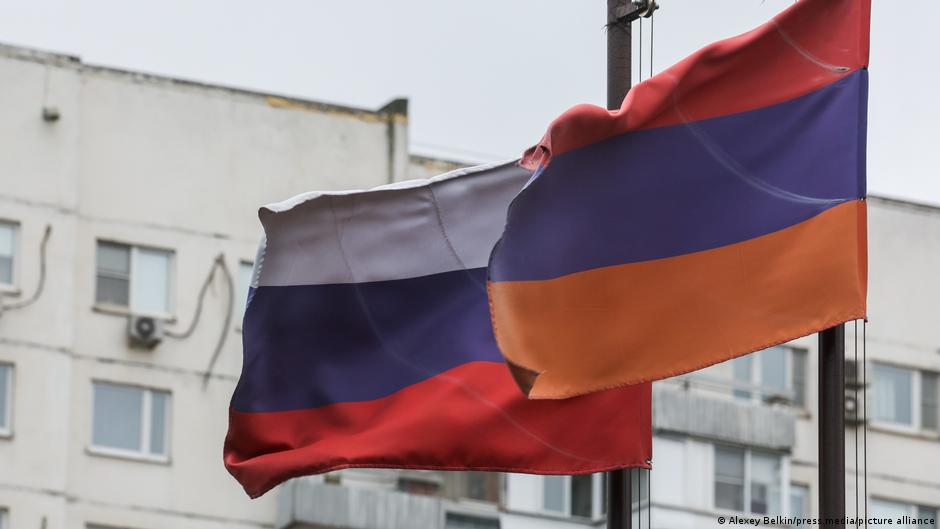
Russian President Vladimir Putin told Armenian Prime Minister Nikol Pashinyan that Armenia's move to begin the process of joining the European Union would in effect amount to leaving the Eurasian Economic Union, sharpening a geopolitical dispute that investors are likely to read through the lens of trade exposure, policy risk and regional market sentiment.
Putin and Pashinyan met in Bishkek on the sidelines of the Shanghai Cooperation Organisation summit. According to a transcript published on the Kremlin website on Tuesday, September 1, the central subject of the talks was Yerevan's plan to submit an application to join the EU.
For markets, the exchange matters less as a near-term legal ruling than as a signal on the future direction of Armenia's economic ties. Membership in the EAEU has underpinned Armenia's access to a Russia-led regional economic framework, while a formal EU accession track would point to a longer-term strategic realignment. That combination is likely to be watched closely by investors assessing Armenian equities, sovereign risk and companies dependent on cross-border trade.
"You said that you had not declared an exit. The adoption of a law on the start of the procedure for joining another economic organisation in fact means a declaration of exit from ours, because being there and there is incompatible. That is the problem," Putin said.
By "the other organisation," Putin was referring to the EU, and by "ours" he meant the Eurasian Economic Union. The Russian president again called for a referendum in Armenia on the choice between the EU and the EAEU, saying the authorities should turn to the people and ask them directly.
Pashinyan pushed back, saying Yerevan had analysed the treaty framework between Russia and Armenia as well as the agreements in force within the EAEU and had found no violations of Armenia's obligations to either Russia or the bloc. He also said that, with the adoption in 2025 of a law on European integration, Armenia had in practice moved away from the idea of holding a referendum on choosing between the EU and the EAEU.
Trade Alignment in Focus for Investors
From a capital markets perspective, the immediate issue is not only Armenia's diplomacy but how the dispute could affect the country's economic operating environment. Putin's comments reinforce the Russian position that EU and EAEU membership cannot be combined, a view Moscow has voiced before. That introduces a clearer risk that political friction could spill into trade restrictions, customs frictions or pressure on specific sectors if relations deteriorate further.
That risk is not theoretical. Ahead of Armenia's parliamentary elections on June 7, Moscow stepped up pressure on Yerevan, including by banning imports into Russia of a number of Armenian products. Investors will note that such measures can hit exporters directly, weigh on revenue visibility for affected companies and complicate macro assumptions around external demand and foreign-exchange inflows.
The political backdrop also matters. Pashinyan's Civil Contract party won the June 7 parliamentary vote, and his September 1 meeting with Putin in Bishkek was their first face-to-face encounter after the elections. The timing suggests that the post-election phase is now moving into a more explicit bargaining period over Armenia's geopolitical and economic orientation.
Pashinyan first said on August 24 that Armenia intended in the near future to begin the process of submitting an application to join the EU. The European Commission responded by saying that Armenia is today closer to the European Union than ever before, while also stressing that accession takes place within a clearly defined, merit-based process.
That formulation is relevant for investors because it points to a long timetable rather than an imminent institutional shift. In market terms, Armenia is confronting a period in which expectations may change faster than formal arrangements do. For equities and bonds, that can mean volatility driven by headlines, official statements and any signs of retaliatory economic measures, rather than by completed treaty changes.
In June, Pashinyan had said there were no grounds for holding a referendum on joining the European Union. He was responding at the time to a joint statement by the leaders of Russia, Belarus, Kazakhstan and Kyrgyzstan. Putin had already argued earlier that EU and EAEU membership cannot be combined. He also said that the so-called Ukrainian scenario began with Kyiv's attempt to join the EU.
For investors, the practical takeaway is that Armenia's EU push is now intersecting with a more openly stated Russian red line. That raises questions about Armenia's future trade model, the resilience of supply chains tied to the Russian market and the sensitivity of local assets to political developments. It also creates a wider regional signal for frontier-market investors tracking how geopolitical alignment can affect tariff regimes, market access and sovereign positioning.
No immediate market-moving policy announcement emerged from the Bishkek meeting itself. But the rhetoric from both sides showed how far apart Moscow and Yerevan remain on the legal and political interpretation of Armenia's EU course. Putin is framing the issue as an incompatibility that effectively triggers an exit from the EAEU, while Pashinyan is arguing that Armenia remains within its formal obligations.
That gap is likely to keep investors focused on political headlines in the near term. Until there is greater clarity on whether Armenia can continue balancing between existing EAEU commitments and a deeper EU trajectory, the country faces a period in which diplomatic statements could carry outsized weight for market sentiment.