Starlink Fire Probe in Poland Raises Infrastructure Risk for Investors
The investigation highlights security risks around communications assets, with implications for defense, telecom and infrastructure valuations.
A criminal investigation into an arson attack on a Starlink ground station near Warsaw is drawing attention to the security risks surrounding critical communications infrastructure in Europe, an issue with potential implications for investors in defense, satellite communications, telecommunications and infrastructure operators.
Two Turkish nationals detained in Germany may be linked to the Turkish organized crime group Daltons and could have acted on behalf of Russian intelligence services, Der Spiegel reported, citing sources in several countries. The German magazine said on Friday, October 16, that the Daltons have for years been involved in extortion, arms trafficking and contract killings, including activities in Germany.
The two suspects, identified as 38-year-old Ümit E. and 34-year-old Müslüm T., were detained on October 12 in Nürtingen, Germany, as part of the investigation into the fire. Representatives of several security agencies told Der Spiegel that the men either belonged to the Daltons or carried out assignments for members of the organization.
The Higher Regional Court in Stuttgart is expected to decide soon whether the two Turkish citizens should be extradited to Poland.
Security concerns extend to strategic infrastructure
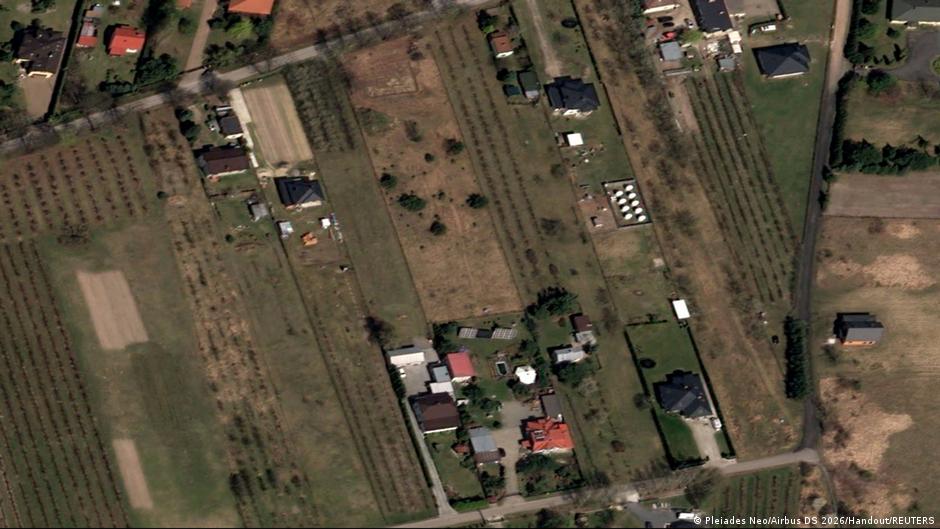
The Starlink facility in the village of Wola Krobowska, about 50 kilometers from Warsaw, was damaged by fire on September 23. The blaze affected an electrical substation and a generator. German tabloid Bild reported that the station briefly stopped operating before returning to service. No injuries were reported.
Polish authorities described the incident immediately afterward as an attempted act of sabotage. Poland’s deputy prime minister, Krzysztof Gawkowski, said on September 23 that there was no direct evidence of Russian involvement but that multiple indications suggested the event was consistent with a new Russian doctrine for conducting attacks.
Polish officials have said direct evidence of Russian responsibility has not yet been established, even as the investigation examines signs of possible sabotage.
For capital markets, the incident underscores a risk that is difficult to isolate in quarterly earnings: physical disruption to communications and energy-support systems. The reported outage was short, but the targeting of an electrical substation and generator illustrates how ground infrastructure can remain vulnerable even when the communications network itself is satellite-based.
The source report did not identify a specific reaction in equities or bonds. Investors are therefore likely to treat the investigation primarily as an indicator of geopolitical and operational risk rather than as an immediate earnings event. The relevant exposure spans satellite operators, telecom companies, defense contractors, utilities and firms responsible for protecting critical facilities.
Alleged criminal proxy adds complexity
Der Spiegel reported that the Daltons may have acted at the direction of Russian intelligence services. The magazine noted that the group’s alleged leader, Beratcan Gökdemir, was detained in Russia in 2024. Turkey requested his extradition, but Russian authorities did not hand him over to Ankara.
According to Der Spiegel, German intelligence services believe Moscow may have offered Gökdemir protection in anticipation of reciprocal services. His current whereabouts are unknown. The allegation remains part of the broader investigative picture, while direct proof tying Russia to the Starlink fire has not been disclosed.
The possible use of an organized crime group as an intermediary may complicate how markets assess geopolitical threats. Conventional country-risk models typically focus on military escalation, sanctions and state action. Operations allegedly carried out through criminal networks can create a less predictable layer of exposure for companies with strategic assets across Europe.
For bondholders, repeated attacks on infrastructure could eventually influence assessments of capital spending, insurance costs and operational resilience at exposed issuers. Equity investors may focus more closely on redundancy, site security and the speed with which damaged systems can be restored. In this case, the station reportedly resumed operations after a brief interruption, providing evidence of recovery capacity but not eliminating the underlying security concern.
Investigation broadens across Germany and Poland
Two additional people, including a woman, were detained on October 13 in connection with the arson investigation. Polish radio station RMF FM reported that an anti-terrorism operation was conducted in Berlin to apprehend her.
Under a preliminary version of events, the woman may have provided logistical assistance to the Turkish nationals and acted as their driver. Authorities have not publicly established a final chain of responsibility.
The next points for investors to watch include the Stuttgart court’s extradition decision, further disclosures from Polish and German investigators, and any evidence clarifying whether the incident was a criminal operation, a state-directed act or both. Until then, the case adds to the security premium surrounding strategically important European communications assets without, on the available information, establishing a direct market impact or Russian responsibility.