ECB Clears UniCredit Path to Control Commerzbank, Raising Market Stakes
The regulatory approval allows UniCredit to exceed 30% ownership and advance a takeover opposed by German officials and bank employees.
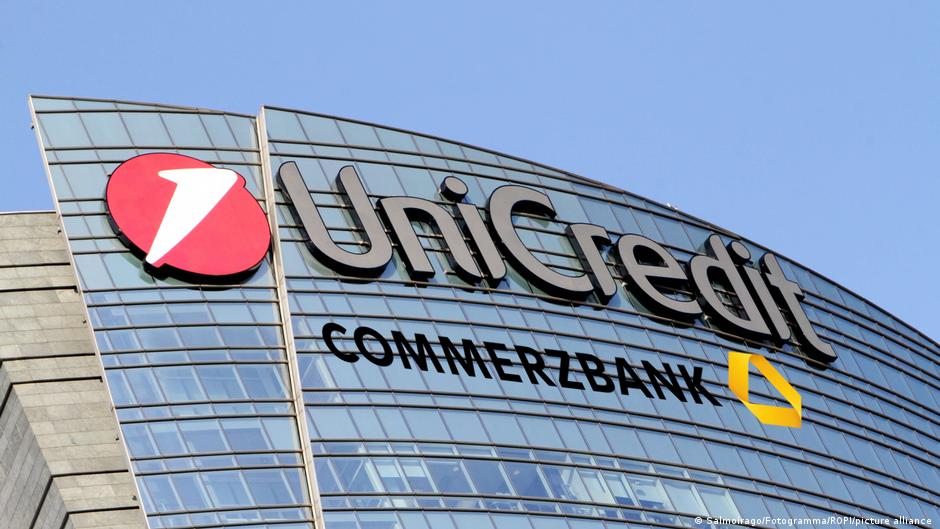
The European Central Bank has approved UniCredit’s acquisition of stakes in Commerzbank, clearing a decisive regulatory hurdle in the Italian lender’s effort to gain control of Germany’s second-most important commercial bank.
UniCredit representatives announced the approval on Thursday, October 15. The decision allows the Italian group to move beyond the 30% ownership threshold in Commerzbank and subsequently increase its stake without restriction, according to the dpa news agency. In practical terms, the authorization opens the way for UniCredit to absorb the German lender.
For capital-markets investors, the approval removes a major element of regulatory uncertainty surrounding one of Europe’s most consequential proposed banking combinations. Attention can now shift toward the remaining supervisory process, the transfer of voting power and the potential financial consequences of integrating two large lenders operating in the eurozone.
UniCredit said the ECB’s decision demonstrated confidence in the bank’s “strong position in the European banking sector.”
Control could be established by year-end
The transaction is expected to complete the required supervisory procedures by the end of the current year. By that point, UniCredit is expected to hold half of the voting rights at Commerzbank’s shareholder council, enabling the Italian bank to establish control, dpa reported.
UniCredit approached Commerzbank shareholders in May with an offer to exchange each Commerzbank share for 0.485 UniCredit shares. Through that proposal, the Italian lender secured access to almost half of the German company’s shares. Completion of the exchange, however, required authorization from the ECB.
The exchange structure makes the relative valuation of the two banks’ equities central to the transaction. For shareholders, the regulatory clearance brings the proposed combination closer to implementation, while leaving investors to assess the value of the UniCredit shares offered, the prospective ownership structure and the execution risks associated with a cross-border integration.
No share-price or bond-yield reaction was disclosed in the source report. Even so, the decision is directly relevant to equity and credit investors because it improves UniCredit’s ability to determine Commerzbank’s strategic direction. The market focus is likely to include the timing of control, possible restructuring measures and the extent to which political opposition in Germany could constrain the combined group’s plans.
ECB backing contrasts with German opposition
The ECB review was the key stage of the transaction, but the regulator’s decision was not considered unexpected. The central bank has repeatedly indicated that it supports bank mergers within the eurozone because such transactions can strengthen the European Union’s single internal market, dpa noted.
That regulatory position stands in contrast to opposition from Commerzbank’s management and employees, as well as from the German authorities. All have previously resisted UniCredit’s plans to take over the bank.
The German government owns slightly more than 13% of Commerzbank’s shares and wants to prevent job cuts that could follow efficiency measures after a takeover. Berlin also wants Commerzbank to remain a publicly listed company headquartered in Frankfurt and to continue developing services for Germany’s small and medium-sized businesses.
Those objectives introduce a political dimension for investors evaluating the deal. UniCredit may have gained the regulatory capacity to increase its ownership, but the German government’s stake gives Berlin a prominent voice in the debate over employment, corporate structure and the lender’s domestic role. The outcome could influence the scale and pace of any post-transaction optimization.
Equity investors will therefore be weighing the strategic case for a larger cross-border banking group against the possibility that political commitments limit restructuring. Bondholders, meanwhile, will be focused on how control and integration affect the banks’ financial profiles, governance and operating stability. The source report provides no forecasts for capital, earnings, costs or credit ratings, leaving those questions open.
A test for eurozone banking consolidation
The ECB’s authorization gives the proposed combination significance beyond the two companies. European policymakers have long viewed cross-border banking consolidation as one route toward a more integrated financial market. UniCredit’s advance on Commerzbank now offers a prominent test of whether regulatory support can translate into effective consolidation when national governments, employees and management oppose a deal.
For investors today, the clearest change is that ECB approval has converted a conditional accumulation of Commerzbank shares into a credible route to control. The remaining milestones are the completion of supervisory procedures, the expected concentration of voting rights by year-end and UniCredit’s handling of German demands concerning jobs, headquarters and support for smaller businesses.
The regulatory hurdle has been lowered, but the investment case will depend on execution. Markets must now judge whether UniCredit can turn formal control into economic value while managing political resistance and preserving Commerzbank’s role in German corporate finance.