Moscow Drone Attack Disrupts Airports, Testing Russia Risk Premium
Russian officials said air defenses destroyed more than 100 drones headed toward Moscow as airport restrictions disrupted flights and regional attacks caused casualties.
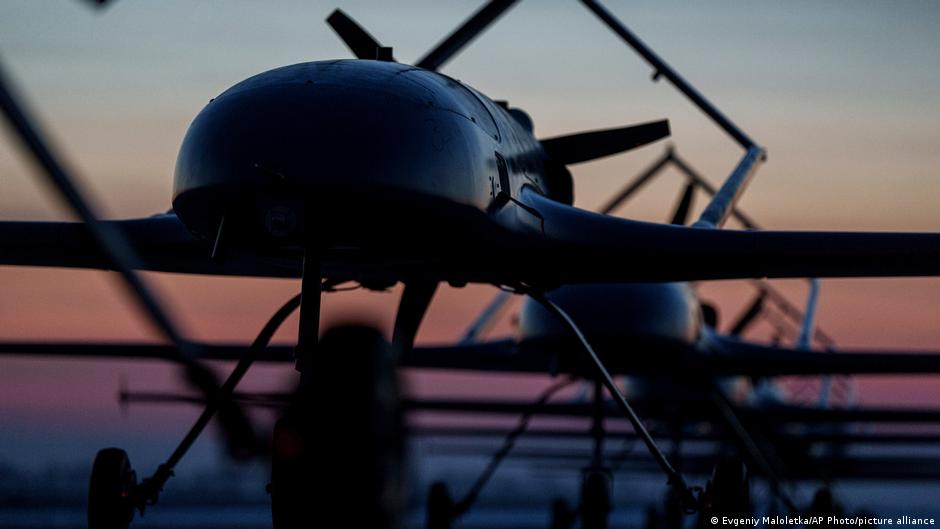
Russian air defenses destroyed more than 100 unmanned aerial vehicles headed toward Moscow overnight into Wednesday, October 14, according to Telegram posts by Moscow Mayor Sergei Sobyanin, in an incident that placed fresh attention on operational risk inside Russia and the potential market impact of recurring drone attacks.
Sobyanin did not specify which districts of the Moscow region saw drones destroyed, nor did he identify any potential target. The scale of the reported attack, however, coincided with temporary restrictions at all four major Moscow-area airports: Vnukovo, Domodedovo, Sheremetyevo and Zhukovsky. Those limits on arrivals and departures were introduced on the evening of October 13, according to notifications from the Telegram channel “Govorit Rosaviatsiya.”
For investors tracking Russia-linked assets, aviation, insurers, logistics operators and companies exposed to domestic infrastructure, the episode underscored a recurring issue: security disruptions around major transport nodes can quickly translate into schedule changes, higher operating costs and reduced visibility for businesses that depend on predictable movement of passengers and cargo.
Airport Restrictions Put Infrastructure Risk Back in Focus
According to TASS, more than 30 aircraft flying to Moscow were redirected to other cities. The agency reported that 19 aircraft bound for Vnukovo instead landed in Nizhny Novgorod, St. Petersburg, Minsk, Pskov and Istanbul.
The Telegram channel “Ostorozhno, Novosti,” associated with journalist Ksenia Sobchak, separately wrote that, according to data from St. Petersburg’s Pulkovo airport, 20 aircraft flying to Moscow were diverted there because of the restrictions.
Restrictions overnight into October 14 were also introduced at airports in Volgograd, Nizhny Novgorod, Samara, Penza, Saratov and Yaroslavl, according to “Govorit Rosaviatsiya.” The low-cost carrier Pobeda also reported schedule adjustments because of prolonged restrictions at airports in the Moscow aviation hub and the Volga region, “Ostorozhno, Novosti” noted.
From a capital markets perspective, the immediate issue is not only the number of aircraft diverted, but the breadth of the disruption. Temporary closures across Moscow and several regional airports point to a risk that is geographically dispersed rather than confined to a single facility. For equity investors, that can matter for aviation-related revenues, fuel planning, crew scheduling, passenger compensation exposure and knock-on delays. For bond investors, repeated disruptions may feed into a wider assessment of infrastructure resilience, state support needs and operational continuity.
“More than 100 unmanned aerial vehicles headed toward Moscow overnight into Wednesday were destroyed by Russian air defenses, according to posts by Moscow Mayor Sergei Sobyanin.”
The event also comes at a time when markets tend to scrutinize any sign that security risks are moving closer to major economic centers. Moscow is Russia’s financial and administrative core, and interruptions affecting its airports can carry broader signaling value even when physical damage in the capital is not specified by officials.
Regional Strikes Add to the Market’s Security Calculus
Beyond the Moscow aviation disruption, regional officials reported damage and casualties linked to drone attacks. Saratov Region Governor Roman Busargin said at least one person had died as a result of a UAV attack. He said several residential buildings in the city of Balakovo were damaged.
“As a result of the UAV attack, several residential buildings in the city of Balakovo were damaged. Preliminary information: one person was killed. All emergency services are working at the site,” Busargin wrote in a Telegram post, according to the source account.
Separately, Stavropol Territory Governor Vladimir Vladimirov said air defense forces had repelled a drone raid aimed toward the industrial zone of Nevinnomyssk. He did not specify which industrial facilities may have been targeted.
For markets, the reference to an industrial zone is notable because industrial assets are often tied to supply chains, utilities, manufacturing throughput and regional employment. No specific facility was identified, and no figures were provided for economic damage. Still, investors typically treat attacks near industrial areas as potential indicators of production and logistics risk, particularly when they occur alongside aviation disruptions across multiple regions.
The reported incident near Saratov may also affect investor perception of regional risk, although officials did not provide a detailed assessment beyond the death, damage to several residential buildings and the presence of emergency services. In the absence of detailed damage estimates, markets are likely to focus on whether such attacks remain episodic or become a more persistent source of operating uncertainty.
Equity reactions in sectors directly exposed to transportation and domestic infrastructure can be sensitive to repeated disruption, even when individual incidents are short-lived. Airlines face the most visible operational pressure, including rerouted flights, airport congestion, revised timetables and potential passenger-service costs. Airport operators and related service companies may also face uncertainty when restrictions are imposed with little advance notice.
Fixed-income investors may view the same events through a different lens: the degree to which regional and federal authorities can maintain critical services, absorb costs and prevent interruptions from affecting broader economic activity. Repeated attacks could increase the perceived risk premium attached to infrastructure-heavy issuers, transport-linked borrowers and regional entities with exposure to emergency response or reconstruction spending.
Currency and sovereign-risk channels are harder to assess from the reported facts alone. The source information does not include market moves, official financial estimates or claims of damage to specific strategic assets in Moscow. But the pattern described by officials and aviation channels reinforces a basic market concern: security incidents that disrupt air travel and raise uncertainty around industrial zones can weigh on sentiment even before direct economic losses are quantified.
For investors today, the practical takeaway is that Russia’s domestic security risk remains a live variable for asset pricing. The destruction of more than 100 drones headed toward Moscow, combined with airport restrictions across the capital and several regional hubs, is likely to keep attention on transport continuity, corporate contingency planning and the resilience of regional infrastructure.