EU Opens New Accession Clusters for Ukraine and Moldova, Lifting Reform Signal
The move advances Kyiv and Chisinau in EU entry talks, giving investors another marker for political risk, reform momentum and regional convergence.
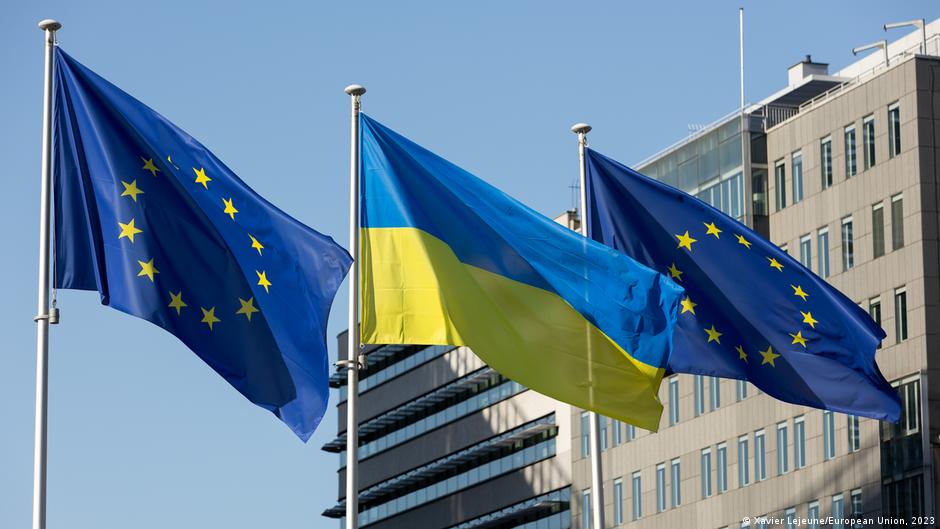
European Union member states have agreed to open accession negotiation clusters 2 and 3 for Ukraine and Moldova, Irish Minister of State for European Affairs Thomas Byrne said on X on Monday, October 12, marking a new step in the two countries’ path toward eventual membership of the bloc.
The decision concerns the thematic clusters covering the “Internal Market” and “Competitiveness and Inclusive Growth.” For capital markets, the move is less an immediate trading catalyst than a political signal: the EU accession process remains active for both countries despite wartime pressure on Ukraine, persistent geopolitical risk in the region and the lengthy reform agenda required to align with EU rules.
“I can confirm that all EU member states agreed to open clusters 2 and 3 for Ukraine and Moldova,” Byrne wrote, also referring to steps concerning Albania and Montenegro.
Byrne framed the development alongside other enlargement decisions, writing that after what he called “Montenegro Monday” there would be a “Super Tuesday” for Albania, Moldova and Ukraine. He said EU states had agreed to open clusters 2 and 3 for Ukraine and Moldova, close chapters 17, 18 and 19 for Albania, and close chapter 20 for Montenegro.
The agreement follows a domestic legislative move in Kyiv that was important for securing Hungary’s consent. Earlier on October 12, Ukraine’s Verkhovna Rada approved amendments to the education law concerning the rights of national minorities in two readings and as a whole. The document had been necessary to obtain Hungary’s agreement to the opening of the second and third accession negotiation clusters for Ukraine.
Later that evening, Ukrainian lawmaker Yaroslav Zhelezniak said on Telegram that the adopted law had been signed by President Volodymyr Zelensky.
Why Markets Watch the Accession Track
EU accession negotiations are structured around six broad thematic sections, known as clusters, covering different areas of legislation and public policy. During the talks, the EU assesses how ready a candidate country is to apply EU rules and standards. The six clusters are “Fundamentals,” “Internal Market,” “Competitiveness and Inclusive Growth,” “Green Agenda and Sustainable Connectivity,” “Resources, Agriculture and Cohesion,” and “External Relations.”
For investors, the opening of additional clusters can be read as a governance and convergence indicator. It does not mean EU membership is imminent, nor does it remove the security risks that dominate Ukraine’s outlook. But it can shape expectations around reform discipline, future access to EU-linked funding, institutional alignment and the longer-term investment framework in both Ukraine and Moldova.
The “Internal Market” cluster is particularly relevant to companies and investors because it points toward alignment with EU market rules. The “Competitiveness and Inclusive Growth” cluster also speaks directly to economic policy, business conditions and the regulatory environment. Progress in these areas can influence how investors assess future opportunities in equities, credit and direct investment, especially in sectors exposed to trade, infrastructure, reconstruction and financial integration.
Ukraine’s first accession negotiation cluster, “Fundamentals,” was opened on June 15. The new agreement, if advanced at the intergovernmental level, would deepen the formal negotiation process and add another layer to the market narrative around Ukraine’s reform trajectory during the war.
Funding, Reform and Risk Pricing
On October 5, EU Enlargement Commissioner Marta Kos said at a press conference after a Moldova-EU Association meeting that the EU could open two accession negotiation clusters for Ukraine and Moldova during an intergovernmental conference on the margins of the EU General Affairs Council scheduled for October 13 in Luxembourg.
Kos said Ukraine and Moldova were carrying out systemic reforms “in very difficult conditions” and were among four countries leading in accession negotiations. She also noted that the European Commission would publish a detailed assessment of reform progress across all areas in candidate countries on October 28 in its annual enlargement report.
That timetable matters for markets because official EU assessments can influence investor perception of reform credibility. Bond investors, in particular, tend to watch the durability of international support, the prospect of budget assistance and the legal and administrative reforms that affect repayment capacity and reconstruction prospects. Equity investors and strategic buyers look for signs that rulebooks, competition policy and market access are moving closer to EU standards.
Kos also urged observers not to forget that Ukraine is fighting for survival while simultaneously pursuing EU accession and implementing reforms, including in order to obtain additional funds for the budget and the needs of the army.
The capital markets implication is therefore two-sided. On one hand, the EU’s agreement to open further clusters reinforces the political anchor behind Ukraine and Moldova’s reform programs. On the other, investors still have to price the long horizon of accession, the conditionality attached to future steps, and Ukraine’s continuing wartime financing needs. The news strengthens the policy direction, but it does not eliminate execution risk.
For today’s market participants, the development is best understood as a signal of institutional momentum rather than a definitive valuation event. It supports the broader case that Brussels remains engaged with Kyiv and Chisinau, and that reform milestones can still move despite political friction among member states. In regional credit, reconstruction-linked equities and frontier-market allocations, that signal may matter even when near-term trading is still dominated by security conditions, fiscal support and global risk appetite.