Dmitriev Hospital Return Highlights Legal-Risk Overhang for Russia Investors
The historian was sent back to a penal colony without a diagnosis after suspected stroke symptoms, underscoring governance risks around Russia exposure.
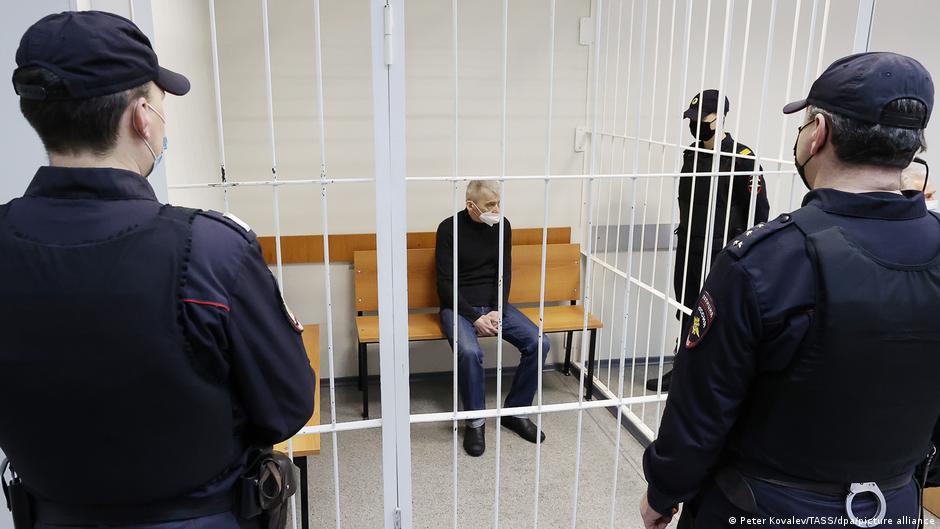
Russian historian Yuri Dmitriev, the former head of Memorial in Karelia, has been returned from a prison hospital to his penal colony without receiving a diagnosis after he was sent for treatment with signs of a possible stroke, according to the human rights project For Human Rights.
The case has no immediate corporate earnings read-through and does not by itself move Russian equities or bonds. For investors, however, it is another reminder of the governance, rule-of-law and sanctions-risk backdrop that continues to shape the investability of Russian assets. Legal predictability, access to independent institutions and compliance with international human rights decisions remain core considerations for any capital-markets assessment of Russia, even when individual cases sit outside the corporate sector.
For Human Rights said on Telegram on Tuesday, October 13, citing an unnamed representative of Dmitriev’s support group, that the historian had been sent to a prison hospital with suspected stroke symptoms but that doctors were unable to make a diagnosis because the facility lacked the necessary equipment.
“His condition is not very good. There was suspicion of a stroke, but no diagnosis was made: the hospital does not have diagnostic equipment,” the representative said, according to the account cited by For Human Rights.
The representative said Dmitriev had received a course of injections, but that it was not known what medication had been administered. She also said he had been prescribed bed rest until October 28, but that the colony had not appeared to know about that instruction and was not allowing him to lie down. She later added that the information about bed rest may have since reached the colony.
The same representative said Dmitriev had been placed in a punishment cell several times, citing incidents including an unfastened top shirt button, sitting on a bed and feeding a cat. Those details add to concerns among supporters about the conditions of his imprisonment and the treatment of a prisoner with reported neurological symptoms.
Governance Risk Remains Central to Russia Exposure
For market participants, the Dmitriev case is relevant less as a single political headline than as part of the broader institutional-risk picture around Russia. Investors weighing Russian-linked equities, sovereign risk, corporate debt or legacy exposure continue to price not only macroeconomic factors, but also the legal environment in which assets, contracts and counterparties operate.
Human rights cases can affect investor sentiment when they reinforce perceptions that judicial outcomes are unpredictable, that state institutions operate with limited external accountability, or that international legal judgments may not be recognized. That perception matters for capital allocation because bond investors and equity holders rely on enforceable rights, credible courts and transparent administrative procedures.
Dmitriev was hospitalized on September 25 on an emergency basis from Penal Colony No. 18 in Potma, Mordovia, and transferred to a medical correctional facility in the settlement of Barashevo. The online outlet Current Time reported that Dmitriev had severe weakness, impaired coordination and could not stand on his own.
Dmitriev is known for compiling and publishing Books of Remembrance for victims of political repression in Karelia in the 1930s and 1940s, as well as materials on the history of the construction of the White Sea-Baltic Canal. He also discovered sites of mass burials of repression victims in Sandarmokh and Krasny Bor.
His criminal prosecution began in 2016, when the first case was opened against him on suspicion of producing pornographic images of his adopted daughter. A court acquitted Dmitriev, but a new case was opened against him in 2018.
On July 22, 2020, a court in Petrozavodsk sentenced Dmitriev to three and a half years in a strict-regime penal colony on charges of sexual violence against a minor. In September 2020, the Supreme Court of Karelia toughened the sentence to 13 years in a strict-regime colony. Dmitriev was also accused of producing child pornography, committing indecent acts and illegally possessing a weapon.
On December 27, 2021, the Petrozavodsk City Court issued the final sentence for Dmitriev, then 65, setting a 15-year strict-regime colony term while taking into account the previously imposed sentence.
Dmitriev has not admitted guilt. On March 15, 2022, the Supreme Court of Karelia rejected his appeal. His supporters have argued that the prosecution was connected to his human rights work and his efforts to restore the memory of victims of repression. The European Union, along with scholars and cultural figures from several countries, called for Dmitriev to be released.
International Ruling Adds to Legal Tensions
In March 2026, the European Court of Human Rights in Strasbourg ordered Russia to pay Dmitriev, who remains imprisoned, 2,000 euros in compensation for moral harm caused by excessively long pretrial detention and the absence of a fair trial. Kremlin spokesman Dmitry Peskov said at the time that Moscow did not recognize the ECHR decision.
That response is significant for investors because international adjudication and state compliance are part of the legal-risk framework watched by holders of sovereign and quasi-sovereign exposure. When a government declines to recognize an international court decision, the signal extends beyond the individual case: it reinforces questions about the enforceability of external rulings and the channels available for legal recourse.
The immediate facts remain medical and humanitarian. Dmitriev was reportedly returned to his colony without a diagnosis despite symptoms that led to suspicion of a stroke, and his support representative said the facility lacked equipment needed for diagnosis. Yet for capital markets, such cases feed into the same broader discount investors attach to jurisdictions where political, judicial and rights-related risks are difficult to separate from economic analysis.