US Senators Urge Trump to Scrap Russian Diesel Deal as Sanctions Debate Grows
A bipartisan group warns that easing restrictions on Russian diesel would do little for US fuel prices while strengthening Moscow’s war financing.
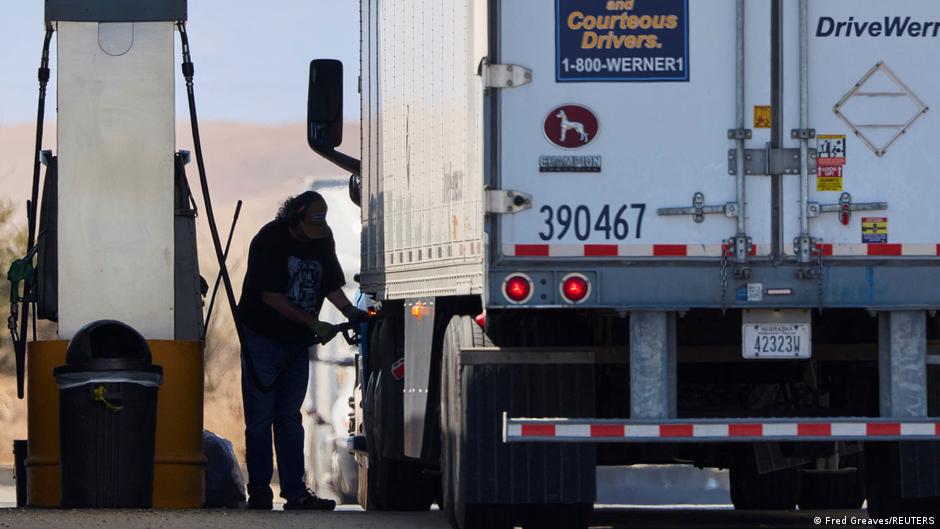
A bipartisan group of US senators is pressing President Donald Trump to abandon a planned diesel arrangement with Russian President Vladimir Putin, warning that the move could weaken sanctions pressure without delivering meaningful relief to American fuel consumers.
The appeal, led by Democratic Senator Richard Blumenthal and signed by 12 senators in total, was sent on Tuesday, October 13. The letter argues that returning Russian diesel supplies to global markets is unlikely to reduce fuel costs for US households, but would provide the Kremlin with additional revenue as the war in Ukraine continues.
For investors, the dispute puts renewed focus on the intersection of energy markets, sanctions policy and geopolitical risk. Diesel prices feed directly into transport, logistics, agriculture and industrial costs, making any shift in supply policy relevant for inflation expectations, corporate margins and bond-market assumptions about the path of interest rates.
Energy Relief or Sanctions Risk
According to the senators, Congress and the American public support ending the war in Ukraine, which they said has taken hundreds of thousands of lives over four and a half years. But they argued that any peace must come on “fair terms,” and that easing sanctions on Russian diesel exports would move policy in the wrong direction.
“This deal is a gift to our adversary and a betrayal of our allies; it must be cancelled,” the senators said in the letter.
The lawmakers wrote that lifting US sanctions on Russian diesel exports would “only provide Putin with additional funds to finance his war machine” and would allow Russia to continue attacks on Ukrainian civilians. Their warning frames the transaction less as an energy-supply measure and more as a sanctions reversal with strategic and financial consequences.
Markets typically respond to additional diesel supply through expectations of lower refined-product prices, especially when inventories are tight. But the senators’ position is that the volumes involved would not materially ease the burden on American families facing high fuel prices. If investors share that view, the deal’s market impact could be judged more through political and sanctions risk than through near-term energy-price relief.
The group urged Trump to increase economic pressure on Russia and on countries they described as central to sustaining Moscow’s war effort, specifically naming China. They called on him to use powers granted under legislation associated with Senator Lindsey Graham on sanctions related to Russia and Iran.
Bipartisan Pressure on the White House
The letter was also copied to Secretary of State Marco Rubio and Treasury Secretary Scott Bessent, signaling that the senators see the issue as both a foreign-policy matter and a sanctions-enforcement question. For capital markets, Treasury’s role is especially important because licensing decisions can affect commodity flows, shipping finance, insurance, payment channels and the compliance posture of banks and trading firms.
Six Democrats signed the appeal: Richard Blumenthal, Jeanne Shaheen, Richard Durbin, Sheldon Whitehouse, Jack Reed and Christopher Coons. They were joined by six Republicans: Mitch McConnell, Thom Tillis, Susan Collins, Alan Stewart Armstrong, Lisa Murkowski and John Cornyn.
The bipartisan makeup matters for investors because it suggests congressional resistance may not be confined to one party. A broad pushback could increase uncertainty around the durability of the license, the timing of shipments and the ability of market participants to treat Russian diesel as a stable source of supply through 2027.
Trump announced on October 9 on Truth Social that he had held what he described as a “highly successful” telephone conversation with Putin. During that call, according to Trump, the two leaders agreed on supplies of Russian diesel fuel to the American and global markets.
Trump said Russian companies would “immediately” ship more than 300,000 tons, followed by another 500,000 tons in November and 1 million tons “immediately after that,” apparently in December. He also said a further 3 million tons could follow, depending on the condition of refineries, though the period for that additional volume was not specified.
The US Treasury Department subsequently issued a general license suspending US sanctions on Russian diesel fuel until April 2027. That licensing decision is now at the center of the senators’ objection, because it provides the legal basis for a temporary reopening of flows that had been restricted under the sanctions regime.
Russian state television program Vesti reported on October 12 that the first shipment of Russian diesel had left St. Petersburg for the east coast of the United States and was expected to arrive within 48 to 72 hours.
What Investors Are Watching
The immediate question for markets is whether additional Russian diesel volumes would be large enough to influence refined-product benchmarks, trucking and freight costs, or broader energy inflation. The senators’ argument is that US consumers should not expect meaningful price relief from the arrangement.
That leaves a different set of market risks in focus. Energy traders will be watching whether the license survives political pressure, whether cargoes face logistical or compliance complications, and whether allies respond to Washington’s temporary easing. Equity investors may assess the implications for refiners, shipping companies, industrial firms and retailers exposed to diesel costs. Bond investors, meanwhile, will be alert to any effect on inflation expectations, however limited.
The debate also highlights a broader policy tension: governments are trying to manage energy affordability while maintaining pressure on Russia. If the diesel arrangement proceeds, it could marginally expand supply but invite scrutiny over sanctions credibility. If it is cancelled, fuel markets may lose a potential source of supply, while sanctions policy remains more tightly aligned with Ukraine-related objectives.
For now, the letter turns a commodity transaction into a political test for the White House. The senators’ message is that any market benefit from Russian diesel would be too small to justify the strategic cost of giving Moscow additional revenue.