Russian Missile and Drone Strikes on Ukrainian Cities Trigger Market Uncertainty
Intensified conflict following Putin’s statements adds volatility to Ukrainian equities and regional bond markets.

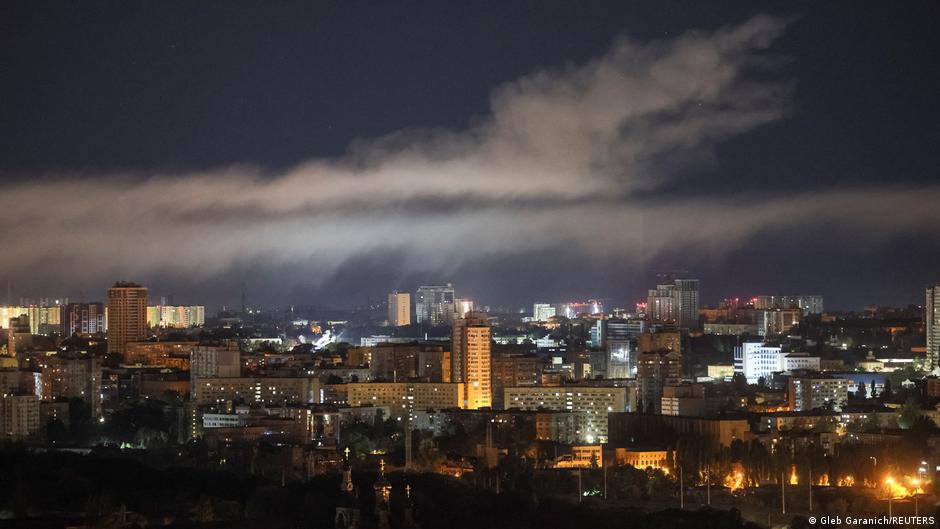
In the early hours of June 2, Russia launched a series of missile and drone strikes against multiple Ukrainian cities, resulting in fatalities, injuries, and infrastructure damage. This escalation follows President Vladimir Putin’s recent remarks framing a Ukrainian strike on the annexed Luhansk region as a turning point in the conflict.
Impact on Capital Markets Amid Renewed Hostilities
Investors are weighing the consequences of the military escalation, with Ukrainian equities and regional bonds experiencing increased volatility. The attacks, including the use of Kalibr cruise missiles launched from the Caspian Sea, have intensified concerns over economic stability and sovereign credit risks.
“Such escalations typically prompt risk-averse behavior, leading to sharp sell-offs in local equities and widening spreads on Ukrainian sovereign bonds,” said a market analyst specializing in emerging European markets.
According to reports from Ukraine’s Air Force, the strikes targeted major urban centers overnight on June 1-2. Kyiv’s mayor, Vitali Klitschko, confirmed four fatalities and over 50 wounded, with 35 hospitalized. Critical infrastructure disruptions were reported, including power outages in three districts. In Podilskyi district, missile debris ignited a fire after striking a residential building.
Additional casualties were reported in other cities. The Dnipro regional governor, Oleksandr Hanža, stated that five people died, including a 73-year-old woman, with 25 wounded following a strike on a residential area that sparked a fire. In Kharkiv, six individuals were injured, including an 11-year-old child, according to regional authorities.
These developments have escalated geopolitical risk perceptions in capital markets, particularly affecting investor sentiment toward Ukrainian assets and regional exposure. Since the conflict's onset, Ukrainian sovereign and corporate bonds have traded at elevated spreads, reflecting heightened default risk concerns.
Furthermore, analysts observe that the timing of Putin’s June 1 statement—describing the Ukrainian strike on the annexed Luhansk region’s Starobilsk as conferring a "new quality" to the war—may be signaling potential for further intensification, which could exacerbate market instability.
President Volodymyr Zelensky had earlier cautioned about a possible large-scale Russian offensive on Ukrainian cities, which seems to have materialized with this latest wave of attacks. The previous major strike on Kyiv and its region on May 24, involving the use of the "Oreshnik" missile for the third time, resulted in two deaths and 80 injuries, marking an escalation in the conflict’s toll.
Market participants remain alert to further developments, with volatility in Ukrainian equity indices and spillover effects in regional emerging market assets likely to persist as the conflict dynamics evolve. Investors with exposure to Ukraine and neighboring regions are advised to monitor geopolitical risks closely and consider potential impacts on portfolio allocations.