Russian Missile Strikes on Kyiv and Kharkiv Put Investors on Alert
The attacks killed at least three people and damaged homes and infrastructure, renewing geopolitical risks for capital markets.
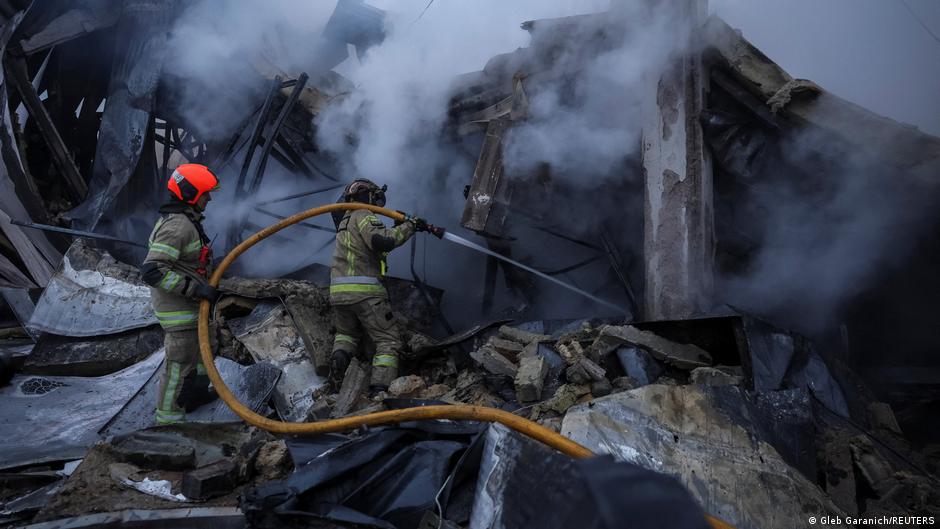
Russian forces launched a series of missile strikes on Kyiv on the evening of October 26, killing at least one person and injuring no fewer than 10, according to Ukrainian authorities. Three of those wounded were reported to be in serious condition. A separate attack on Kharkiv killed two people and injured four others.
The latest strikes bring renewed geopolitical risk into focus for investors assessing exposure to Ukraine, Russia and the wider region. The immediate consequences described by officials were humanitarian and physical, while the potential market significance lies in the possibility of further disruption to infrastructure, business activity and financing conditions. No specific reaction in equities or bonds was reported in the available information.
Russian forces attacked Kyiv with ballistic missiles on Monday evening, October 26. Ukraine’s Air Force said the missiles were launched from Bryansk. At about 11 p.m. local time, Kyiv Mayor Vitali Klitschko reported on Telegram that at least one person had been killed and 10 injured.
Medical teams hospitalized nine of the injured people, Klitschko said. Three were in serious condition.
Damage Reported Across Two Kyiv Districts
Earlier messages from the mayor described attacks on two districts of the Ukrainian capital. In the Desnianskyi district, a strike was recorded near a metro station and close to a university dormitory. In the Dniprovskyi district, another strike hit a building in a non-residential development area.
Windows were also blown out in two departments of a medical facility in the Dniprovskyi district. Klitschko said neither patients nor medical personnel were injured there. Officials were still determining the other consequences of the attacks.
The Kyiv City Military Administration said a residential building in the Desnianskyi district had been damaged. Preliminary information indicated that people might be trapped inside. At the time of publication, the attack was continuing, including through the use of jet-powered drones.
For capital-markets participants, damage near transport facilities, residential buildings, a university dormitory and a medical institution underscores the persistent operational risks facing assets and organizations in Ukraine. Any assessment of listed companies, sovereign debt or reconstruction-linked investments must account for the possibility that renewed attacks could affect infrastructure and impose additional costs. The information available did not quantify the financial damage or identify any affected public companies.
Kharkiv Attack Adds to Regional Risk
Several hours before the strikes on Kyiv, Russian forces also attacked Kharkiv. Mayor Ihor Terekhov said shelling in the city’s Novobavarskyi district had killed two people and wounded four.
“As a result of the shelling of the Novobavarskyi district, two people have already been killed and four injured,” Terekhov wrote on Telegram.
Apartment buildings, private homes and vehicles were damaged in Kharkiv, the mayor said. No estimate of the property losses was provided.
The simultaneous reports from Ukraine’s capital and its second-largest city reinforce the conflict’s continuing relevance for investors monitoring regional risk. In practical terms, repeated attacks can influence perceptions of sovereign credit risk, the cost and availability of insurance, corporate continuity planning and expectations for reconstruction spending. Those channels may matter for holders of Ukrainian debt and for companies with operations, suppliers or other commercial exposure in the country.
Investors may also watch whether the strikes lead to broader disruption beyond the locations identified by officials. The reported damage was confined to buildings, vehicles and sites in Kyiv and Kharkiv, while authorities continued to assess the consequences in the capital. The source information did not report damage to energy infrastructure, financial institutions or securities-market systems.
For now, the clearest takeaway for markets is an increase in headline risk rather than a documented repricing of assets. Further information on casualties, infrastructure damage and the duration of the attacks could shape investor assessments. With people potentially trapped in a damaged residential building and attacks still underway at the time of publication, the full human and economic impact remained uncertain.