Lula Wins Brazil Runoff as Election Challenge Clouds Market Outlook
Investors face renewed political uncertainty after Flavio Bolsonaro rejected the result and demanded that Brazil’s runoff be annulled.
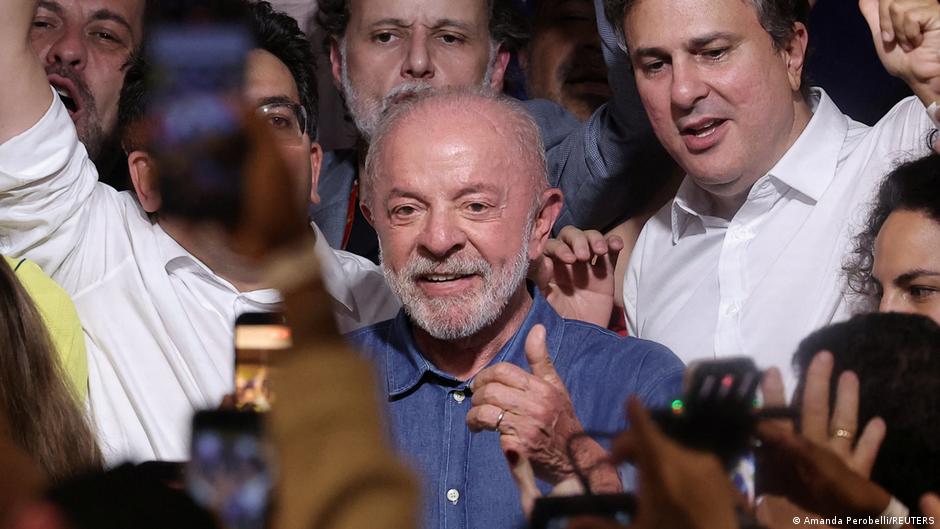
Brazilian President Luiz Inacio Lula da Silva has won re-election in a closely contested runoff, but a demand from his opponent to annul the vote leaves investors confronting a new period of political uncertainty in Latin America’s largest economy.
Official results showed the 80-year-old center-left incumbent securing 51.8% of the vote in the presidential election held on Sunday, October 25. Right-wing populist Senator Flavio Bolsonaro received 48.2%. Bolsonaro is the son of Jair Bolsonaro, Brazil’s former far-right president.
The result gives Lula a fourth, nonconsecutive term as president. It also marks the first time in Brazilian history that a candidate who placed second in the first round has gone on to win the election.
Contested result adds a political risk premium
Flavio Bolsonaro refused to concede and called for the election result to be annulled, citing the extension of voting hours. His challenge introduces uncertainty over the transition and could become an immediate consideration for investors assessing Brazilian equities, government bonds and the currency.
The dispute centers on a decision made shortly before polling stations were due to close. Lula and Bolsonaro had both previously requested longer voting hours because of public transport problems and adverse weather conditions in parts of Brazil. Supreme Court Justice Cristiano Zanin ultimately ordered voting to continue for another two hours, issuing the ruling three minutes before the scheduled closing time.
For markets, the significance of Bolsonaro’s objection will depend on whether it develops into a sustained legal or institutional confrontation. A rapid resolution would allow attention to shift toward Lula’s economic program and cabinet choices. A prolonged challenge, by contrast, could make investors more cautious toward Brazilian assets by reducing visibility over policymaking and the political transition.
The narrow 3.6-percentage-point gap also underlines the country’s political divisions. Those divisions may affect Lula’s ability to advance legislation, respond to fiscal pressures and address voter concerns without intensifying tensions over public spending. Investors in sovereign debt will be particularly attentive to the balance between social commitments and budget discipline, while equity holders will look for signals about taxation, regulation and the government’s approach to state-linked companies.
Cost of living and crime remain central concerns
Lula’s re-election campaign was complicated by public anxiety over the cost of living and rising crime. The campaign also unfolded amid corruption scandals, economic instability and allegations of interference by the United States.
Those issues will remain relevant after the election. Persistent pressure on household finances can shape consumer demand, corporate earnings and expectations for interest rates. Concerns about crime may influence business confidence and investment decisions, while broader economic instability can raise financing costs for the government and private companies.
No specific market reaction was reported in the immediate account of the result. The first investable signals are therefore likely to come from the handling of Bolsonaro’s challenge, the response of Brazil’s institutions and Lula’s initial statements on fiscal and economic policy. Investors will also be watching whether the president can build sufficient political support to govern effectively after such a close contest.
Companies exposed to domestic consumption could be sensitive to policies aimed at easing living-cost pressures. Banks and other financial firms may respond to changes in the interest-rate and credit outlook, while infrastructure and state-influenced sectors could be affected by the administration’s spending and governance priorities. Bond investors, meanwhile, will focus on the implications for borrowing needs, inflation expectations and fiscal credibility.
Celebrations contrast with institutional uncertainty
The announcement of the result prompted celebrations in major cities. Fireworks and vuvuzelas were heard in Rio de Janeiro, while thousands of people dressed in red, the color of Lula’s Workers’ Party, took to the streets of Sao Paulo to celebrate his victory.
That public enthusiasm contrasts with the uncertainty created by Bolsonaro’s refusal to accept defeat. The institutional response will be important not only for the legitimacy of the result but also for investor perceptions of Brazil’s political stability and the predictability of its legal framework.
The central market question is now shifting from who won the vote to whether the result is implemented without an extended confrontation. Once that issue is settled, attention will turn to the composition of Lula’s government and the policies of his fourth presidency. Until then, the disputed outcome may keep political risk elevated across Brazilian assets even as the official count gives the incumbent a clear mandate to remain in office.