Bulgaria Heads to Runoff as Low Turnout Adds Investor Uncertainty
The November 1 presidential runoff puts Bulgaria’s Ukraine policy and institutional stability under closer scrutiny from investors.
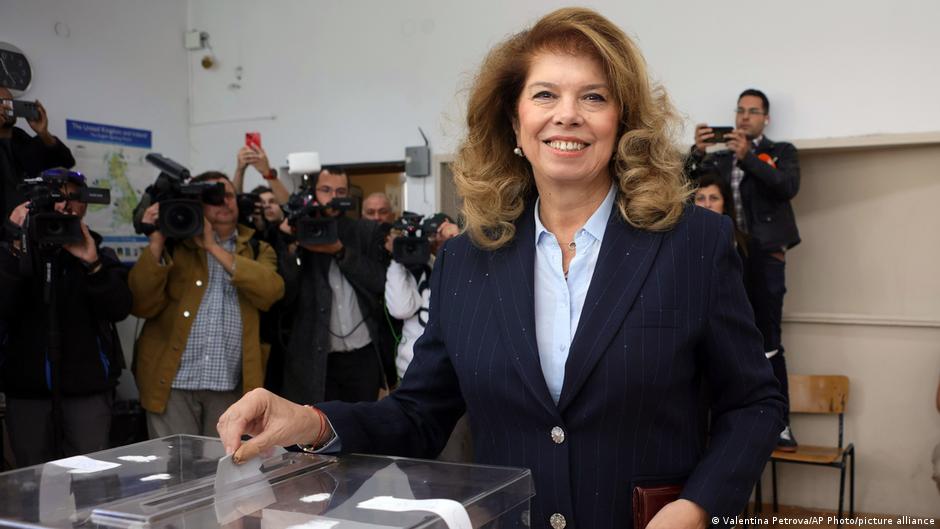
Bulgaria is heading toward a presidential runoff after no candidate secured an absolute majority in the first round, extending political uncertainty at a time when investors are closely watching the country’s exposure to the war in Ukraine and the stability of its institutions.
With 95.3% of ballots processed, incumbent head of state Iliyana Yotova had received 34.6% of the vote, according to the country’s Central Election Commission. Pro-Western former prime minister Andrey Gyurov was in second place with 32%, setting up a closely contested second round that is expected to take place on November 1.
Turnout was only 22.2%, far below the required level of more than 50%. The weak participation adds another layer of uncertainty to the result and highlights limited voter engagement during a campaign initially characterized by sparse rallies, no televised debates and numerous personal attacks against the two leading candidates.
Markets Face a Political Risk Test
For capital markets, the immediate question is not simply which candidate wins, but whether the runoff produces a clear and broadly accepted political mandate. Low turnout and the narrow gap between Yotova and Gyurov could keep investors cautious as they assess Bulgaria’s policy direction, institutional continuity and relationship with European and regional partners.
The president’s formal powers are limited, but the office is not merely ceremonial. The president represents Bulgaria internationally, subject to certain exceptions, serves as commander-in-chief and signs decrees appointing the prosecutor general and the heads of the highest courts. The officeholder can also appoint an acting prime minister from a constitutionally defined group of eligible officials and veto legislation adopted by parliament.
Those powers matter to equity and bond investors because they can influence government formation, judicial appointments and the pace at which legislation takes effect. The outcome may therefore shape perceptions of political stability even if most economic policy remains outside the president’s direct control. Investors will be alert to any signs that the runoff could complicate relations between the presidency, parliament and the government.
The close result leaves markets with two distinct foreign-policy signals, particularly over Bulgaria’s support for Ukraine.
Ukraine Policy Moves to the Fore
The second round carries particular foreign-policy significance because Bulgaria is close to the theater of war in Ukraine. During October alone, four merchant vessels off Bulgaria’s Black Sea coast were reportedly struck by drones. A Starlink station near Sofia was also damaged in an arson attack.
Yotova and the Bulgarian government headed by Rumen Radev responded cautiously to the incidents. They did not offer an unequivocal assessment or identify those responsible, an approach that also influenced the election campaign. For investors, the incidents underline the security risks facing Black Sea trade routes and infrastructure, although the source information provides no evidence of a specific reaction in Bulgarian equities or bonds.
Foreign policy was not initially the dominant feature of the presidential race. In its early stages, the campaign drew attention for its infrequent public rallies, lack of television debates and repeated personal attacks. In recent weeks, however, differences between the two frontrunners over support for Ukraine have moved to the center of the contest.
Yotova favors a diplomatic end to the war and sought to assure voters that Bulgarian troops would not be sent to Ukraine, even though the possibility had not been the subject of broad public debate. Gyurov has previously expressed support for Ukraine and, while serving as prime minister, signed a security cooperation agreement with Kyiv.
What Investors Will Watch Next
The contrasting positions may affect how investors evaluate Bulgaria’s geopolitical alignment and its exposure to regional security pressures. A Yotova victory could be interpreted as favoring a more restrained public posture toward the conflict, while a Gyurov win would point toward more explicit support for Kyiv. Neither outcome, on its own, determines Bulgaria’s fiscal or monetary policy, but foreign-policy signaling can influence broader assessments of country risk.
Bond investors are likely to focus on whether the runoff leads to institutional friction or preserves continuity in state appointments and the legislative process. Equity investors, particularly those exposed to transport, infrastructure, energy and other sectors sensitive to Black Sea security, will have reason to follow any change in the government’s response to drone incidents and infrastructure attacks.
The first-round count leaves the race open: Yotova’s 34.6% gives her a lead, but Gyurov’s 32% keeps the contest competitive. With turnout at just 22.2%, mobilization ahead of November 1 could prove decisive. Until the runoff clarifies Bulgaria’s political and foreign-policy direction, investors may treat the election as an unresolved source of regional risk rather than a direct change in economic policy.