Ryanair to Close Berlin Base, Halve Flights Amid Rising German Aviation Costs
Irish low-cost carrier Ryanair cites soaring airport fees and aviation taxes in Germany as reasons for scaling back operations in Berlin.
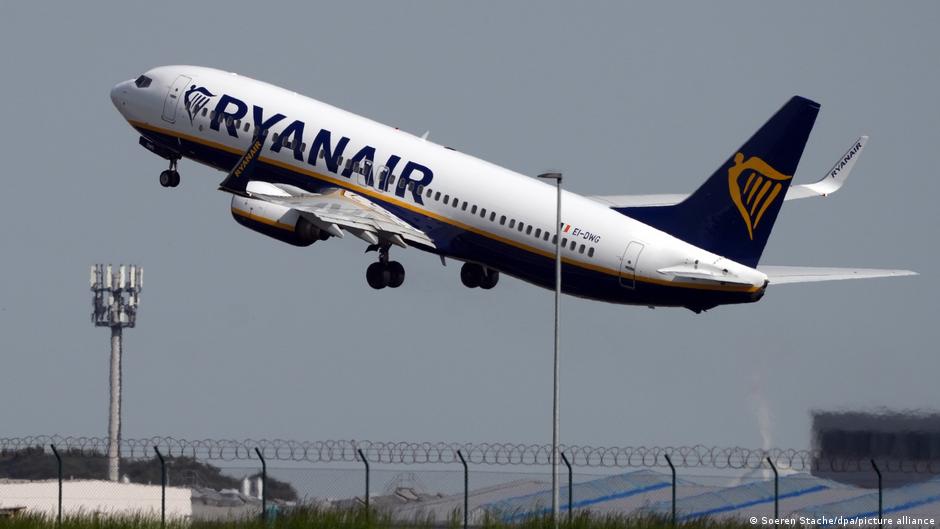
Ryanair, the Irish budget airline, has announced plans to close its base at Berlin Brandenburg Airport by October 2026, significantly reducing its presence in the German capital. The move includes withdrawing all seven aircraft from Berlin and cutting flight frequencies to the city by 50%, which will reduce annual passenger traffic from 4.5 million to approximately 2.2 million.
Market Reaction and Investor Implications
The decision reflects Ryanair's broader strategy to shift capacity to more cost-efficient airports across the European Union, including Sweden, Slovakia, Albania, and Italy. These markets have recently removed or reduced aviation taxes, offering a more favorable cost environment. By contrast, Germany's aviation sector faces a rising cost burden that the airline deems unsustainable for low-cost operations.
Ryanair's announcement follows Berlin Brandenburg Airport's planned 10% increase in fees between 2027 and 2029, adding to already elevated airport charges that have surged 50% since the onset of the COVID-19 pandemic. This fee hike comes despite a 30% decline in passenger volumes at Berlin—from 36 million in 2019 down to 26 million expected in 2025.
"German aviation policy has failed its citizens by relying heavily on high aviation taxes and airport charges," Ryanair CEO Eddie Wilson stated, highlighting the unsustainable cost trajectory impacting profitability and route viability.
Since 2019, Germany has escalated its aviation taxes from €7.30 to €15.50 per passenger, security fees are projected to double from €10 in 2024 to €20 by 2028, and air traffic management charges have increased from €1 to €3.30 per passenger. Ryanair interprets these rising expenses as a significant deterrent to maintaining its Berlin operations.
The management of Berlin Brandenburg Airport has disputed the airline's claims about fee increases, describing Ryanair's decision as unexpected and confirming ongoing discussions with the carrier to resolve the situation.
For investors, Ryanair's retreat signals mounting pressure on European budget carriers operating in high-cost jurisdictions. The airline has previously shuttered bases in Frankfurt, Düsseldorf, and Stuttgart, and discontinued flights to Dresden, Leipzig, and Dortmund, indicating a broader pattern of optimization under rising regulatory and fiscal challenges.
Ryanair plans to reallocate personnel displaced by the Berlin base closure to other parts of its European network, an effort to sustain employment and operational growth despite contracting the German footprint.
Financial markets will be closely watching how Ryanair balances cost pressures with expansion in lower-cost EU airports and whether German aviation taxation policies adapt to maintain competitiveness. The airline's strategic shifts could influence investor sentiment across the European airline sector, affecting equity valuations and bond yields amidst an evolving regulatory landscape.