Ukraine Says Starshield Speed Limits Persist Despite Trump’s Assurance
The dispute keeps operational and political risks around SpaceX’s military satellite services in focus for defense and technology investors.
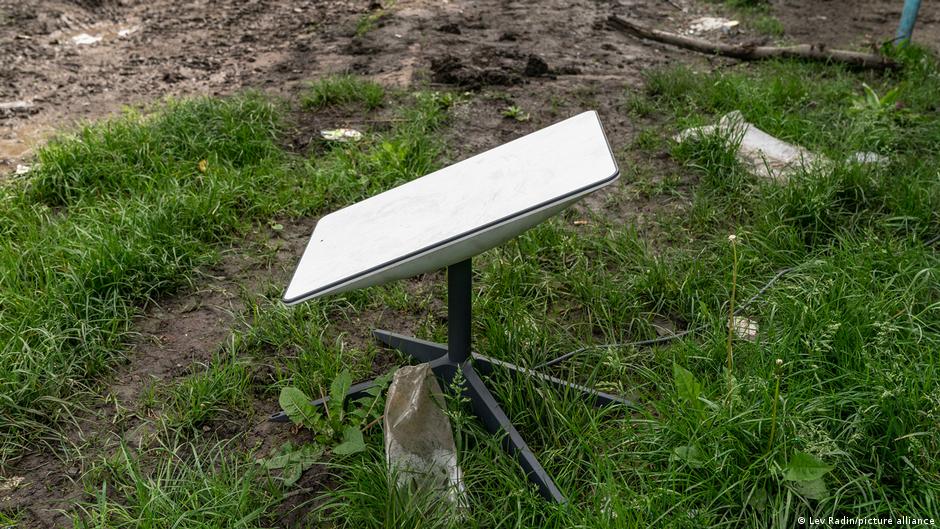
Ukraine said speed restrictions remain in place on the Starshield satellite communications service used by its military, contradicting US President Donald Trump’s statement that SpaceX had restored full Starlink access in the country.
Ukrainian President Volodymyr Zelensky said the limits were still active during a video address to the Hudson Institute, a conservative US think tank, on Friday, Oct. 23. “The speed has not been restored,” Zelensky said.
The conflicting accounts bring renewed attention to the operational and political risks surrounding privately operated satellite infrastructure in wartime. For investors, the episode underscores how companies serving both commercial and government customers can face heightened scrutiny when their technology becomes critical to military operations.
SpaceX Service Dispute Remains Unresolved
Starshield is described as the military package of SpaceX’s Starlink satellite communications services used by Ukraine. Zelensky’s adviser, Serhiy Beskrestnov, said connection speeds may in some cases slightly exceed the imposed limit. He cautioned, however, that such instances could reflect SpaceX algorithms or specific conditions of use rather than the removal of the restriction.
Trump said a day earlier that SpaceX had restored Ukraine’s full access to Starlink. He did not answer a question about who had instructed the company to lift the restrictions observed in Ukraine since Oct. 14.
Both Trump and SpaceX founder Elon Musk had previously denied that either of them ordered Starlink speeds to be reduced. The latest comments from Kyiv leave the cause, authority and current status of the limitations publicly contested.
“The speed has not been restored,” Zelensky said during his Hudson Institute address.
Although SpaceX is privately held and therefore not directly traded on public equity markets, developments involving Starlink and Starshield can still matter across publicly listed aerospace, defense and satellite communications companies. Investors assess such incidents for what they may signal about government procurement, contractual oversight, service resilience and the strategic value of alternative communications networks.
The disagreement also highlights the dependence of modern military operations on commercial technology providers. That dependence may influence how governments structure future contracts, including requirements concerning service continuity, control over access and performance guarantees. The source report did not identify any financial impact on SpaceX, disclose contract terms or describe any immediate response in equities or bonds.
Military Impact Raises Broader Defense-Sector Questions
The Ukrainian military uses Starshield, including to help guide unmanned aerial vehicles during attacks on targets in territories occupied by Russia in the course of its war against Ukraine. Zelensky previously said disruptions to Starlink slow frontline logistics and restrict the use of drones.
For capital-markets participants, those operational consequences reinforce the growing role of satellite connectivity, autonomous systems and secure communications within defense spending. They also illustrate concentration risk when essential capabilities depend on a limited number of suppliers. Any policy response could affect perceptions of companies exposed to military communications, satellite launches, network equipment and competing low-Earth-orbit systems, though no new procurement decisions were announced.
The issue arrives as defense and aerospace investors continue to weigh strong demand for military technology against execution risks, supply constraints and political intervention. Contradictory statements from national leaders and private-sector executives can add uncertainty over accountability and the reliability of services under crisis conditions.
Interceptor Deliveries Are Also Delayed
Zelensky also told the Hudson Institute that deliveries of interceptor missiles intended to defend Ukrainian territory against Russian ballistic missiles had been delayed.
“We are waiting for interceptors that had already been agreed upon. But they still have not arrived. This is a real problem because the Russians attack us almost every day,” Zelensky said.
The delayed deliveries add another supply-side concern for the defense sector. Missile interceptors are central to Ukraine’s air-defense requirements, and delivery delays can draw attention to production capacity, inventories and the timing of government orders. The report did not specify the type or number of interceptors, identify their supplier, or provide a revised delivery schedule.
Ukraine’s armed forces are nevertheless continuing to hold their defensive positions, Zelensky said. “I am proud of how strong our people are,” he added.
Investors now face two unresolved operational questions: whether SpaceX will confirm that the Starshield speed limits remain active, and when the previously agreed interceptor deliveries will reach Ukraine. Until clearer answers emerge, the dispute is likely to sustain focus on the reliability of private military infrastructure and the capacity of Western defense supply chains.