United Russia Leads Duma Vote, Signaling Policy Continuity for Markets
Early official results point to a strengthened parliamentary majority for the ruling party, reinforcing expectations of limited policy change for investors.
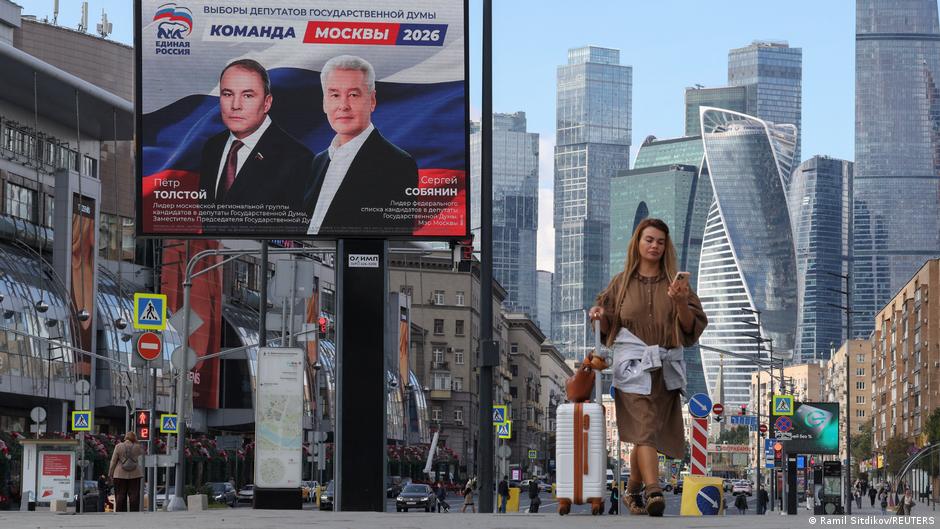
Russia’s ruling United Russia party is on course to win the State Duma election, according to early official results released by the country’s Central Election Commission, a result that points to continued political continuity at a time when investors are weighing sanctions risk, state spending priorities and the outlook for Russian assets.
After 82.19 percent of voting protocols had been processed, United Russia had 57.76 percent of the vote in elections to the ninth convocation of the State Duma, the lower house of parliament. The figures were reported by Russia’s Central Election Commission late on Monday, September 21, according to the Russian state agency TASS.
The Communist Party of the Russian Federation was in second place with 13.89 percent, followed by the Liberal Democratic Party of Russia with 8.77 percent. New People stood fourth with 7.97 percent, while A Just Russia had 4.99 percent, leaving it at risk of failing to clear the 5 percent threshold, according to the commission’s data.
United Russia was reported at 57.76 percent after 82.19 percent of protocols had been processed.
For capital markets, the developing result is less a surprise shock than a signal of institutional continuity. A commanding majority for the ruling party would reinforce expectations that fiscal, regulatory and geopolitical policy will remain broadly aligned with the Kremlin’s existing approach. That matters for equities and bonds because Russian market pricing is heavily shaped by state-directed sectors, budget priorities, sanctions exposure and the perceived predictability of political decision-making.
Majority Math Matters for Investors
United Russia candidates were also leading in 208 of the 225 single-mandate districts. On that basis, the party of power is expected to secure more than 301 seats in parliament, the number required for a constitutional majority.
A constitutional majority would be significant for investors not because it introduces an immediate new market catalyst, but because it reduces legislative uncertainty. In markets where politics and corporate regulation are closely linked, large parliamentary control can make policy implementation faster and more predictable. For holders of Russian equities, particularly in state-linked industries, that may support the expectation that current industrial, defense, energy and social spending priorities will continue.
At the same time, predictability is not the same as lower risk. The same political consolidation may reinforce investor concerns about governance, rule-of-law issues and the geopolitical backdrop that has already shaped access to Russian securities and sovereign debt for many global investors. Bond investors, in particular, are likely to view the results through the lens of fiscal capacity, sanctions constraints and the state’s ability to maintain domestic funding channels.
The comparison with the previous Duma election is also notable. In 2021, United Russia won 49.82 percent of the vote. The current reported share, at 57.76 percent with more than four-fifths of protocols processed, indicates a stronger showing for the ruling party in the proportional vote.
Sanctions and Legitimacy Questions Remain Central
This year’s three-day parliamentary vote was also held in Russian-occupied territories of Ukraine. That element is likely to remain central to how foreign governments and institutional investors assess the election’s legitimacy and its implications for sanctions policy.
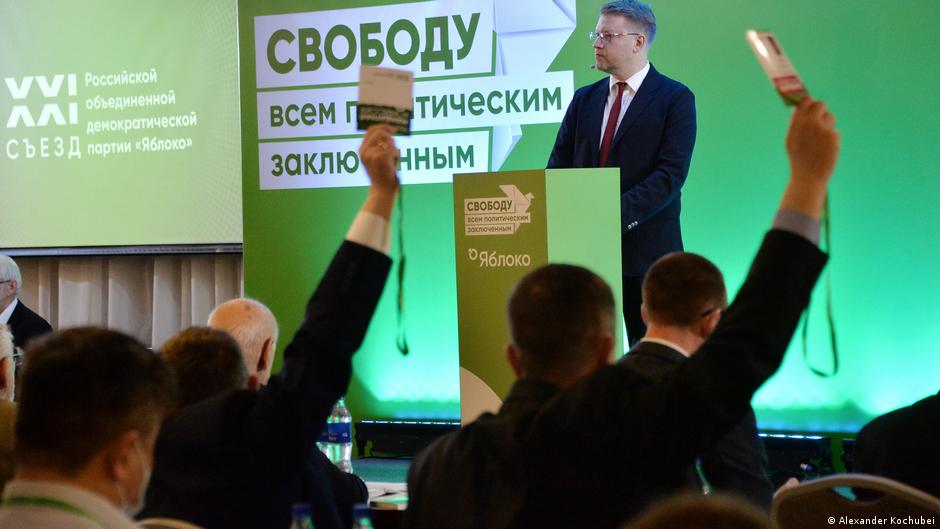
Germany and the European Union criticized the Russian parliamentary elections, pointing to what they described as their staged nature and to repression against the opposition. The only major party that had opposed the war, Yabloko, was removed from the election.
Those political conditions are relevant for markets because they feed into the broader risk premium attached to Russian exposure. Even when domestic results point to policy stability, international criticism can sustain pressure on cross-border investment, settlement infrastructure, sovereign risk perceptions and access to capital. For global funds already constrained by sanctions and compliance rules, the election outcome is unlikely to reopen meaningful access in the near term.
For domestic investors, the immediate effect may be more about expectations than direct market mechanics. A stronger United Russia mandate suggests that existing economic policy settings are likely to remain intact, including the state’s role in strategic sectors and the legislative support for government priorities. Russian equities tied to public spending or regulated industries may be assessed against that continuity, while fixed-income investors will focus on budget execution, inflation management and domestic demand for government debt.
The early results therefore present a familiar market equation: stronger political control may lower short-term policy uncertainty inside Russia, while the surrounding geopolitical and legitimacy concerns continue to limit the appeal of Russian assets to many international investors. With A Just Russia hovering just below the parliamentary threshold and United Russia leading across most single-mandate districts, the final seat distribution will determine the precise scale of the ruling party’s control, but the direction of travel is already clear.