U.S. Reports New Caribbean Drug-Boat Strike as Investors Weigh Risk
The U.S. military said four people were killed in the latest Caribbean strike, extending a campaign that has drawn legal scrutiny and geopolitical concern.
The U.S. military said it carried out a new lethal strike on a vessel in the Caribbean Sea that it said was transporting drugs, killing four people and adding another flashpoint for investors already monitoring geopolitical risk, defense policy and the political outlook for regional trade routes.
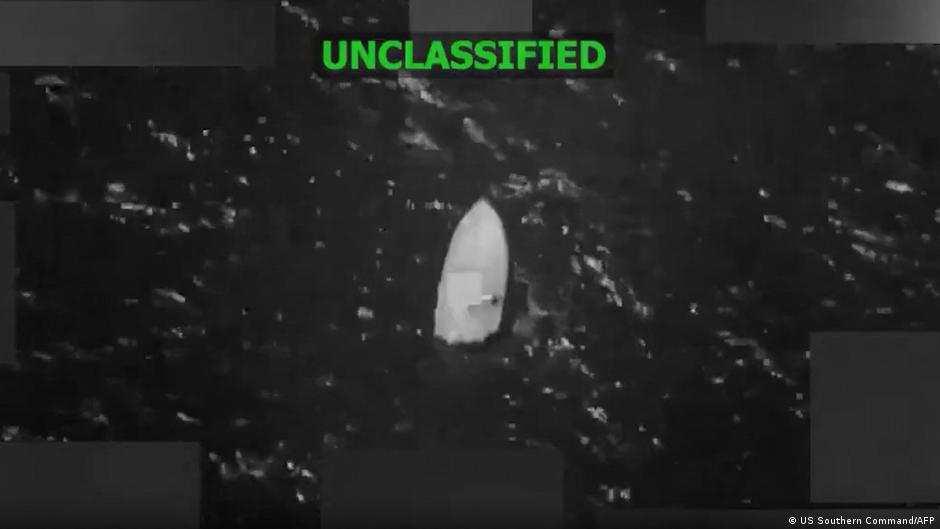
U.S. Southern Command said on Saturday, September 19, that it had struck a speedboat “traveling along routes used for illegal drug trafficking in the Caribbean Sea.” The command said intelligence had linked the vessel to narcotics trafficking, but the U.S. side did not present evidence publicly demonstrating the boat’s involvement.
“Credible intelligence confirmed this vessel’s involvement in drug trafficking. During the operation, four narcoterrorists were eliminated,” the military said.
A video posted on X showed a moving vessel that then disappeared in a bright flash. The strike is part of a broader U.S. campaign against vessels described by American officials as connected to drug trafficking in the Caribbean, a campaign that has intensified scrutiny from international legal officials and could remain a source of political volatility for markets.
Market Focus Turns to Policy Risk
For capital markets, the immediate question is not only the tactical details of the strike but whether the campaign adds another layer of policy and geopolitical risk to U.S. assets and companies exposed to Latin America and the Caribbean. Investors tend to discount isolated military actions quickly when there is no immediate threat to energy flows, shipping lanes or large-scale diplomatic escalation. But a campaign lasting more than a year, involving repeated strikes and rising death tolls, can still influence sentiment at the margin.
Defense equities may draw attention when U.S. military operations remain in focus, particularly if investors expect sustained demand for surveillance, intelligence, maritime patrol, drones, munitions or command-and-control systems. At the same time, a law-enforcement and counter-narcotics operation does not automatically imply a broad defense spending cycle, and market reactions may remain selective unless policymakers signal a wider military posture in the region.
Bond investors are likely to view the development through the lens of fiscal, diplomatic and headline risk rather than as a standalone driver of yields. U.S. Treasury markets generally respond more strongly to inflation, Federal Reserve policy, growth data and budget expectations than to limited overseas operations. Still, recurring military action can reinforce demand for liquid safe assets if it coincides with broader risk aversion or a deterioration in regional relations.
Equity markets may also watch for any effect on companies tied to logistics, insurance, commodities and regional financial exposure. The Caribbean is not typically treated by investors as a single systemic market risk comparable with major energy corridors, but repeated strikes at sea can raise questions about operational risk, maritime monitoring and diplomatic responses from governments in the region.
Legal Scrutiny Adds a Governance Dimension
The Associated Press has noted that, including this case, the total number of people killed in U.S. military strikes on vessels of alleged drug traffickers in the Caribbean Sea has reached at least 231. According to the agency’s count, 69 such strikes have been carried out as part of a campaign that has continued for more than a year.
The campaign has also drawn criticism from international human rights officials. On October 31, 2025, U.N. High Commissioner for Human Rights Volker Türk said U.S. attacks on vessels “allegedly linked to drug trafficking” violated international law. Türk called for immediate, independent and transparent investigations into the attacks.
That legal dimension matters to investors because it can affect the political durability of a policy. Operations that face sustained scrutiny from international bodies, courts, lawmakers or allied governments can become harder to price. Markets usually prefer clear rules of engagement and predictable policy frameworks, especially when cross-border enforcement, sanctions risk or military authority are involved.
The source article also cited remarks by U.S. President Donald Trump at a White House press conference on October 23, 2025, when he said American military forces would “kill people” bringing drugs into the country from Venezuela. That statement underscored the administration’s willingness to frame drug interdiction in explicitly lethal military terms, a posture that may keep regional tensions on investors’ radar.
For investors today, the practical takeaway is that the strike adds to a pattern rather than creating a wholly new market event. The reported deaths, the number of previous strikes and the absence of publicly presented evidence in this case will likely keep the campaign in political debate. Unless the episode prompts a diplomatic rupture, disrupts trade or changes expectations for U.S. fiscal or defense policy, its direct effect on broad indexes may be limited.
Still, markets often move first on macroeconomic data and monetary policy, then reprice geopolitical risk when patterns become harder to ignore. The Caribbean campaign now sits in that second category: not yet a dominant market driver, but a recurring geopolitical variable for investors tracking defense shares, sovereign risk, regional equities and the legal boundaries of U.S. military action.