Trump Signs Graham Russia Sanctions Law, Putting Energy Markets on Alert
The measure gives the White House broad discretion to target buyers of Russian energy, raising tariff risk for global trade and investors.
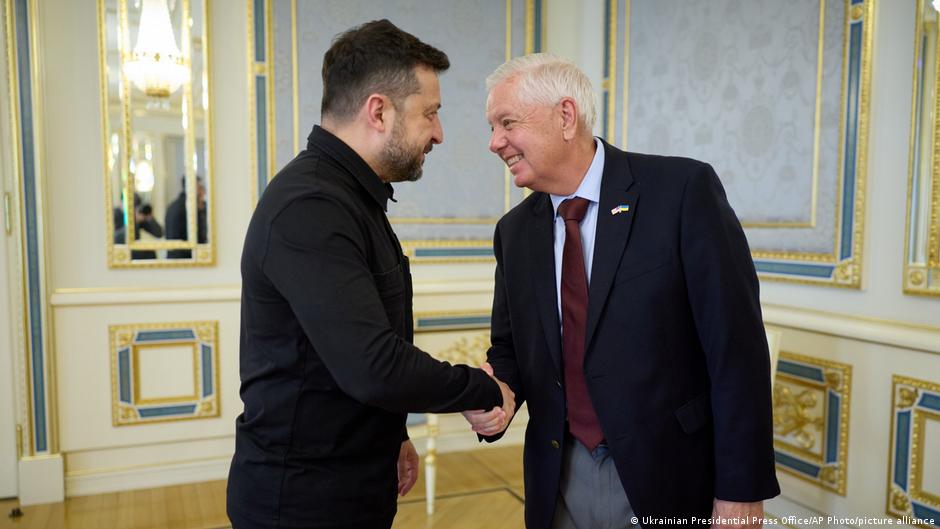
President Donald Trump on Friday, September 18, signed into law a new package of U.S. sanctions against Russia over its continuing war against Ukraine, approving legislation long associated with the late Republican Senator Lindsey Graham and closely watched by energy, currency and bond investors.
The measure, known in political and media shorthand as the Graham bill, gives the U.S. president authority to impose 100% tariffs on the five largest buyers of Russian oil and gas, as well as on five countries deemed to be helping Moscow evade energy sanctions. It also includes exemptions for countries that receive less than 15% of their natural gas consumption from Russia and are taking steps to reduce those imports.
For capital markets, the immediate issue is not only the sanctions text, but the discretion embedded in it. By giving Trump the power to decide whether to apply, suspend or remove the measures, the law creates a new policy variable for investors already weighing geopolitical risk, energy supply, inflation and global trade frictions.
Energy Risk Moves Back to the Forefront
The law targets Russia's energy revenue at a time when oil and gas markets remain highly sensitive to disruptions in supply, shipping and payment channels. A 100% tariff threat against large buyers of Russian energy could increase pressure on importers to diversify supply, potentially affecting crude flows, liquefied natural gas contracting and refined-product trade.
The legislation also provides for sanctions against Russian officials, banks, business figures and the so-called shadow fleet, a network of vessels associated with efforts to move Russian oil outside established sanctions and price-cap systems. Measures aimed at shipping and finance can matter for markets even before formal penalties are applied, because insurers, banks, commodity traders and refiners often adjust exposure in anticipation of enforcement risk.
Investors in energy equities may now have to assess two opposing forces. On one side, tighter restrictions on Russian supply could support oil and gas prices, helping some producers and service companies. On the other, higher tariffs and broader trade disruption could weigh on global growth expectations, hurting cyclical equities and energy demand forecasts.
Bond markets may also treat the law as a fresh inflation-risk input. If the threat of sanctions contributes to higher energy prices, that could complicate the outlook for consumer prices and central bank policy. At the same time, escalating geopolitical uncertainty often supports demand for safe-haven government debt, creating cross-currents for Treasury yields and European sovereign bonds.
Broad Presidential Authority Adds Trade Uncertainty
The bill has changed substantially since it was introduced in April 2025 by Graham and Democratic Senator Richard Blumenthal. Its original version contemplated tariffs of up to 500% on Russian products while Moscow continued the war against Ukraine and refused peace talks. The president would have been required to assess periodically whether Russia was ready for dialogue and, if not, impose sanctions. Because of the 500% level, the proposed measures became known as “hellish” sanctions.
That tariff threshold was later reduced to 100% for importers of Russian oil. By the time Trump signed the bill, it had also expanded the president's authority significantly. Unlike the usual practice in which such actions require coordination with Congress, the final law allows Trump himself to determine whether to impose or cancel the measures specified in the legislation.
That feature is central to the market read-through. For equities, especially companies exposed to global supply chains, the law adds another channel through which tariff policy can shift with executive decisions. For bonds, it raises questions about inflation pass-through, fiscal effects and the broader risk premium attached to trade policy. For currencies, countries that remain major buyers of Russian energy could face pressure if investors judge them to be at risk of U.S. penalties.
The final version may also be used by Trump in the context of his continuing trade war against China, according to the source text. That possibility broadens the relevance of the law beyond Russia and Ukraine, placing it within a wider U.S. trade-policy framework that investors have already had to price across industrials, technology, commodities and emerging markets.
“Why should Congress or the House give the president unlimited authority to impose new tariffs around the world that will have negative economic consequences for the American people?” House Democratic minority leader Hakeem Jeffries said, explaining his opposition.
Jeffries also said life in the United States was already too expensive and argued that he could not support granting such broad tariff powers. His remarks point to a domestic market concern: tariffs intended as geopolitical pressure can also raise import costs, affect corporate margins and feed into consumer prices.
Ukraine Welcomes the Signal
Ukrainian President Volodymyr Zelensky thanked Trump for signing the legislation, calling it an extremely important law and thanking senators and members of the House of Representatives who supported it. He emphasized the importance of increasing pressure on Moscow to end the war.
Zelensky also invoked Graham's belief that the United States had sufficient strength to confront dictators and achieve results if it acted correctly. Graham, who had promoted the measure for roughly a year and a half, died on July 11, 2026, before the bill became law.
Supporters of the legislation argue that the measure sends an important signal of U.S. support for Ukraine at a time when the intensity of fighting is increasing. For markets, that signal has a practical dimension: Washington is now armed with another instrument that could affect energy trade, banking channels, shipping activity and the investment climate across economies linked to Russian commodity flows.
The law also extends U.S. sanctions against Iran until 2031, adding another geopolitical layer for investors tracking energy supply and Middle East risk. While the Russia provisions are the immediate focus, the Iran extension reinforces the broader theme that sanctions policy remains a durable factor in global capital allocation.
In the near term, investors are likely to focus on implementation. The statute gives Trump room to choose targets, timing and reversals, meaning market reaction may depend less on the signing itself than on subsequent White House decisions. Until those choices become clear, the law is likely to keep a geopolitical premium attached to energy prices and maintain caution around equities, debt and currencies exposed to Russian oil and gas trade.