U.S.-Denmark Greenland Deal Puts Arctic Security Back on Market Radar
Washington says the arrangement expands its military role in Greenland, while Denmark and Nuuk frame it as a pending agreement that strengthens NATO security.
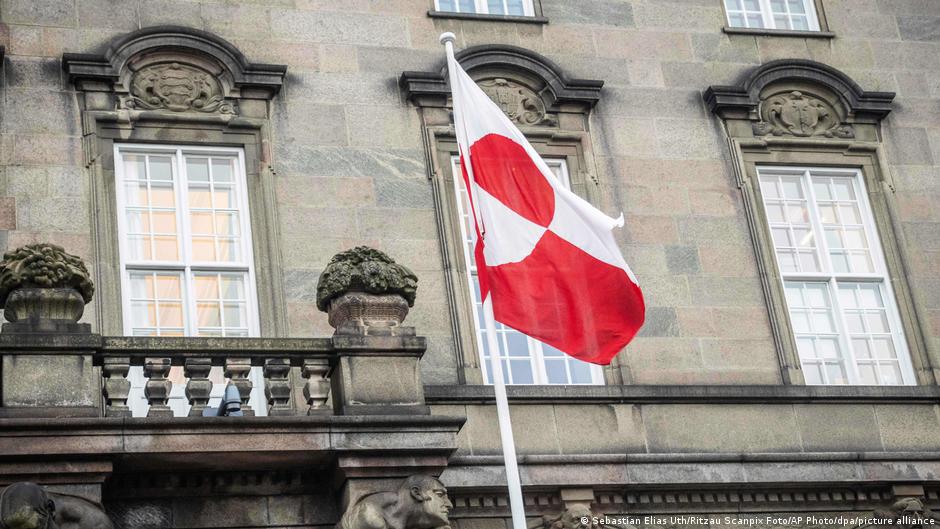
President Donald Trump said the United States has reached understandings with Denmark and Greenland to expand the U.S. military presence on the island, a move that places Arctic security, NATO defense priorities and strategic minerals back in focus for investors tracking geopolitical risk.
Trump announced the agreement on Truth Social on Friday evening, September 18, describing it as a deal on the “security of Greenland.” According to his statement, the arrangement would give the United States “permanent control over security and all other needs in Greenland,” allowing Washington to do what it considers necessary to ensure and protect the security of both the island and the United States.
The announcement, if finalized, could reshape the strategic backdrop for companies and investors exposed to defense spending, Arctic logistics, critical minerals and transatlantic policy risk. It also lands at a moment when markets have been sensitive to sudden shifts in U.S. trade and security policy, particularly under Trump’s renewed pressure on European allies.
Security Terms With Market Implications
Trump said Washington had obtained an indefinite right to act in Greenland as needed for security purposes. He also said that, without U.S. approval, “opponents of the United States” would be unable to establish military bases in Greenland or make “sensitive investments” in the autonomous Danish territory. He added that the deal would cost the United States nothing.
For capital markets, the language around sensitive investment may matter as much as the military component. Greenland has long been viewed as strategically important because of its location near North America and the Arctic, but officials close to Trump have repeatedly noted that the island is also rich in rare earth resources. Any U.S.-backed framework restricting rival investment could affect how investors assess future mining, infrastructure and supply-chain opportunities in the region.
Trump said the United States would immediately begin expanding its military presence in several parts of Greenland. He praised himself for securing an arrangement that, in his telling, his predecessors had been unable to conclude for 100 years, and said the results would be highly valued by the American people.
Trump said the United States would have an indefinite right to do what is necessary in Greenland to protect the security of the island and the United States.
Defense equities may draw attention from the announcement because an expanded U.S. Arctic footprint typically implies demand for surveillance, logistics, communications, air defense and infrastructure capabilities. However, Trump’s assertion that the deal would cost U.S. taxpayers nothing complicates any direct read-through for federal spending expectations. Investors are likely to wait for signed documents and implementation details before assigning revenue impact to contractors or infrastructure providers.
Copenhagen and Nuuk Signal Support, But Call It Pending
Governments in Copenhagen and Nuuk welcomed the understandings with Washington. Danish Prime Minister Mette Frederiksen said the agreement would benefit NATO by strengthening “our common security in the Arctic and the North Atlantic region.”
At the same time, a joint statement from Copenhagen and Nuuk stressed that the understandings recognize Denmark’s “sovereignty and territorial integrity,” as well as “the right of the people of Greenland to self-determination.” That framing is important for political-risk assessment because Greenland is an autonomous region within the Kingdom of Denmark, and any expanded U.S. role is likely to be evaluated through both Danish sovereignty and Greenlandic self-government.
Greenland Prime Minister Jens-Frederik Nielsen said the agreement “ensures and strengthens the security of Greenland, the Kingdom of Denmark, the United States and the Western alliance.” He added that it recognizes Greenland’s interests and the autonomous region’s place in international cooperation.
But there is a notable caveat. The statement presented by Nuuk and Copenhagen was titled as a press release concerning an “expected agreement” with the United States. That wording may indicate that the actual documents have not yet been signed. Under Trump, negotiations between Washington and other countries have repeatedly broken down at the last moment, after which the White House was accused of trying to change deal terms “at the last minute.”
For investors, that uncertainty is central. Markets generally distinguish between a political announcement and an executable agreement, especially where defense access, territorial sovereignty and foreign investment controls are involved. Until documents are signed and operational terms are published, the immediate market effect may be more thematic than transactional.
Arctic Risk Premium Returns
U.S. Secretary of State Marco Rubio, speaking to Fox News Digital, called the Greenland deal a “huge victory” for the United States and Americans. He said the agreement “forever guarantees U.S. security interests in the Arctic at no cost to American taxpayers.”
Rubio said Denmark and Greenland’s understanding of their own defense capacities helped bring about the arrangement. According to Fox News, Rubio said Denmark and Greenland understand that they do not have the necessary financial resources to defend Greenland in the event of an attack or threat, while the United States has the necessary means.
The potential agreement may mark the end of Trump’s long-running pursuit of control over Greenland, an island located off the coast of North America but belonging to Denmark. During his first term, Trump said he wanted to buy Greenland. After returning to the White House, he increased pressure on Denmark and its European allies, even threatening them with large customs duties. Trump justified his intentions by citing U.S. security concerns.
For bond markets, the announcement is unlikely to create a clean near-term signal unless it alters expectations for U.S. defense outlays, European security spending or tariff risk. But the broader implication is a reinforcement of geopolitical fragmentation: Washington is seeking deeper control over a strategically located territory, while also asserting veto power over adversarial military and sensitive investment activity there.
Equity investors may look most closely at defense contractors, Arctic infrastructure operators, shipping and logistics firms, and companies tied to rare earth supply chains. The absence of confirmed spending figures limits immediate valuation impact, but the political direction is clear: Greenland is being treated not only as a defense asset, but as a strategic economic zone in a contest over security, resources and influence.