Merz Says Era of Unconditional U.S.-German Friendship May Be Over
German Chancellor Friedrich Merz framed strains with Washington as a strategic reset with implications for defense spending, trade and growth.
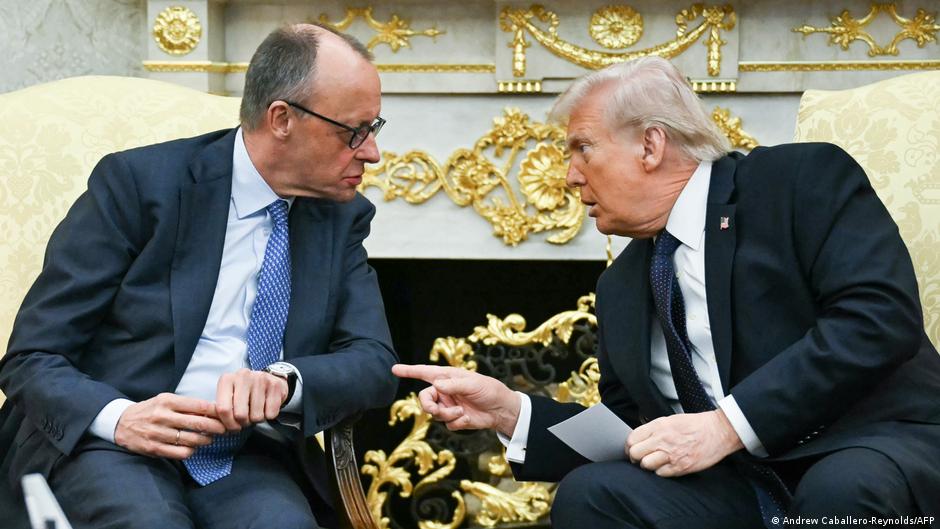
German Chancellor Friedrich Merz said the era of “unconditional transatlantic friendship” may be over for the long term, sharpening a political risk that investors are increasingly weighing across European equities, bonds and currencies.
Speaking at a campaign event of the Christian Democratic Union in Berlin on Thursday, September 17, Merz said Berlin was witnessing a shift in political thinking across the Atlantic and in how the transatlantic alliance is assessed. The comments, reported by dpa, came against a backdrop of deteriorating relations between Germany and U.S. President Donald Trump over the war involving the United States and Israel against Iran, as well as trade wars initiated by the White House.
“We are observing on the other side of the Atlantic a change in political approaches and in the assessment of the transatlantic alliance that we perhaps could not have imagined,” Merz said, according to dpa.
For markets, the message is less about diplomatic tone than about a possible repricing of Germany’s policy path. A weaker assumption of automatic U.S. backing may support higher defense outlays, shift capital toward security-related industries and place fresh pressure on fiscal planning in Europe’s largest economy. It also adds another layer of uncertainty for exporters already exposed to trade friction with Washington.
Defense Spending Becomes a Market Signal
Merz said the tensions that have emerged between Europe, including Germany, and the United States create new opportunities that should not be missed. Germany, he argued, should use the moment to assume greater responsibility for its own security and development. He pointed in particular to the federal government’s significant increase in defense spending.
That emphasis is likely to keep defense and infrastructure-linked equities in focus. Investors have already treated European rearmament as a structural theme rather than a short-term political headline, and Merz’s remarks reinforce the view that security spending is becoming embedded in German fiscal strategy. At the same time, bond investors will be watching how that spending is financed, especially if larger defense commitments coincide with broader efforts to revive growth after years of stagnation.
The chancellor also sought to present the moment as an economic turning point. He said there were signs of recovery in Germany after several years of stagnation, noting that forecasts point to economic growth of about 1.3 percent in 2026. “We have come out of this valley of a shrinking or stagnating economy,” Merz said, while adding that the country still needs reforms.
For equity markets, the combination of modest growth, higher state spending and reform pledges may offer some support to domestically exposed German companies. But the outlook remains tied to external risks: trade disputes with the United States, the impact of geopolitical shocks on energy and shipping, and uncertainty over global demand. A 1.3 percent expansion would mark improvement, but not a return to rapid growth.
Trade, Iran and Political Friction With Washington
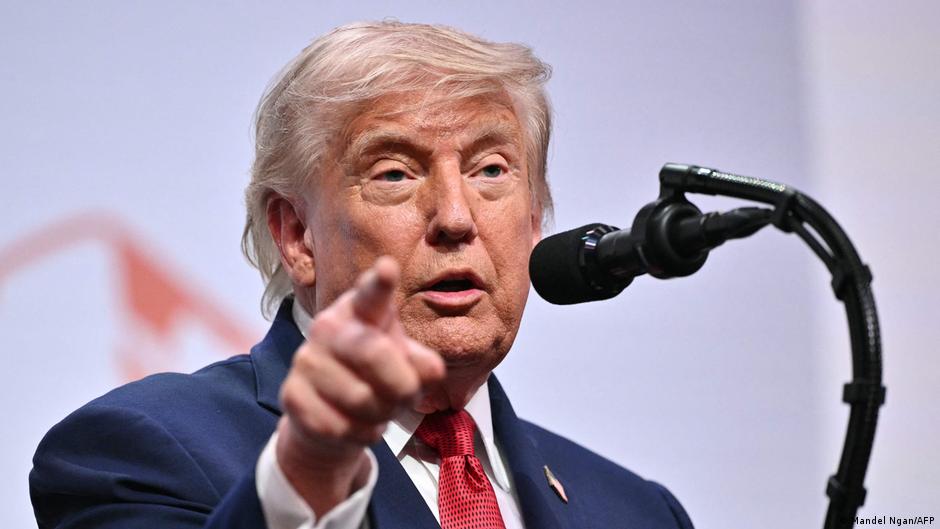
Relations between Merz and Trump had initially been favorable at the start of Trump’s second presidential term, according to the source account. They worsened after Merz declined to support the United States in the war with Iran. Trump then began criticizing the German authorities, including by attributing false statements to Merz.
The rift has also touched domestic German politics. Earlier in September, Trump congratulated the far-right Alternative for Germany on its victory in state elections in Saxony-Anhalt. That was another gesture of support from Washington toward German right-wing populists, something that had already drawn criticism in Berlin.
Such interventions matter for investors because they increase the risk of policy volatility. Germany’s political center is under pressure from the far right, and U.S. support for the AfD complicates Berlin’s relationship with Washington at a time when markets are already sensitive to tariff risk, sanctions policy and military commitments. Any sustained deterioration in U.S.-German ties could affect sentiment toward European exporters and multinational manufacturers with large exposure to the U.S. market.
Later on Thursday, German government spokesman Stefan Kornelius said Merz and Trump had held a phone call that Berlin had previously postponed. According to Kornelius, Merz discussed the “next steps to end” Russia’s war against Ukraine, welcomed the U.S. Congress’s adoption of a sanctions package against Russia initiated by Senator Lindsey Graham, and raised shipping problems in the Strait of Hormuz and the Red Sea caused by the war in Iran.
Those topics all carry market consequences. Sanctions on Russia remain relevant for energy, commodities and European industrial costs. Shipping disruptions in the Strait of Hormuz and the Red Sea can affect freight rates, supply chains and oil-market risk premia. The fact that these issues were part of the Merz-Trump call underscores how closely diplomacy, trade routes and investor positioning are now linked.
The call had originally been scheduled around the anniversary of the September 11, 2001 terrorist attacks. A day before the planned conversation, Berlin postponed it indefinitely without giving a reason. The delay followed Trump’s praise for the AfD after its strong victory in elections to the Saxony-Anhalt state parliament.
Berlin reacted with irritation to Trump’s statements. Metin Hakverdi, the German government’s coordinator for transatlantic cooperation, said Germans were capable of deciding for themselves how to deal with migration and whom to elect. “We do not need advice from the White House on this,” he said.
For investors, Merz’s remarks suggest that Germany is preparing for a world in which transatlantic relations are more transactional, less predictable and more directly tied to domestic political choices. That could mean higher defense spending, a greater role for European strategic autonomy and a more complex backdrop for bonds and equities. The immediate market impact may be measured, but the direction of travel is clear: geopolitical assumptions that once sat in the background of German asset pricing are moving closer to the center of the investment case.