Trump Threat to Halt EU Trade Adds New Risk Premium for Global Markets
The U.S. president warned of higher tariffs or a trade cutoff if EU-Canada ties are judged hostile, sharpening investor focus on trade-sensitive assets.
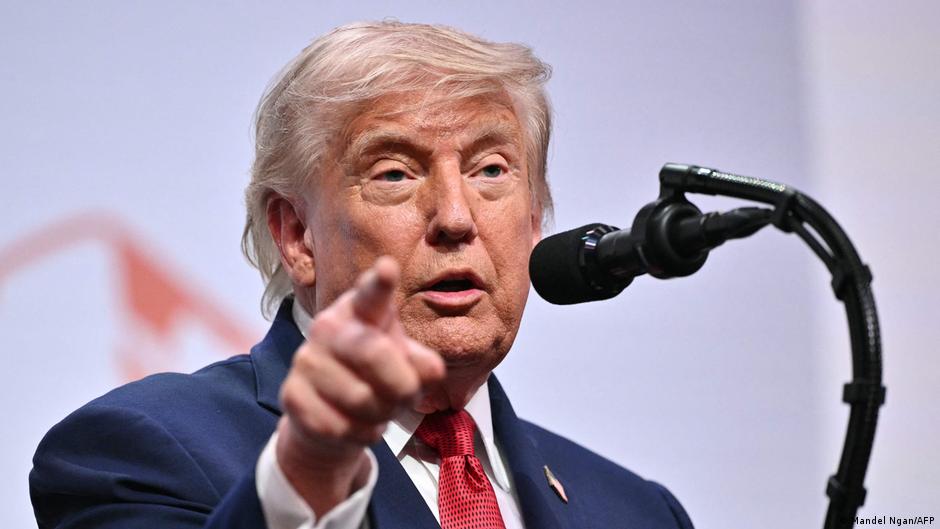
U.S. President Donald Trump has threatened to halt trade with the European Union if the bloc continues to expand its partnership with Canada, injecting a fresh dose of geopolitical risk into markets already tracking tariffs, supply chains and cross-border capital flows.
Speaking on Wednesday, September 16, at a campaign event in North Carolina, Trump responded to plans by European Commission President Ursula von der Leyen to make Canada the EU’s “first associate member.” He called the idea “ridiculous” and warned that Washington could respond with sharply higher tariffs if it viewed the move as unfriendly.
“If they do that and I consider it even slightly an unfriendly act, I will impose very high tariffs or stop trade with Europe,” Trump said.
For investors, the remarks add another potential shock to a global trade landscape already shaped by escalating U.S.-Canada tariff measures and uncertainty over Washington’s commercial policy. A direct U.S.-EU trade confrontation would carry implications for exporters, industrial companies, auto supply chains, technology cooperation, defense contractors and currency markets.
Trump added that the outcome would depend on intent. “If the intentions are good, everything is fine. If the intentions are bad, we will impose very high tariffs on Europe, that is one of the possibilities,” he said.
Tariff Risk Returns to the Center of Market Calculations
The threat comes as equity investors continue to price the possibility that trade policy could become a more volatile driver of corporate earnings. Higher tariffs typically raise costs for companies that depend on imported components, compress margins for retailers and manufacturers, and complicate guidance for multinational groups. A wider U.S.-EU dispute would also test investor assumptions about global demand and the durability of cross-Atlantic commercial ties.
Bond markets may also be sensitive to the escalation. Tariffs can act as a tax on imports, potentially feeding price pressures while also weighing on growth. That combination can complicate the outlook for sovereign yields, particularly if investors begin to weigh stagflationary risks or seek safety in government debt during periods of market stress.
Von der Leyen outlined the EU’s ambitions on September 16 in the European Parliament, in the presence of Canadian Prime Minister Mark Carney. She said the EU wanted to lift relations with Canada to “the highest possible level” and said she wanted to work with Carney so that Canada becomes the bloc’s first associate member.
She did not provide detailed terms for the proposed partnership. However, she mentioned cooperation in technology and the defense industry, two areas closely watched by investors because they overlap with public procurement, strategic industrial policy and long-term capital spending. Von der Leyen stressed that EU-Canada cooperation “will not be directed against others” and would aim to make both sides stronger.
The market relevance lies in the sectors named. Technology collaboration can affect semiconductor supply chains, digital infrastructure and research spending, while defense cooperation can shape procurement pipelines and valuations across aerospace and security-related equities. Any U.S. retaliation against Europe could therefore broaden from headline politics into sector-specific earnings risks.
Canada Becomes a Flashpoint in Trade Policy
Canada, like the EU, has been affected by what AFP described as the unpredictable trade and foreign policy of President Trump. The agency observed that this is why both Canada and the European Union are looking at new alliances.
At the same time, the White House said Trump signed a memorandum on September 16 providing for a ban on Canadian goods participating in federal government procurement. According to the release, Washington is taking the measures in response to Canada’s actions, which it said “unreasonably introduced new barriers” for American companies seeking access to Canada’s government procurement market.
The procurement move matters for markets because government contracts can be material for companies in infrastructure, industrial goods, transportation, technology and defense-adjacent sectors. Restrictions on access can alter revenue expectations and increase uncertainty around order books.
The latest measures follow a rapid sequence of tariff actions between Washington and Ottawa. From September 15, the U.S. administration imposed additional 50% tariffs on cheeses, steel, aluminum, paper, furniture, lighting fixtures and other goods from Canada. Trump administration officials said the move was a direct response to new tariffs introduced by Ottawa.
Canada’s own tariffs on U.S. exports worth about $20 billion also took effect on September 15. Those measures were a response to U.S. tariffs of 50% on $20 billion worth of Canadian goods that entered into force on August 22.
Canada withdrew from trade negotiations with the United States on August 21, underscoring how quickly political disputes have hardened into formal trade barriers.
For capital markets, the concern is not only the direct economic value of the measures already announced. It is the possibility that tariff escalation becomes a template for wider disputes, including with Europe. Investors are likely to watch for signs of retaliation, exemptions, sector carve-outs or renewed negotiations, all of which could influence equity performance and bond-market expectations in the days ahead.
The immediate read-through is a higher trade-policy risk premium. Companies exposed to U.S.-Canada commerce, EU-U.S. supply chains, metals, consumer goods, paper products, furniture, lighting and food imports may face closer scrutiny from analysts. Meanwhile, defensive assets could benefit if markets begin to treat the dispute as a broader threat to global growth rather than a contained diplomatic clash.