Russian Strikes on Kyiv and Odesa Add Fresh Risk to Ukraine Market Outlook
The overnight attacks injured civilians including children, underscoring the war-related risks that continue to weigh on investors’ view of Ukraine.
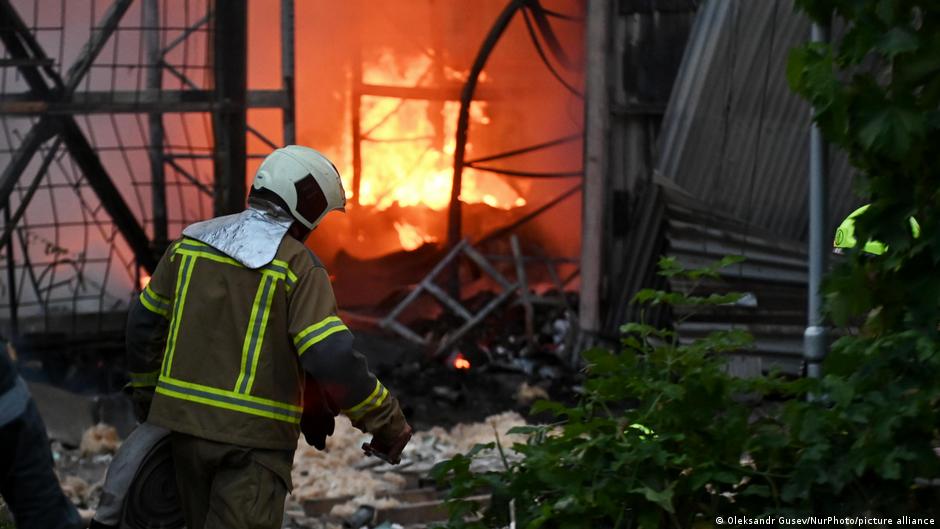
Russia carried out overnight attacks on Kyiv and Odesa, injuring civilians including children and causing damage to residential, office, warehouse and educational buildings, according to Ukrainian officials. The strikes, reported in the early hours of Thursday, September 17, add another layer of security risk for investors already assessing the cost of war, reconstruction needs and the resilience of Ukraine’s urban infrastructure.
In Kyiv, at least 12 people were injured as a result of Russian strikes, Mayor Vitali Klitschko said on Telegram. He said the wounded included children aged 10 and 12, and that nine injured people were in hospitals. The Kyiv city military administration had earlier said on Telegram that the 10-year-old child injured in the Russian attack was a girl.
The human toll was also reported in Odesa, where the head of the city military administration, Serhiy Lysak, said at least three people were wounded, including a four-year-old child. “Everyone is receiving the necessary medical assistance,” he wrote in a post cited in the source material. In Sumy, Ukraine’s State Emergency Service said one person was killed and nine others were injured, including two children, after Russian airstrikes the previous evening.
War Risk Remains Central for Investors
For capital markets, the latest attacks are a reminder that Ukraine’s economic outlook remains tied not only to macroeconomic policy and foreign financial support, but also to the day-to-day security environment. Missile and air attacks on major cities can affect business continuity, logistics, insurance costs, public spending priorities and investor appetite for exposure to Ukrainian assets or companies with operations in the country.
The source article does not report immediate moves in equities, bonds or currencies following the attacks. Even so, for investors, such incidents typically feed into the broader risk framework around Ukraine: the probability of further infrastructure damage, the fiscal burden of emergency response and reconstruction, and the possibility that civilian and commercial facilities will continue to face disruption. Those issues matter for sovereign debt holders, lenders, insurers, infrastructure investors and companies evaluating operations or supply chains linked to Ukraine.
In Kyiv, officials described damage across several districts. By morning, the Kyiv city military administration said warehouse premises had been damaged in the Solomianskyi and Dniprovskyi districts. It also reported damage to a residential building in the Dniprovskyi district. Klitschko separately said that in the Dniprovskyi district, the glazing and facade of a three-story office building were damaged, while windows were blown out in several residential buildings. In the Sviatoshynskyi district, according to Klitschko, a non-residential building was damaged.
Ukraine’s State Emergency Service also said that in Kyiv’s Holosiivskyi district, the facade and glazing of a four-story university building were damaged. The name of the educational institution was not specified. According to the report, there were no deaths or injuries from that incident.
“In hospitals are nine injured people,” Klitschko said in a Telegram post cited in the Russian-language source.
Ukraine’s air force reported during the night of September 17 on Telegram that missiles were moving toward Kyiv. The warning was followed by reports of injuries and damage in the capital, reinforcing the pressure on municipal authorities and emergency services. For investors, the geographic spread of damage across residential, office, warehouse and educational sites illustrates the difficulty of isolating economic activity from military risk in an active conflict zone.
Infrastructure Damage and Fiscal Pressure
Damage to warehouses, office buildings, homes and civilian vehicles can have consequences beyond the immediate physical loss. It may require emergency repairs, temporary relocation, compensation mechanisms and expanded public support. In a wartime economy, those needs compete with defense spending and other budget demands. That is especially relevant for bond investors and institutions monitoring Ukraine’s fiscal trajectory and reliance on external assistance.
In Odesa, Lysak had earlier reported that a multi-story building was damaged as a result of the Russian attack. Odesa is one of Ukraine’s key urban centers, and although the source does not detail the economic impact of the damage, any attack on the city is likely to be watched closely by investors because of the broader importance of southern Ukraine to transport, trade and civilian infrastructure.
The previous evening’s airstrikes in Sumy added to the casualty toll. Ukraine’s State Emergency Service said one person was killed and nine were wounded, including two children. It said that attacks using guided aerial bombs had destroyed and damaged private residential houses, outbuildings and civilian cars.
“Private residential houses, outbuildings and civilian cars were destroyed and damaged,” Ukraine’s State Emergency Service said, according to the source article.
The repeated focus on civilian infrastructure is significant from a market perspective because reconstruction needs can accumulate even when damage is dispersed across smaller properties. Housing, municipal facilities, offices and vehicles may not each shift national economic forecasts on their own, but together they represent a continuing drain on capital, labor and public-sector capacity.
For equity investors, the latest reports highlight operational uncertainty for businesses in exposed cities. Companies with logistics, retail, real estate, construction, energy or financial exposure to Ukraine must account for intermittent disruption, higher security costs and possible asset impairment. For credit markets, the implications are broader: each new attack reinforces the relevance of war-risk premiums, the durability of international financial support and the timing of any eventual reconstruction-led investment cycle.
The immediate story remains the civilian cost. At least 12 people were reported injured in Kyiv, including two children; at least three were wounded in Odesa, including a four-year-old; and one person was killed in Sumy, where nine others were injured, including two children. For markets, the attacks are another indication that Ukraine’s investment case continues to be shaped by events far beyond conventional economic indicators.