Russia Opens Three-Day Duma Vote as Investors Weigh Political Risk
The parliamentary election extends to occupied Ukrainian territories, raising verification concerns as markets assess policy continuity and sanctions risk.
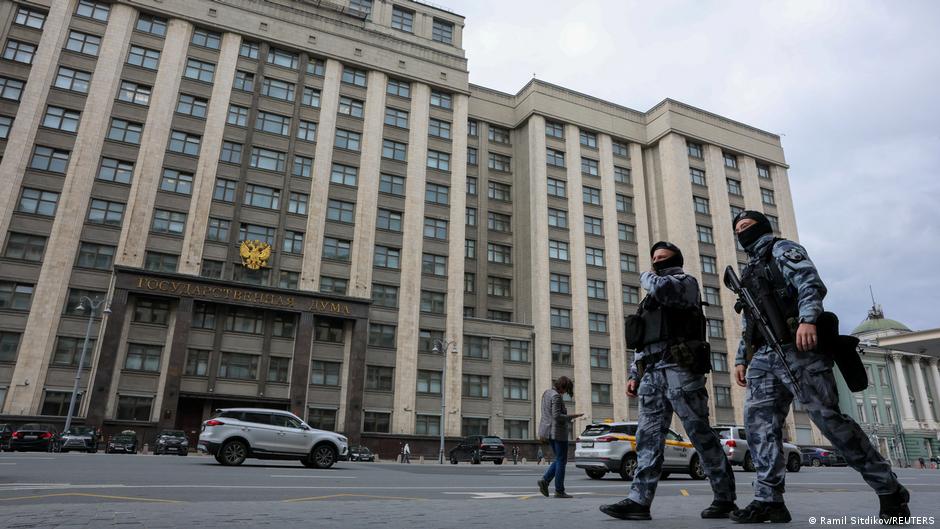
Russia formally opened a three-day election for the State Duma on Friday, September 18, with polling stations first beginning work in Kamchatka and Chukotka at 08:00 local time. Voting is scheduled to continue through September 20, with polling places in the regions due to remain open until 20:00 local time.
For investors, the vote is less a contest over a near-term change in macroeconomic policy than a political risk event that may shape expectations around sanctions, capital controls, state spending priorities and the operating environment for Russian assets. The election is taking place against the backdrop of the continuing war in Ukraine and expanded voting in territories occupied by Russia, a factor that may reinforce geopolitical risk premiums around Russian equities, sovereign debt and companies with exposure to the country.
The new Duma will have 450 deputies. Half are expected to be elected in single-mandate constituencies, where voters choose individual candidates. The remaining 225 seats will be distributed through party lists. Ten parties are listed for the party-list portion of the election after the Yabloko party was removed from participation on formal grounds. Yabloko candidates, however, remain represented among single-mandate contenders in several Russian regions.
Continuity Is the Central Market Signal
The previous State Duma election was held in 2021. This time, voting has been expanded to occupied Ukrainian territories. Participants in Russia’s full-scale invasion of Ukraine, as well as residents of regions occupied by Russia, voted early from late August through September 17, according to representatives of various Russian structures.
From a capital markets perspective, the election is likely to be read primarily through the lens of policy continuity. None of the ten parties represented in the 2026 Duma election has condemned the continuing war in Ukraine. That limits the scope for investors to price in a parliamentary shift that might reduce geopolitical tensions or ease sanctions pressure in the near term.
Opposition figures Yulia Navalnaya and Maxim Katz shortly before the vote urged Russians to support the strongest single-mandate candidates who are not members of United Russia. Yabloko criticized that approach and instead advised voters to spoil their ballots. The dispute highlights the restricted political space around the election, but it does not point to a clear policy alternative that markets could easily translate into an investable scenario.
The most immediate implications for investors are therefore likely to sit in risk assessment rather than earnings forecasts. Russian equities, already shaped by domestic liquidity, sanctions constraints and limits on foreign participation, may remain driven by state policy, commodity revenues and the ruble environment. Bond investors are likely to focus on fiscal demands, inflation pressures and central-bank policy rather than expecting the Duma vote itself to deliver a sudden repricing.
Verification Concerns Add to Risk Premiums
Observers have raised concerns about the ability to verify results in the occupied regions. Even setting aside the question of the legitimacy of voting there, they note that Russia’s Central Election Commission organized the process in ways that make the results practically impossible to verify. Authorities did not publish data on members of regional election commissions or polling-station addresses. Open video monitoring was not organized, and the use of mobile ballot boxes was allowed.
The Central Election Commission also permitted local election commissions, if necessary, to print ballots on site and not immediately transfer them to higher-level bodies after the count. For markets, such procedures may matter less as a direct election-mechanics issue than as a governance signal. The harder results are to independently verify, the more political institutions are likely to be viewed by outside investors as opaque and difficult to price.
Authorities did not publish data on regional election commission members or polling-station addresses, and open video monitoring was not organized.
Before the start of voting, pro-government resources in Russia began circulating videos whose message was that footage of falsifications and ballot stuffing from polling stations could be generated by artificial intelligence. Central Election Commission chair Ella Pamfilova also said such technologies could allegedly “substitute the picture” from polling stations in a live broadcast.
That narrative may further complicate how claims about the conduct of the vote are received, particularly by foreign investors and policymakers already assessing the credibility of Russian institutions. In practical market terms, contested information environments tend to sustain higher risk discounts, especially in jurisdictions where court systems, regulators and electoral institutions are perceived as closely aligned with the state.
Opposition Constraints Remain in Focus
Yabloko had initially been allowed to participate in the election and had consistently criticized the war, but it was later removed on formal grounds. Although the party was excluded from the party lists, individual members are taking part as candidates in single-mandate districts. Later, some of them also faced pressure and removal from the election on various grounds, often because of old photos and posts, including references to Alexei Navalny.
For investors tracking Russia, the treatment of anti-war and opposition-linked candidates is relevant because it provides a reading on the range of views permitted inside formal politics. A narrower political spectrum can reduce uncertainty about headline policy direction, but it can also increase longer-term institutional risk. Markets often tolerate predictability, but they discount systems where feedback mechanisms are weak and policy adjustment depends heavily on executive preference rather than competitive politics.
The election therefore arrives as a political event with limited signs of immediate market liberalization and clear reminders of elevated geopolitical exposure. Equity investors are likely to keep focusing on sectors tied to state priorities, domestic demand and commodities, while bond investors will watch how wartime spending, inflation and monetary policy evolve after the vote. For international investors with constrained access to Russian instruments, the broader message is one of continued caution: the election reinforces the political conditions under which sanctions, capital restrictions and governance concerns remain central to any Russia-related investment assessment.