White House Press Secretary Caroline Leavitt Resigns Amidst Market Sensitivities
Caroline Leavitt steps down as White House press secretary, raising questions on political stability and market impact
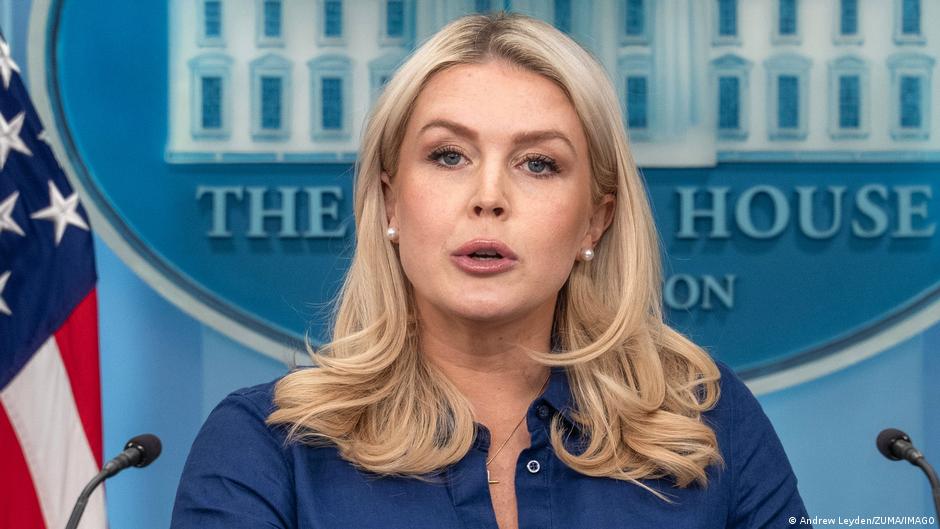
Caroline Leavitt, the youngest press secretary in White House history, announced her resignation on August 12, citing a desire to devote more time to her two young children. Leavitt’s decision, revealed through her social media post, comes after she recently returned from maternity leave following the birth of her second child.
Leavitt, aged 28, served as press secretary during Donald Trump's administration and was also the spokesperson for his 2024 re-election campaign. A prominent figure within the MAGA movement, her departure may introduce fresh uncertainty into the political landscape as President Trump prepares for the coming months.
Market Implications of Leavitt’s Resignation
Political personnel changes at the White House often signal shifts in communication strategy and policy direction, factors closely monitored by equity and bond investors. Leavitt’s resignation could be interpreted as a destabilizing factor, especially given her role as a key external advisor and influential Republican figure, as described by President Trump.
“In returning to the White House after my daughter’s birth, I realized that I could not be the best mother my children deserve if I continued in this demanding role,” Leavitt stated.
For capital markets, the immediate focus is on how this leadership change might affect the administration’s messaging on fiscal policy, economic stimulus, and regulatory outlook—all critical to investor confidence. A shift in communication tone or delay in policy announcements could increase volatility in equity markets and impact bond yields as investors reassess risk amid greater political uncertainty.
Equity markets sensitive to political developments may see increased short-term fluctuations, particularly in sectors vulnerable to regulatory changes. Similarly, bond markets could witness widening spreads if perceived policy continuity is threatened, potentially leading to higher borrowing costs for both corporate and government issuers.
Investors should remain attentive to subsequent appointments in the White House communications team and any shifts in messaging ahead of the 2024 elections. Stability in this role is often correlated with market confidence, especially given Leavitt’s notable influence within the Trump campaign and the Republican Party overall.
While President Trump confirmed Leavitt will remain a significant external advisor, the lack of a named successor has sparked speculation about potential shifts in strategic communication. Market participants will be closely watching for signals that could indicate new policy directions or changes in political messaging that might impact market sentiment.
Overall, Leavitt’s resignation highlights the intersection between political leadership dynamics and capital market responses, underscoring the importance of stable governance and clear communication in maintaining investor confidence.