AfD Win in Saxony-Anhalt Puts Fresh Political Risk on Europe’s Markets
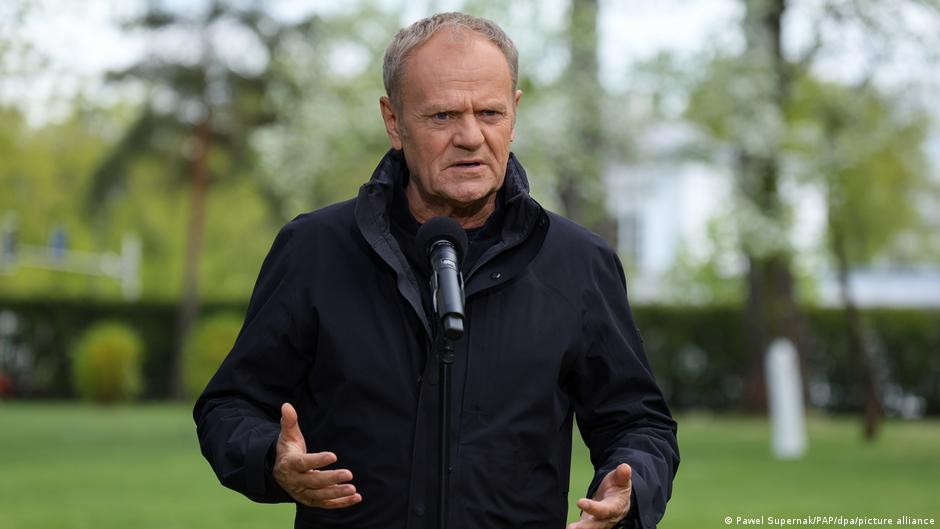
Poland, France and Czech politicians reacted sharply after preliminary results showed the far-right AfD winning 44% in Saxony-Anhalt.
European investors are opening the week with another political-risk signal from Germany after the far-right Alternative for Germany, or AfD, emerged as the clear winner in preliminary results from the state election in Saxony-Anhalt. The result is local in legal terms, but market participants will read it through a broader lens: Germany remains the eurozone’s largest economy, and signs of political fragmentation there can quickly feed into assumptions about fiscal policy, coalition durability and the pricing of European assets.
According to preliminary results, AfD won 44 percent of the vote in the eastern German federal state. Its candidate for state premier is Ulrich Siegmund. The Christian Democratic Union, the party of incumbent state premier Sven Schulze, was far behind on a preliminary 17.4 percent. The Social Democratic Party was at 9.2 percent, the Greens at 8.9 percent, the Left Party at 8.6 percent and the Sahra Wagenknecht Alliance at 5.1 percent. The Free Democratic Party and other parties failed to cross the 5 percent threshold, according to the preliminary figures.
The projected distribution of the 83 seats in the Saxony-Anhalt parliament under those results would give AfD 39 mandates, the CDU 15, the Left Party, Greens and SPD eight seats each, and the Sahra Wagenknecht Alliance five. The preliminary final outcome was expected during the night of September 7.
Political Shock Adds to the European Risk Premium
The immediate importance for capital markets is not that a single state parliament can redirect eurozone policy on its own. It cannot. The issue is that state-level results can confirm or challenge the direction of national politics, and investors tend to price that direction through risk premia on equities, sovereign bonds and the euro. A strong showing by AfD may sharpen questions about Germany’s ability to form stable coalitions, sustain pro-European policy alignment and maintain predictable fiscal decision-making.
For bond investors, the signal matters because German political stability is a core assumption behind the pricing of Bunds, which serve as the benchmark for euro-area rates. A result that increases perceived policy uncertainty could influence the spread discussion across Europe, even if the first-order reaction remains contained. Investors in peripheral debt will also watch whether the result strengthens anti-EU or nationalist parties elsewhere, since that can affect expectations for European coordination during periods of budget stress or market volatility.
Equity investors will focus on sectors most exposed to regulation, public spending and cross-border trade. German domestic cyclicals, banks, utilities and infrastructure-linked names can be sensitive to shifts in fiscal expectations and coalition arithmetic. More broadly, global investors may view the vote as one more input into the political discount applied to European equities, especially when compared with markets perceived as having clearer policy direction.
“In Poland, only idiots or traitors can rejoice at the triumph of the AfD party in Germany,” Polish Prime Minister Donald Tusk wrote on X.
Tusk said on Sunday evening, September 6, that some such people had accumulated in Poland’s opposition parties Confederation and Law and Justice, or PiS. His reaction underlined how closely Germany’s neighbors are watching the vote. For Warsaw, the market relevance is not only diplomatic. Poland’s economy is tightly connected to Germany through trade, manufacturing supply chains and investment flows, so any political development that clouds Germany’s policy outlook can also be relevant for Polish assets.
In neighboring Czechia, the reaction moved in a different direction. Tomio Okamura, speaker of the Chamber of Deputies and founder of the right-wing Freedom and Direct Democracy party, congratulated the German far-right party on its success during a broadcast on public television CT. He said he hoped above all that AfD would enter the new governing coalition in Saxony-Anhalt. Czechia has been governed since the end of 2025 by a coalition consisting of billionaire Andrej Babis’s right-populist ANO party, Okamura’s SPD and the Motorists party.
Investors Watch for Contagion Across Politics, Not Just Markets
France also framed the result as a European concern. Benjamin Haddad, France’s minister for European affairs, wrote on X that it was a difficult moment for Europe. He said governments had to listen to anger, anxieties and fears and respond to them, while stressing that nationalism and xenophobia would never be the solution. Haddad added that Europe must not forget its history and said this was the meaning of the decisions taken by France and Germany.
Those comments point to the central market issue: whether the Saxony-Anhalt vote remains a regional political event or becomes part of a broader repricing of Europe’s policy risk. Investors have become accustomed to far-right and populist parties gaining ground across the continent, but Germany’s role in European fiscal, industrial and defense policy gives its domestic political signals greater weight.
For now, the numbers themselves are stark enough to draw attention. AfD’s 44 percent preliminary result would put it well ahead of the CDU and leave other mainstream and left-leaning parties clustered in single digits. Even if coalition constraints limit AfD’s ability to govern, the result could pressure other parties to adjust policy positions or campaign strategies. Markets often respond not only to who takes office, but also to how mainstream parties adapt under electoral pressure.
The trading implications may be clearest in sentiment rather than in a single mechanical price move. A stronger political-risk premium can weigh on local equities, support defensive positioning, and make investors more sensitive to future German polling, coalition talks and national-level policy signals. In fixed income, the safest outcome for markets would be rapid clarity around government formation and a continuation of predictable fiscal management. The riskier outcome would be prolonged negotiation or a perception that Germany’s political center is losing its capacity to anchor policy.
With preliminary results expected to be finalized overnight into September 7, investors will be watching both the seat arithmetic and the official reactions from Berlin, Warsaw, Prague and Paris. The election may be regional, but the response has already shown that its implications are being measured at a European scale.