EU Shelves Defense Panel as Berlin and Rome Resist Kallas Initiative
The last-minute cancellation highlights political friction inside Europe’s defense push as investors track security spending and fiscal risk.
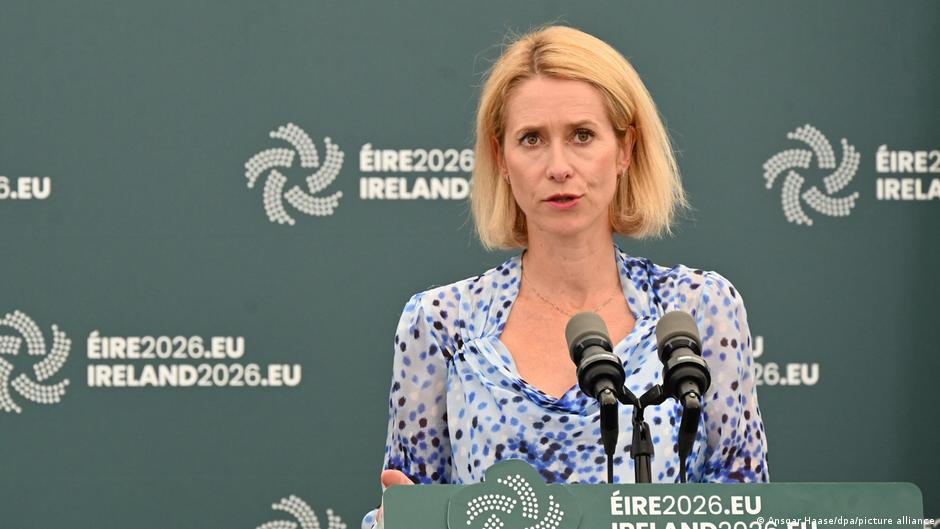
The European Union has pulled back from launching a planned high-level defense expert group after opposition from several member-state governments, according to dpa, in a move that underscores the political constraints around Europe’s push to strengthen military capacity.
EU foreign policy chief Kaja Kallas canceled “at the last minute” the presentation of the group that had been scheduled for Monday, September 7. The panel was intended to work under her leadership on proposals for closing gaps in Europe’s military capabilities more quickly and effectively, with a report containing concrete recommendations.
For capital markets, the episode matters less as a single institutional setback than as a signal about execution risk. European governments have broadly embraced the need for higher defense readiness, but the route from political consensus to procurement, financing and industrial orders remains uneven. Defense equities, sovereign bond investors and credit markets are all sensitive to that gap between strategic ambition and practical delivery.
“Some member states considered that this was not the right step at the moment,” an EU official in Brussels told dpa late on September 6.
After talks with EU defense ministers, the decision was made not to proceed with this specific initiative, the official said. According to dpa, Germany and Italy were among the governments that had earlier opposed the creation of the expert group.
Defense Policy Meets Market Execution Risk
The proposed group was expected to include senior political and military representatives from several EU countries, as well as Britain and Ukraine. Its members were due to be presented at a launch event on the morning of September 7. Instead, the cancellation leaves Brussels looking for other ways to coordinate with EU countries on defense policy.
The market relevance is immediate because European defense has become a key investment theme. Higher military spending has supported expectations for multi-year demand across aerospace, electronics, ammunition, cybersecurity and battlefield technology suppliers. But those expectations depend on coordination, budget authorization and procurement timelines. Political resistance to a central EU-led process may reinforce the view that spending will continue to flow through national channels and NATO planning structures rather than through a more integrated Brussels-led framework.
Dpa cited one possible reason for Germany’s refusal as Berlin’s critical stance toward Kallas personally as head of the EU’s foreign policy service. In defense policy, German authorities tend to rely on NATO planning processes. Germany is also currently advocating for the merger of a significant part of the European External Action Service, which Kallas oversees, with the European Commission.
That institutional preference is important for investors because NATO-led and national procurement pathways can favor different timelines, vendors and budget mechanisms than EU-level initiatives. If Berlin continues to prioritize NATO planning, markets may place more weight on national defense budgets and alliance capability targets than on new EU coordination bodies.
Italy’s opposition, as reported by dpa, adds another layer of complexity. The source article does not specify Rome’s reasoning, but the resistance by two major EU economies is enough to pause an initiative that was meant to produce recommendations for accelerating Europe’s military build-out.
Bond Markets Watch the Fiscal Channel
For sovereign bond markets, the cancellation does not remove the underlying fiscal pressure. The EU official quoted by dpa emphasized that the diagnosis had not changed: Europe still needs to move faster on defense.
“We do not want to look back in a few years and state that Europe was so focused on where it should be in 2035 that it missed the opportunity to do what was necessary in 2027,” the official said.
That framing points to a nearer-term policy horizon. Investors in European government bonds are already weighing the implications of higher defense outlays against slower growth, strained budgets and the political challenge of reallocating spending. A less centralized EU process may reduce expectations for a single coordinated mechanism, but it does not eliminate the likelihood of higher national defense expenditure.
In equity markets, the read-through is more mixed. Defense contractors may still benefit from sustained demand, especially if governments continue to identify capability gaps and fund national procurement. However, the setback could temper expectations that an EU-level body would speed up cross-border standardization or produce a clear pipeline of coordinated recommendations. Companies exposed to fragmented procurement may fare differently from those positioned for large multinational programs.
Kallas had announced on September 1, after an informal meeting of EU defense ministers in Wicklow, Ireland, that Ukraine would be involved in finding solutions to strengthen Europe’s defense capabilities. Kyiv was expected to join the new high-level group alongside senior politicians and military officials from EU member states and Britain.
At that time, a DW correspondent asked Kallas who would represent Ukraine in the new group, noting that former Ukrainian defense minister Mykhailo Fedorov had been brought in by Italy as a defense adviser. Kallas did not name Ukraine’s representative or representatives, saying the full composition of the group would be presented on September 7.
Kallas also noted that most EU countries are NATO members, while saying that gaps remain in the alliance’s defense capabilities and that European countries need to fill them. She said Europe had acted too slowly despite the growing threat level. Ukraine was being included, she explained, because it has extensive experience, calling Kyiv a “world leader in battlefield innovation.”
The cancellation therefore leaves a strategic contradiction unresolved. European officials continue to argue that defense capacity must increase faster, and Ukraine’s battlefield experience is viewed as valuable for that effort. But the institutional vehicle proposed by Kallas has been stopped before launch. For investors, that means the defense theme remains intact, but the policy path looks more fragmented, with national politics and NATO processes likely to shape the pace of orders, financing and market reaction.