Germany Plans Anti-Sabotage Shield as Russian Risk Moves Up Investor Agenda
Berlin’s proposed drone and cyber defenses point to rising security costs for critical infrastructure, transport operators and defense suppliers.
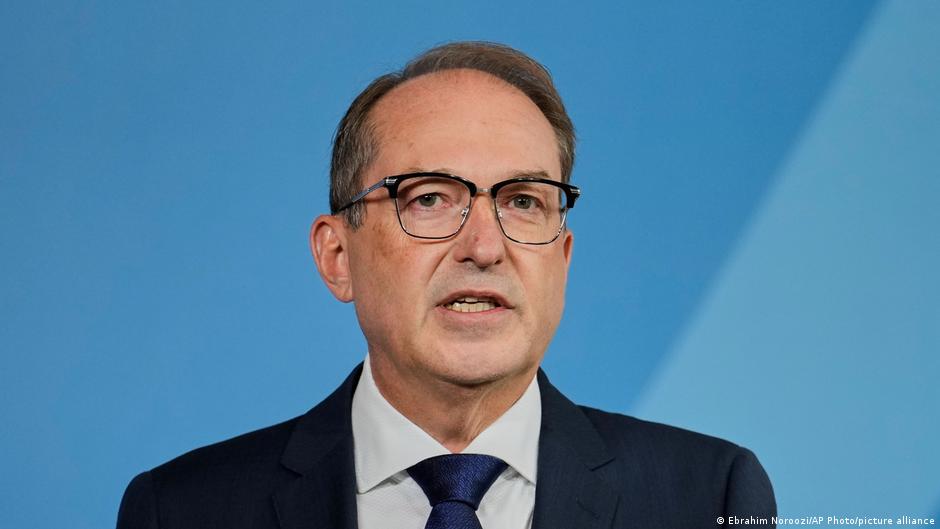
Germany’s Interior Ministry plans to create a comprehensive protective shield against further Russian sabotage, including cyberattacks, after a drone incident at Leipzig/Halle Airport. For capital markets, the announcement places geopolitical and infrastructure-security risk back at the center of the European investment debate, with direct implications for transport hubs, energy operators, defense companies and public-sector technology spending.
Interior Minister Alexander Dobrindt said Germany must respond more forcefully to what he described as Russian sabotage activity. In an interview with Bild am Sonntag published on Sunday, September 6, Dobrindt said hybrid attacks attributed to Russia had become part of daily security conditions in Germany.
“Russia’s hybrid attacks using drones with explosives at airports, agents in our cities, cyberattacks on our networks and sabotage against our infrastructure are an everyday reality,” Dobrindt said.
He added that such attacks would intensify, while arguing that Germany could resist and protect itself. The ministry is now preparing what Dobrindt described as a comprehensive shield against further attacks. The initiative follows an August 4 attempted act of sabotage at Leipzig/Halle Airport involving an Antonov An-124 Ukrainian cargo aircraft, according to the source report.
Security Spending Becomes a Market Variable
The plan outlined by Bild am Sonntag, if implemented, would move Germany closer to a standing security posture for key economic nodes rather than an incident-by-incident response model. The reported measures include the rapid deployment of special units in strategically important cities: Berlin, Munich, Hamburg, Stuttgart, Dusseldorf, Frankfurt am Main, Leipzig, Hanover and Cologne.
The proposal also envisages stronger protection of airspace above key transport hubs, airports, railway stations and Berlin’s government district against unmanned aerial vehicles. According to the report, the concept covers not only interception but also the neutralization of explosive devices. That distinction matters for investors because it points to demand not just for surveillance systems, but also for active counter-drone capabilities, bomb-disposal capacity, sensor networks and operational response infrastructure.
The government’s approach could affect several listed and private-sector categories. Airport operators and logistics companies may face tighter compliance requirements and higher operating costs if the new framework becomes embedded in transport-security regulation. Defense and security-technology suppliers may see a stronger policy backdrop for procurement. Energy and critical-infrastructure firms could also become part of the operational response architecture rather than remaining passive beneficiaries of federal protection.
According to Bild am Sonntag, protection against drone threats in the near future would not be handled only by federal police. Companies operating critical infrastructure, including electricity utilities and defense enterprises, are expected to receive legal powers allowing them to actively repel drone attacks. For markets, that would mark a significant shift in the boundary between state security and corporate responsibility. It could raise capital expenditure needs, insurance considerations and liability questions for companies whose assets are deemed strategically important.
Cyberdome Plan Highlights Digital Infrastructure Risk
The Interior Ministry is also planning a national protective shield against cyberattacks, referred to as a Cyberdome, in response to hundreds of daily cyberattacks on German government agencies and companies. The proposed system would rely on a large network of digital sensors intended to detect and intercept attempted hacker attacks at an early stage.
Cybersecurity has already become a recurring risk factor for European corporates, but Germany’s proposal frames the threat as part of a broader hybrid-conflict environment. For bond investors, the issue is not limited to headline cyber incidents. Persistent attacks can influence public budgets, municipal resilience spending and the credit profiles of infrastructure-heavy entities. For equity investors, the same trend can alter margins and investment plans at transport, energy and defense-linked companies, while supporting long-term demand for cybersecurity vendors and systems integrators.
The Leipzig/Halle episode is central to the policy response. On August 4, there was an attempted sabotage operation against a Ukrainian An-124 cargo aircraft at the airport. Media reports, citing German investigative authorities, said several drones were involved in the suspected attack. One drone carrying explosives was found near several Ukrainian cargo aircraft. A second drone is believed to have crashed into a DHL cargo aircraft minutes after the first was discovered.
On September 1, the German government blamed Russia for the drone sabotage at Leipzig Airport. Berlin’s response included a decision to close the Russian consulate general in Bonn and the Russian House in Berlin, as well as to strengthen controls on Russian citizens entering Germany. Germany also decided to tighten measures against Russia’s so-called shadow fleet.
The diplomatic and regulatory response adds another layer for markets. Measures linked to the shadow fleet can influence shipping, energy logistics and sanctions-compliance risk, while tighter entry controls and closures of Russian institutions underscore the deteriorating bilateral environment. Investors in European transport, energy and defense-linked equities are likely to view these steps as part of a longer security cycle rather than a one-off dispute.
The European Union, NATO and the governments of several European countries expressed support for Germany. At home, some German opposition politicians criticized the federal government’s countermeasures. Some argued the steps were insufficient, while others warned they represented a dangerous escalation.
That political split is important for investors because the size, speed and legal design of any new security shield will depend on domestic consensus as well as alliance coordination. A broader agreement could accelerate procurement and regulatory changes. A more contested process could slow implementation or complicate corporate obligations, particularly for operators of critical infrastructure asked to take a more active role in defending their own assets.
For today’s market participants, the message is that Germany is treating sabotage, drones and cyberattacks as recurring operational risks. The immediate announcement does not provide spending totals or procurement schedules, but it identifies the sectors most exposed to the next phase of policy: airports, rail hubs, logistics networks, utilities, defense plants and digital infrastructure. In European capital markets, security resilience is becoming a factor in both valuation narratives and risk premia.