White House Says US Envoys Discussed Concrete Ukraine Plans With Putin
US representatives Stephen Witkoff and Jared Kushner are expected in Kyiv after talks in Moscow on a new diplomatic push to end the war.
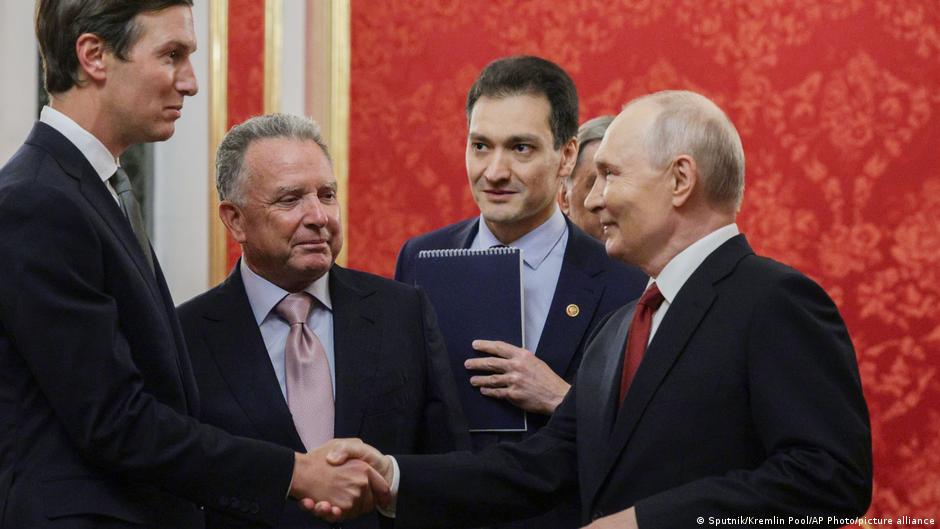
The White House said US representatives held talks with Russian President Vladimir Putin on “concrete plans” for further steps toward ending the war in Ukraine, setting up a closely watched round of diplomacy in Kyiv that investors will track for any shift in geopolitical risk across European markets, defense stocks, energy prices and sovereign bonds.
According to a White House representative cited by AFP overnight on Sunday, September 6, US presidential special envoy Stephen Witkoff and Jared Kushner, Donald Trump’s son-in-law, discussed specific plans during their conversation with Putin. The official said the plans are expected to be made public “in the coming weeks” and that the US envoys were looking forward to “no less productive meetings” in Ukraine.
For capital markets, the significance lies less in the limited detail disclosed so far than in the sequence of meetings. The Moscow talks are being followed by Witkoff and Kushner’s first trip to Kyiv for negotiations with Ukrainian President Volodymyr Zelensky, making the initiative a potential near-term catalyst for assets exposed to the war’s trajectory. Investors have repeatedly treated signs of diplomacy, military escalation and sanctions risk as variables affecting European equities, defense contractors, oil and gas markets, currencies and bond spreads.
Diplomatic Push Moves From Moscow to Kyiv
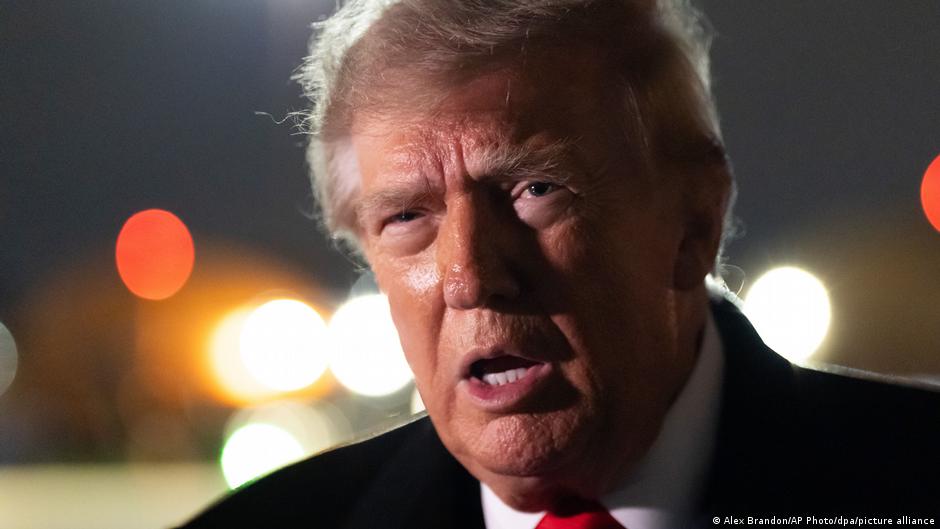
Trump also announced a new diplomatic initiative aimed at ending the war and said Witkoff and Kushner had brought with them a plan “to end the war,” AFP reported. The US president did not specify whether the plan would include the transfer of Ukrainian territories to Russia. He said only: “We have an idea for peace.”
That absence of detail leaves investors without a clear basis for pricing the potential economic or sanctions implications of the proposal. A plan perceived as credible could influence expectations around reconstruction spending, defense budgets, commodity flows and risk premia in Eastern Europe. Conversely, ambiguity around territorial questions and Moscow’s war aims may keep markets cautious until the terms are disclosed or rejected by one of the parties.
After the Moscow visit, Kushner and Witkoff are due to arrive in Kyiv for talks with Zelensky. Flight-tracking data from Flightradar24 showed that a Boeing C-32A carrying the US envoys landed at 01:30 local time at the airport in Rzeszow, Poland. The aircraft departed Moscow’s Vnukovo airport and headed west while bypassing Belarus, then crossed the airspace of Latvia, Lithuania and Poland. The envoys are expected to continue to the Ukrainian capital by train.
The route underscores the operational realities that continue to shape the war economy and regional risk. Ukraine’s airspace remains closed to regular civilian traffic, while Poland and the Baltic states remain central logistical corridors for diplomacy and assistance. Those dynamics matter for investors assessing transport infrastructure, defense spending and regional exposure across NATO’s eastern flank.
Moscow Describes Talks as Frank and Useful
Russian officials also commented on the meeting, saying Putin held “extremely frank” talks in which the American delegation presented “several ideas” on how the war in Ukraine might be ended.
“American representatives carefully prepared for this trip. They not only expressed interest in the fastest possible end to hostilities, but also presented several ideas on possible paths to a solution,” Russian presidential aide Yuri Ushakov told Russian journalists.
Ushakov said the talks were timely and useful for both sides, according to Interfax. “Overall, it can be said that the negotiations were timely and very useful for both sides,” he was quoted as saying. “Our president confirmed his intention to continue working jointly with the Americans to search for political and diplomatic solutions.”
For bond and currency investors, such comments may be read as a signal that communication channels remain open, but not necessarily as evidence of an imminent breakthrough. Russia’s public messaging continues to combine diplomatic language with confidence in its military campaign, limiting the immediate scope for market repricing unless the upcoming Kyiv talks produce clearer commitments.
RBC reported that the Russian side gave the Americans its assessments of the course of military operations in Ukraine, noting successes by the Russian army and expressing “confidence in achieving the goals set.” According to the agency, Trump’s special envoys promised to use that information during the talks in Kyiv.
That detail may draw scrutiny from Ukrainian officials and Western investors alike. Any perception that Washington is carrying Moscow’s battlefield assessments into negotiations could influence political risk assessments around US policy, sanctions, defense aid and the durability of support for Kyiv. Markets have become sensitive to shifts in US positioning because American policy affects military assistance, energy sanctions and broader transatlantic coordination.
Zelensky Signals Readiness for Talks
Before the Kyiv meetings, Zelensky held a phone call with the US presidential envoys who had arrived in Russia and announced readiness to halt strikes on Moscow for the next three days. In a social media post, he said the plan for diplomatic measures in Kyiv with the participation of the American team had been approved.
“We are waiting for Steve Witkoff and Jared Kushner and are ready for a substantive conversation,” Zelensky said.
The proposed three-day pause in strikes on Moscow gives the diplomatic track a narrow window, though the source account did not report any broader ceasefire. Investors are likely to distinguish between a temporary tactical gesture and a durable cessation of hostilities. The former may reduce immediate headline risk; the latter would have wider implications for European defense shares, Ukrainian reconstruction prospects, energy infrastructure risk and sovereign debt sentiment.
With the details of the US plan still undisclosed, market reaction may remain measured until the Kyiv talks clarify whether the initiative has support from both Moscow and Kyiv. The next signals investors will watch are whether the “concrete plans” referenced by the White House are published in the coming weeks, whether territorial issues are addressed, and whether either side commits to steps beyond exploratory diplomacy.
For now, the diplomatic choreography has created a fresh headline risk event rather than a settled policy shift. The Moscow meeting, the White House’s account of concrete next steps, Russia’s description of frank and useful talks, and Zelensky’s stated readiness for substantive discussions together mark a notable escalation in US-led diplomacy. For capital markets, the question is whether that escalation changes the probability of a negotiated outcome or simply adds another uncertain variable to an already volatile geopolitical landscape.