Brazil Election Heads to Runoff as Flavio Bolsonaro Leads First-Round Vote
The close contest between Flavio Bolsonaro and Luiz Inacio Lula da Silva adds political risk for investors tracking Brazil assets.
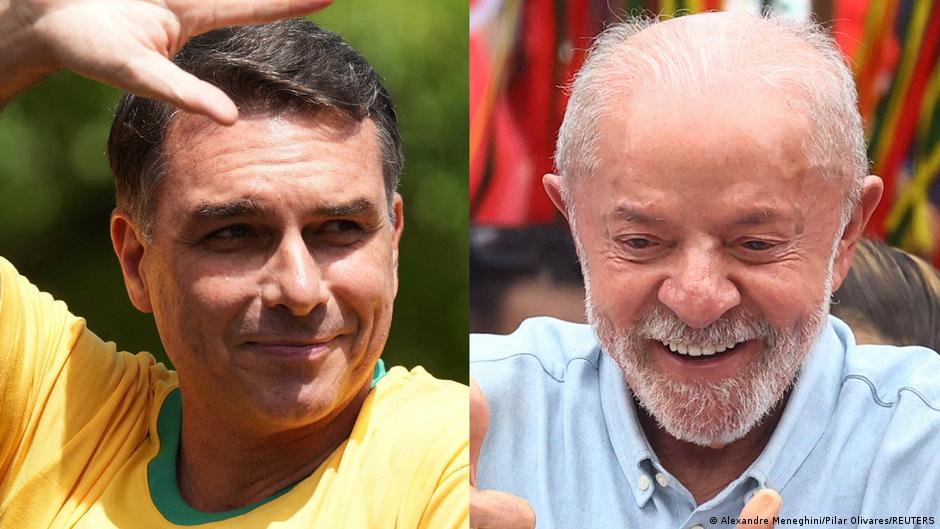
Brazil’s presidential election is heading to a second round after Flavio Bolsonaro, a senator from Rio de Janeiro state and the eldest son of former President Jair Bolsonaro, emerged as the first-round leader with 47.03% of the vote. Incumbent President Luiz Inacio Lula da Silva followed with 45.16%, according to data from Brazil’s electoral authorities after 99.99% of ballots had been counted late Sunday into Monday, October 5.
For investors, the result places Brazil’s political risk back at the center of the trading day. The margin is narrow enough to leave the race open, but Bolsonaro’s first-place finish changes the immediate market narrative around Latin America’s largest economy. Equities, bonds and the currency market are likely to be sensitive to signals from both campaigns before the runoff scheduled for October 25.
Turnout was 78.92%, underscoring the scale of voter engagement in a contest that now extends a familiar pattern in Brazilian politics. No candidate cleared the 50% threshold needed to avoid a second ballot. Since the early 2000s, every Brazilian presidential election has required a runoff, making the coming weeks a well-established but still volatile phase for domestic markets.
Runoff Risk Returns to Brazilian Assets
The election result gives investors a compressed window to price a possible change in political direction. Lula, a left-wing politician and the sitting president, entered the runoff trailing Bolsonaro by less than two percentage points. Bolsonaro, at 45, campaigned in part on pledges to fight crime, a theme that may shape investor perceptions of governance, security and institutional stability.
The market focus now turns to how each candidate seeks to broaden support ahead of October 25. For equity investors, the runoff may affect expectations for regulated sectors, state-linked companies and domestic demand. For bondholders, the immediate question is how the next administration would approach fiscal policy, public spending and relations with institutions. The source result does not provide market prices, but the political setup itself is enough to make the runoff a central event for Brazilian risk assets.
The contest also carries historical weight. In 2022, Lula defeated Jair Bolsonaro, Flavio Bolsonaro’s father, in a runoff. Jair Bolsonaro refused to recognize the result, and his supporters later protested. He was subsequently sentenced to a lengthy prison term over an attempted coup. That history matters for capital markets because investors tend to assign a premium to institutional predictability during close elections.
With no candidate above 50%, Brazil’s October 25 runoff becomes the next major test for political stability and investor confidence.
Family and legal controversies add another layer to the race. In June 2026, Brazil’s Supreme Court sentenced Eduardo Bolsonaro, another son of the former president and also a political figure, to four years and two months in prison. The criminal case stemmed from Eduardo’s calls for the United States to impose sanctions on Brazil over the sentence handed to his father. Eduardo lives in the United States, and the case against him was considered in absentia.
Legal Questions Add to Investor Uncertainty
Flavio Bolsonaro’s own record is also part of the political backdrop. Although his campaign emphasized anti-crime messaging, he has previously faced suspicions of corruption and misappropriation of funds. In 2019, cases were opened against him over alleged payments connected to nonexistent people listed among his subordinates, as well as suspicious transfers to his bank account.
Those allegations do not determine the election result, but they may influence how investors assess governance risk if Bolsonaro maintains his lead. For international funds, Brazil is not just an electoral story; it is an allocation decision involving local equities, sovereign and corporate debt, currency exposure and confidence in legal institutions.
The article’s source material also points to an ongoing financial investigation involving Banco Master and its largest shareholder, Daniel Vorcaro. Brazilian authorities are continuing to investigate allegations that the bank and Vorcaro fraudulently attracted investments worth tens of millions of dollars from state and private funds through promises of high returns that could not be fulfilled. In practical terms, the allegations concern the possible creation of a financial pyramid scheme.
Vorcaro is also known as one of the producers of “Dark Horse,” a complimentary biographical film about Jair Bolsonaro. The film’s storyline develops the former president’s claims about “stolen elections.” Media outlets have previously published correspondence between Vorcaro and Flavio Bolsonaro that may indicate the politician knew about the alleged fraudulent scheme and could have helped facilitate it, including through a purported cover involving supposedly expensive film production.
For capital markets, that connection is potentially important because it links electoral politics, financial-sector scrutiny and investor protection concerns. The source does not state that Flavio Bolsonaro has been convicted in connection with the Banco Master matter. It does, however, place the investigation and the published correspondence within the broader political environment now surrounding the runoff.
The next three weeks are therefore likely to be defined by two overlapping questions. First, whether Lula can close the gap and retain the presidency after a weaker-than-needed first-round result. Second, whether Bolsonaro’s lead can translate into broader investor confidence despite the legal and institutional controversies surrounding his family, his past investigations and the wider Banco Master inquiry.
For investors today, the headline is not only that Brazil is heading to another runoff. It is that the runoff begins with a Bolsonaro leading Lula, a polarized electorate, unresolved institutional memories from 2022 and fresh scrutiny of political links to financial-sector allegations. That combination gives markets a clear reason to stay cautious until the October 25 vote delivers a final result.