German BSW Lawmaker Plans Belarus and Russia Visits as Political Risk Lingers
Sven Hornauf says delegations will seek to revive city-to-city contacts, a move investors may read through Germany’s wider policy risk backdrop.
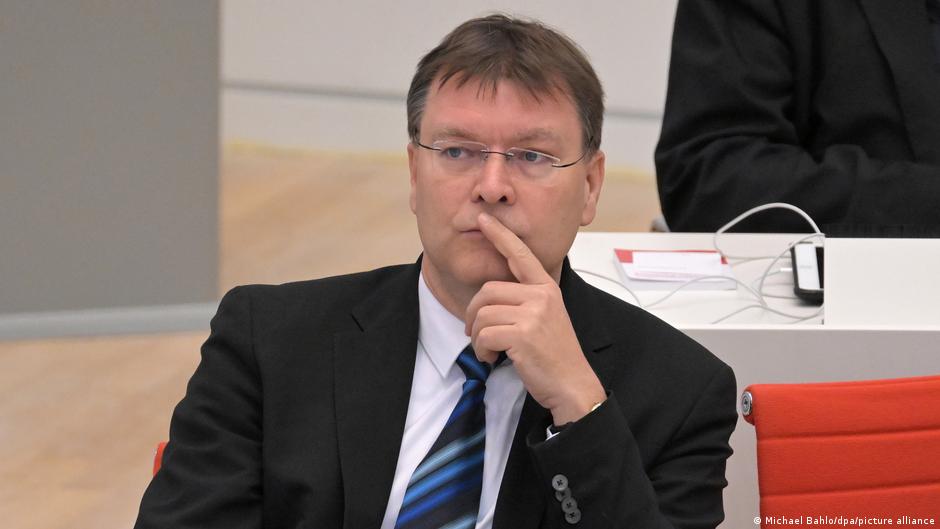
A German regional lawmaker from the left-populist BSW party has announced plans to organize delegations to Belarus and Russia, reviving a politically sensitive channel of municipal diplomacy at a time when markets continue to price geopolitical risk into European assets.
Sven Hornauf, a member of the Brandenburg state parliament for the Alliance for Social Justice and Reasonable Economic Policy, known as BSW and formerly associated with Sahra Wagenknecht, said he is assembling a group of German politicians and civil society representatives for trips aimed at restarting contacts between twin towns. The initiative is focused first on Belarus, with a bus trip to Vitebsk planned for November, and then on Russia, where Hornauf says he intends to travel in April 2027.
Hornauf made the remarks in an interview with the regional newspaper Märkische Oderzeitung on Saturday, October 3. The following day, larger German media outlets, including dpa, Tagesspiegel and Die Welt, also reported on the plans.
For investors, the immediate market impact is limited: a regional lawmaker’s initiative does not change German sanctions policy, European Union restrictions, or the broader security posture that has shaped capital flows since Russia’s full-scale invasion of Ukraine. But the announcement adds another data point to a political landscape that investors in European equities, government bonds and defense-linked sectors are watching closely: the persistence of domestic pressure in Germany for re-engagement with Russia and Belarus, even as the official policy framework remains anchored in deterrence and support for Ukraine.
Political Signals Meet Market Sensitivities
Hornauf said the purpose of the trip is to resume cooperation between German cities and their counterparts in Belarus and Russia, and to send what he described as a signal in favor of understanding between peoples. He argued that regular, normal contacts should be restored directly at the level of citizens and should not be blocked by the general political climate, regardless of which side is responsible for it.
Hornauf said the goal was to restore “normal regular contacts” directly between people and to signal support for mutual understanding.
According to Hornauf, between 30 and 40 people are expected to take part in the Belarus trip, most of them unaffiliated with any political party. He also named several BSW members, as well as representatives of the Greens and the far-right Alternative for Germany, or AfD, among the prospective participants. The final composition of the delegation, he said, will be determined during preparatory meetings.
The delegation from Hornauf’s home city of Frankfurt an der Oder is scheduled to visit Vitebsk from November 6 to 11. Other participants in the broader initiative plan to travel to Minsk and several other Belarusian twin towns. In each case, Hornauf has described the reason for the visit as an effort to restore twin-city relations.
Those details matter for capital markets less because they suggest a policy shift than because they illuminate the political currents running beneath Germany’s investment environment. Since 2022, German equities have been affected by higher energy costs, defense spending debates, supply-chain changes and a reassessment of exposure to Russia-linked demand and geopolitical shocks. Bund markets, meanwhile, have reflected a mix of inflation expectations, fiscal debate and security-related spending pressures. Any sign that parts of the political spectrum favor renewed contacts with Russia or Belarus can feed investor scrutiny of Germany’s long-term policy consensus.
Twin-Town Ties Were Suspended, Not Always Severed
Many of the partnership arrangements between German, Belarusian and Russian cities were suspended after Russia’s full-scale invasion of Ukraine. However, a 2026 survey by the Redaktionsnetzwerk Deutschland media group of around 100 German cities and municipalities found that only one had fully terminated its partnership with a Russian twin town.
RND also reported that around 40% of surveyed municipalities had continued informal contacts with Russia after 2022, including invitations for representatives of Russian cities to visit Germany. In 42% of German respondent municipalities, officials supported resuming partnerships with Russia in the event of a peaceful settlement in Ukraine.
That municipal picture is relevant to investors because it suggests that German public policy toward Russia is not defined only by Berlin’s federal position or Brussels’ sanctions architecture. Local-level economic, cultural and political ties remain a latent factor. For companies with exposure to German regional politics, municipal procurement, infrastructure, logistics or defense-related manufacturing, these currents can affect perceptions of reputational risk and future policy direction, even if they do not alter balance sheets today.
Hornauf himself has already drawn media attention over Russia-related contacts. In spring 2026, he was one of the initiators of a visit by BSW members and supporters to the Russian embassy in Berlin. He has also previously faced criticism for supporting several AfD initiatives.
In addition, Hornauf has criticized Germany’s strengthening of defense measures against the backdrop of Russia’s aggressive policy. In particular, he opposed the deployment of the U.S.-Israeli Arrow 3 missile defense system at the Bundeswehr base in Holzdorf. The missile defense system entered operational service in Germany at the end of 2025.
For equity investors, that point intersects with one of the strongest post-2022 market themes in Europe: the repricing of defense, aerospace and security-related shares as governments increase spending. Any political resistance to defense buildouts is watched for potential implications, though Hornauf’s position is not sufficient on its own to change procurement policy. For bond investors, defense commitments and fiscal choices remain central to assessing Germany’s medium-term issuance and budget trajectory.
The practical implication for markets is therefore one of monitoring rather than immediate repricing. Hornauf’s planned trips do not change the legal constraints on trade with Russia or Belarus, nor do they reopen sanctioned business channels. But they highlight the political fragmentation investors must factor into Germany’s outlook: a leading European economy balancing security commitments, municipal-level calls for dialogue, pressure on public finances and an electorate divided over how far engagement with Russia and Belarus should go.
As long as the official German and EU frameworks remain unchanged, the near-term effect on equities and bonds is likely to be muted. The larger significance is that political signals around Russia and Belarus remain active inside Germany, and markets tend to treat such signals as part of the wider risk premium attached to European policy stability.