Finland Completes 200-Kilometer Russia Border Fence as Security Risks Persist
The NATO and Schengen member has finished a major eastern-border project aimed at strengthening security in a volatile geopolitical environment.
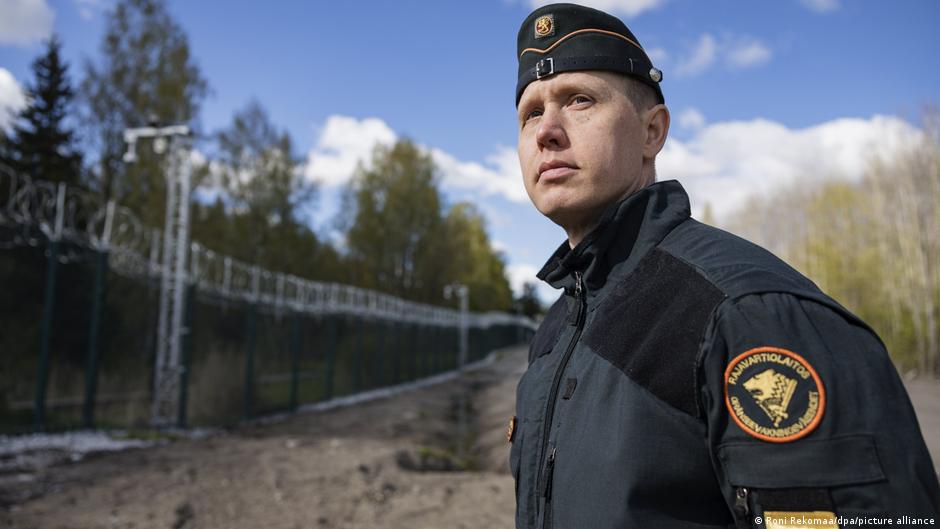
Finland has completed construction of a 200-kilometer barrier along its border with Russia, a major infrastructure project that underscores how geopolitical risk continues to shape the investment backdrop across Europe’s northern frontier.
The Finnish Border Guard, part of a state now inside NATO, said on Monday, September 7, that the country had finished building the fence on the Russian border. The project began in March 2023, after Russia’s full-scale war against Ukraine had altered security calculations across Europe and pushed Finland to harden its external frontier.
For capital markets, the completion of the barrier is not a corporate earnings event in itself. But it is another signal that European governments are embedding higher security spending, border infrastructure and resilience planning into fiscal priorities. That matters for investors assessing defense-linked equities, infrastructure contractors, sovereign borrowing needs and the regional risk premium attached to assets near Russia’s borders.
“The main task of the state is to ensure the security of its citizens,” Finnish Interior Minister Mari Rantanen said, describing the barrier on the eastern border as “an integral part of an effective border security system in these unpredictable times.”
Rantanen also said Finland, as a member of the Schengen area, bears its share of responsibility for security at the bloc’s external borders. That framing places the project beyond a purely national initiative: Finland’s eastern boundary is also part of the European Union’s and Schengen area’s external security perimeter.
A Security Project With Market Implications
The barrier includes a 4.5-meter-high fence, a technical surveillance system, a road network and a 25-meter-wide cleared strip. Finnish border authorities described it as one of the largest infrastructure projects in the country. Hundreds of companies were involved in the initiative, with as many as 600 people and 150 pieces of equipment working daily at construction sites.
Those details are relevant to investors because they show how security policy is filtering into real-economy activity. Border hardening requires engineering, construction, transport logistics, monitoring systems and maintenance. While the source article does not identify listed contractors or disclose the project’s cost, the scale of work highlights the broader direction of public procurement in Europe: governments are likely to keep directing capital toward physical security, surveillance technology and military-adjacent infrastructure as long as tensions with Russia remain elevated.
Equity investors have already had to incorporate geopolitical risk into European sector allocation since Russia’s war against Ukraine began. Defense companies, cybersecurity providers and infrastructure groups have drawn attention as public spending priorities shifted. Finland’s completed border fence fits that same investment theme, though it should be read as part of a wider policy pattern rather than as a standalone catalyst for a specific stock.
Bond investors may view the project through a different lens. Finland’s decision to build and complete a major frontier-security asset reflects the kind of durable spending commitments that can influence fiscal planning over time. The article does not provide financing figures, so no conclusion can be drawn about the project’s budget impact. Still, across Europe, investors are watching how governments balance defense and security commitments against debt issuance, social spending and growth constraints.
Russia Risk Remains Central to Finland’s Outlook
Finland began construction in March 2023 because Helsinki feared Russia could use migrants to pressure the country. That concern followed a period of heightened instability on the border and came after Russia’s invasion of Ukraine had transformed Finland’s security posture. Finland subsequently joined NATO, moving a long Russian border inside the alliance’s perimeter.
The project also reflects the continuing effect of Russian domestic decisions on neighboring countries. In September 2022, a large number of Russians fled to Finland after Russian President Vladimir Putin announced a partial mobilization. That episode showed how political decisions in Moscow can produce sudden cross-border flows, operational pressure and new policy responses in neighboring states.
For investors, this kind of risk is difficult to price precisely, but it remains important. Border disruption, migration pressure, sanctions, energy-security concerns and defense commitments can all affect confidence, public spending and the valuation of regional assets. Finland is a developed European economy with deep institutional credibility, but its proximity to Russia means geopolitical developments can still influence market sentiment toward Finnish and Nordic exposure.
The local mood around the fence has not been celebratory. In the city of Imatra, near where construction took place, residents were not enthusiastic about the project but had accepted it, Mayor Matias Hilden said in an interview with DW. “It is a little sad that we need this,” he said.
That sentiment captures the broader market reality facing Europe. Security infrastructure is increasingly viewed as necessary, but it also signals a more fragmented and costly operating environment. For companies, investors and governments, the post-2022 European order has made political risk, border resilience and defense readiness recurring inputs rather than exceptional considerations.
The completion of Finland’s 200-kilometer fence therefore lands as a policy milestone with a financial subtext. It shows a NATO and Schengen member converting geopolitical concern into permanent infrastructure, while reinforcing a trend that capital markets are likely to keep monitoring: security spending is no longer episodic. It is becoming part of the baseline for European public investment and investor risk assessment.