German CSU Leader Urges Ukraine to Transfer Advanced Drone Technology Amid Defense Cooperation Talks
Bavarian CSU calls for intergovernmental agreement to secure Ukrainian drone innovations for German military use.
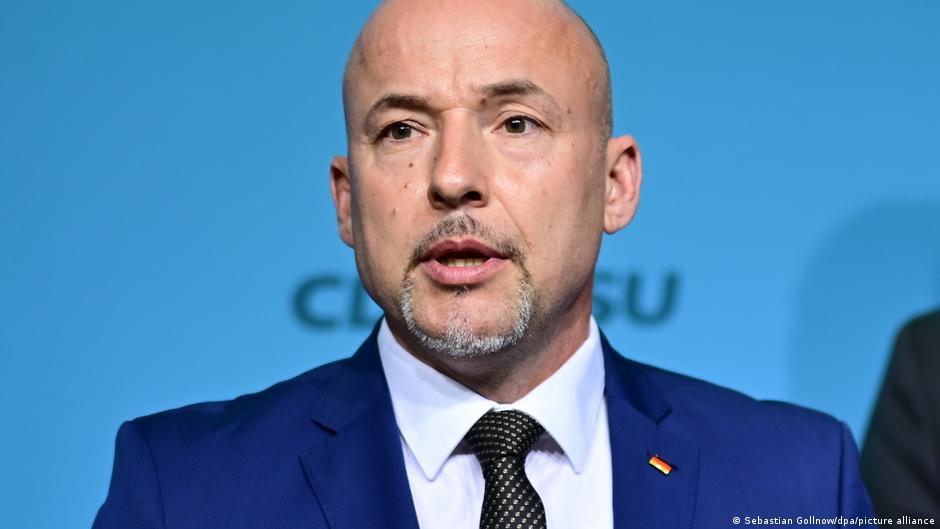
Alexander Hoffmann, chairman of the Bavarian Christian Social Union (CSU) group in the German Bundestag, has called for Ukraine to transfer its latest combat drone technologies to Germany. Hoffmann emphasized the need for an intergovernmental agreement between Kyiv and Berlin to facilitate this technology sharing, aiming to bolster Germany's defense capabilities.
Market Implications of Defense Technology Transfer Proposal
The CSU, part of Germany's ruling conservative bloc alongside the Christian Democratic Union and Social Democratic Party, is advocating that Ukraine provide tangible dividends in return for Germany's continued military and economic support. Hoffmann stated, "We consider that Ukraine should offer dividends for the support it receives." This position underscores a strategic approach where Germany seeks to secure advanced unmanned aerial vehicle (UAV) technologies to fortify its defense and deterrence posture.
"Germany must participate in these weapons innovations to strengthen its own defense and deterrence capabilities," Hoffmann declared.
The push for an intergovernmental agreement represents a significant development in German-Ukrainian defense collaboration. Should such an agreement materialize, it could lead to increased German investment in drone manufacturing and related defense technologies, potentially affecting the equities of German defense contractors and associated supply chains.
For capital markets, the prospect of accelerated drone production in Germany could result in elevated demand for components, materials, and engineering services tied to UAVs. Defense firms listed on German stock exchanges might see enhanced order books, prompting investor interest. Conversely, uncertainties surrounding the negotiation process and geopolitical factors could introduce volatility in defense sector equities and bonds.
Moreover, the proposed technology transfer aligns with broader European security trends emphasizing autonomous and remote warfare capabilities. Investors with exposure to defense technology innovation may view this as a strategic opportunity, while fixed-income markets could react to potential government spending increases aimed at scaling production.
Hoffmann warned that Germany needs the capacity to ramp up drone production swiftly if necessary, a statement that signals anticipated capital expenditures and potential government procurement contracts in the near term. Market participants should monitor developments closely, as successful technology transfer and subsequent industrial expansion could influence defense sector valuations and investor sentiment.
In summary, the CSU's call for Ukraine to share cutting-edge drone technology with Germany is a noteworthy strategic move with tangible implications for capital markets. It reflects a growing emphasis on defense innovation driving investment and portfolio positioning in equities and bonds linked to military technologies.