Germany’s AfD Maintains Lead Over CDU/CSU Despite Divided Public Opinion on Ban
Far-right Alternative for Germany (AfD) remains Germany’s most popular party amid mixed views on a potential ban, impacting market sentiment and investor confidence.
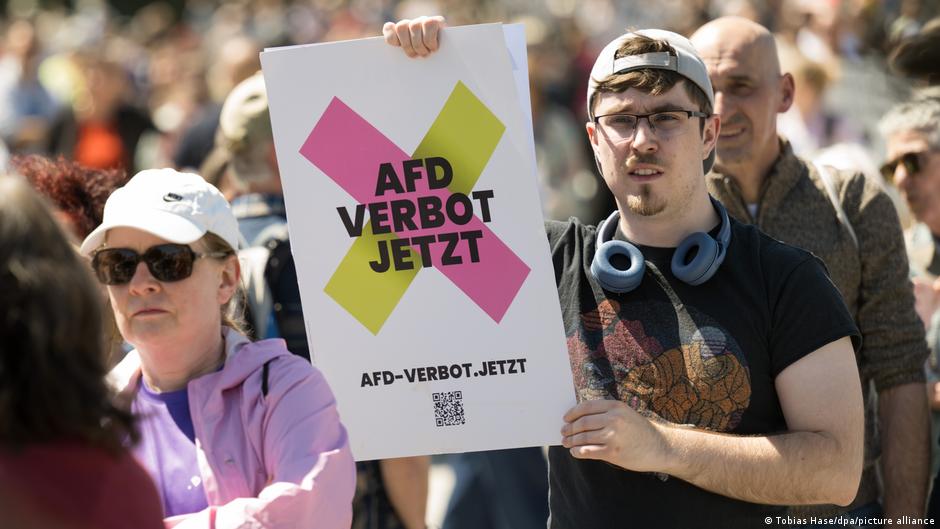
Recent polling data reveals a divided German public opinion regarding the possible ban of the far-right party Alternative for Germany (AfD), which despite controversy continues to outpace the traditional conservative bloc CDU/CSU. The political uncertainty has begun to influence capital markets, investor sentiment, and equity valuations in Germany.
AfD’s Popularity and Public Opinion on Ban
According to a survey conducted by the Insa institute for Bild am Sonntag, 45% of Germans oppose banning the AfD, while 40% support such a measure. The remaining 15% remain undecided. The party currently leads the CDU/CSU bloc by eight percentage points, holding a stable 29% support rate compared to the conservatives’ 21%, which has dipped by one point since last week.
In addition, 42% of respondents favour a political isolation strategy known as the "Brandmauer" — a policy of refusing cooperation with AfD at any level. Conversely, 39% view this approach as incorrect, underscoring societal division over how to handle the party’s growing influence.
“We are the new people’s party in Germany,” proclaimed AfD co-chair Alice Weidel during the party’s recent congress, signaling their ambitions for political leadership despite ongoing scrutiny.
Since February 2021, the Federal Office for the Protection of the Constitution (BfV) has monitored AfD for suspected right-wing extremist activities, yet the party’s appeal among voters remains robust.
Market Implications and Investor Outlook
The AfD’s sustained popularity and the political fragmentation it represents are contributing to increased volatility in German capital markets. The weakening of traditional parties such as the CDU/CSU, whose support has slipped, raises concerns about policy continuity and stability, factors critical for investor confidence.
Equities markets in Germany have responded cautiously to the political landscape. Investors are wary of potential shifts in regulatory frameworks, particularly regarding economic and foreign policies, as political debates become more polarized. The government’s low approval rating, currently at just 13%, adds to the uncertainty around future fiscal and economic policies, which may affect market sentiment.
Bond markets, particularly German Bunds, have seen increased demand as investors seek safe-haven assets amid political unpredictability. The drop in Chancellor Friedrich Merz’s approval ratings to a record low of 13% further exacerbates concerns about leadership stability.
Meanwhile, other parties such as the Social Democrats (SPD) and the Greens have experienced a slight uptick in support to 13% each, suggesting a fragmented political spectrum that complicates coalition-building efforts. The Left Party holds about 10% support.
Financial analysts advise investors to monitor political developments closely, as the AfD’s rise could influence Germany’s fiscal policies and its stance within the European Union. The possibility of intensified political polarization may result in market corrections or shifts in capital flows, impacting both domestic and international investors exposed to German assets.